
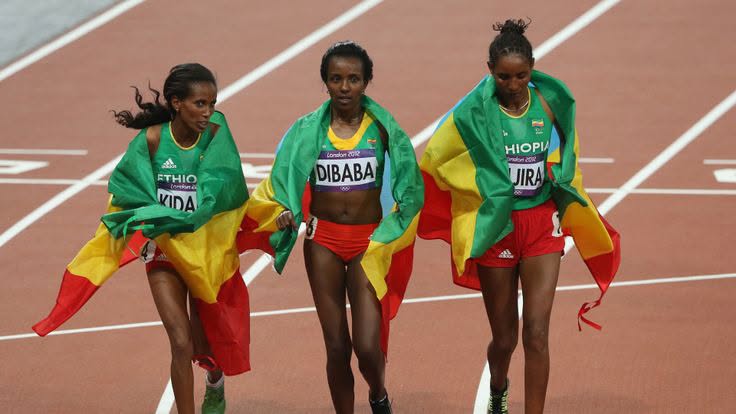
What an Ethiopian Champion Carries Beyond the Finish Line
Addis Ababa, October 12, 2026 (FMC) — There are moments in sport when victory becomes something greater than a medal, a record or a place on the podium. As an Ethiopian athlete stands beneath the national flag, its colors rising above the arena, a personal achievement becomes a source of pride for millions, carrying the hopes of a nation and the enduring spirit of its people.
For Ethiopia’s athletes, the national flag is far more than a symbol carried into competition. It represents a homeland, the trust of its people and the responsibility of wearing the country’s name before the world. It is a reminder of what they represent—and of the countless Ethiopians who share in every triumph.
That bond between flag and athlete has been woven into Ethiopia’s remarkable sporting history. In 1960, Abebe Bikila captured the world’s imagination by winning the Olympic marathon in Rome barefoot, announcing Ethiopia’s arrival on the global sporting stage. His extraordinary victory became a defining moment in the country’s athletic legacy, demonstrating how determination and courage could carry an Ethiopian runner to the summit of international competition.
Generations that followed continued that legacy. Derartu Tulu, Haile Gebrselassie, Kenenisa Bekele, Tirunesh Dibaba and many other Ethiopian champions raised the national flag through their achievements at the Olympic Games and World Championships. Their victories brought international recognition to Ethiopia and gave people at home and abroad moments of shared celebration.
Behind every triumph lies a journey that the finish line cannot fully reveal: years of training, physical exhaustion, setbacks, sacrifice and the determination to begin again. Athletic excellence demands far more than physical ability. It requires discipline, mental resilience and the courage to keep pursuing a goal when the path becomes difficult.
For athletes carrying the Ethiopian flag, that journey also bears a national dimension. They compete as individuals, yet their achievements resonate far beyond themselves. When they celebrate a victory with the flag held high, the moment belongs not only to the athlete but also to the families, communities and fellow citizens who find inspiration in their success.
The flag gives that emotion a visible expression. In a single image—a champion holding the national colors aloft—personal ambition and collective pride meet. The achievement of one becomes a memory shared by many, transcending the boundaries of age, background and geography.
Sport possesses a rare ability to bring people together. On the track, athletes are measured by their performance, perseverance and commitment. In the stands and before television screens, people from different walks of life can celebrate the same finish, cheer the same champion and feel connected through a common moment. For a diverse country such as Ethiopia, this shared experience offers an opportunity to nurture mutual respect, solidarity and a sense of belonging.
The power of sport, therefore, extends beyond competition. It can build bridges where differences might otherwise keep people apart, inspire young people to pursue their ambitions and remind communities of the strength found in shared purpose. Ethiopia’s sporting achievements offer a compelling example of how individual excellence can become a source of collective encouragement.
As the country observes its National Flag Day under the theme “Our Flag for National Consensus and Unity,” the connection between athletes and the national flag takes on a broader meaning. The same colors that accompany champions onto the podium can remind citizens of the importance of respecting one another, preserving their common bonds and working toward a future in which every achievement contributes to the country’s shared progress.
For young Ethiopians watching their sporting heroes, the message is especially powerful. The champions they admire demonstrate that extraordinary accomplishments grow from perseverance, preparation and belief. Their journeys show that representing one’s country is both an honor and a responsibility—and that the pursuit of excellence can inspire an entire generation.
Ultimately, Ethiopia’s flag is not raised by athletes alone. It is carried in the hopes of young runners taking their first steps on village paths, in the encouragement of families following competitions from home and in the pride of Ethiopians cheering from distant countries. Every victory adds another chapter to a story that belongs to the nation as a whole.
When an Ethiopian champion raises the flag, the celebration reaches far beyond the podium. It becomes a moment of recognition, belonging and shared hope—a reminder that sport can unite a diverse people around a common source of pride, and that the country’s greatest victories are those whose inspiration reaches everyone.