
Ethiopia: From Inspiring Africa’s Anti-Colonial Struggle to Leading Its Fight for Food Sovereignty
Addis Ababa, October 12, 2026 (FMC) — Ethiopia’s historic contribution to Africa’s struggle against colonialism established it as a symbol of freedom, sovereignty and resistance to foreign domination.
Today, that legacy is finding renewed expression in a different but equally consequential struggle: Africa’s quest to defeat food insecurity, reclaim control over its food systems and achieve genuine food sovereignty.
Through its agricultural transformation and growing capacity to produce food for domestic consumption and export, Ethiopia is setting the tone for a continental pursuit of self-reliance—and inspiring other African nations to follow suit.
The connection between these two historic struggles is profound. Political independence secured the right of African nations to determine their own destinies, but lasting sovereignty also requires the capacity to feed their populations, mobilise their resources and withstand external shocks.
A continent endowed with immense agricultural potential cannot fully realise its independence while remaining vulnerable to food shortages and disruptions in international supply chains. Ethiopia’s experience brings this unfinished dimension of African liberation into sharp focus.
Ethiopia’s place in the history of African resistance is rooted in its defence of sovereignty against colonial conquest. Its victory over Italian forces at the Battle of Adwa in 1896 became a landmark in the struggle against European colonial expansion, inspiring anti-colonial sentiment and movements for freedom across Africa and beyond.
Adwa demonstrated that African sovereignty could be defended against a colonial power at a time when much of the continent was being partitioned and subjected to foreign rule.
That legacy continues to resonate, but the challenges facing Africa have evolved.
The struggle to defend territorial and political sovereignty has been joined by the imperative to strengthen economic independence. Among the most pressing fronts in this pursuit is food: the ability of countries to produce sufficient supplies, protect their populations from shortages and make their agricultural resources a foundation for prosperity rather than vulnerability.
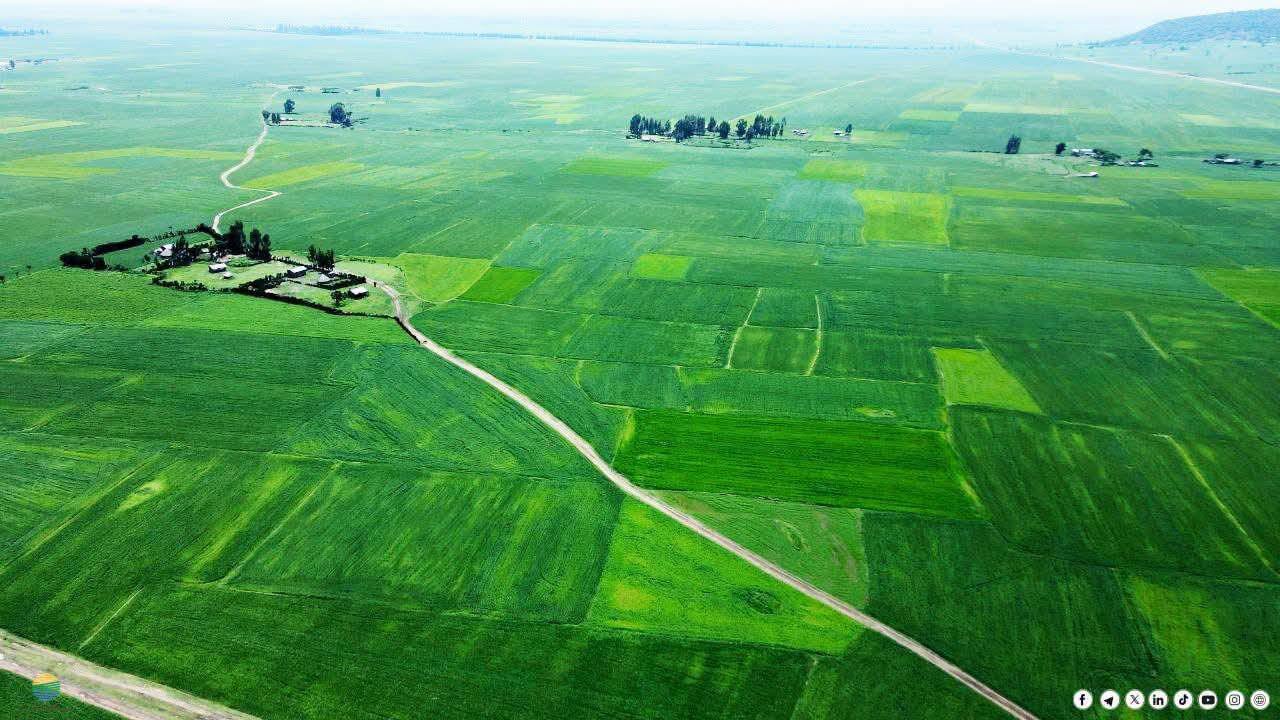
Ethiopia’s agricultural transformation is contributing to this effort. The country has moved from importing roughly one billion dollars’ worth of wheat annually towards domestic self-sufficiency and surplus production, with exports reaching neighbouring markets, including Djibouti and Kenya.
This shift illustrates how investment in domestic productive capacity can reduce dependence on imported staples while creating opportunities to supply regional markets.
Mechanised farming and cluster-based production have formed part of Ethiopia’s broader effort to increase agricultural output and productivity.
By mobilising its land and agricultural workforce and expanding modern production systems, the country is working to turn its agricultural potential into a stronger foundation for food security, economic resilience and regional trade.
This progress is attracting attention beyond Ethiopia’s borders. During a high-level visit led by Nigerian Vice President Kashim Shettima, Nigerian officials visited mechanised wheat cluster farms and agricultural facilities in Oromia region to examine Ethiopia’s experience.
Shettima indicated that Nigeria would adopt Ethiopia’s mechanised farming model as part of its efforts to strengthen food security and agricultural productivity.
The significance of this development extends beyond a bilateral exchange. Nigeria, Africa’s most populous country, is looking to Ethiopia for practical approaches to a challenge shared across the continent.
The interest signals the growing relevance of African-developed experience and the potential for countries to learn from one another as they pursue greater control over their food production.
The Nigerian delegation’s interest also encompasses nutrition. Federal and state leaders have examined Ethiopia’s Seqota Declaration, launched in 2015 with the ambition of ending stunting among children under two by 2030.
Nigeria’s stated intention to draw lessons from the initiative for its Nutrition 774 programme, which seeks to extend interventions across all 774 local government areas, places Ethiopia’s experience at the centre of another major African effort to improve food and nutrition outcomes.
These parallel developments demonstrate that food sovereignty is not merely a matter of producing more grain.
It requires the capacity to increase agricultural productivity, strengthen rural livelihoods and ensure that food systems support healthy lives. Ethiopia’s agricultural and nutrition initiatives offer approaches that other countries can assess and adapt to their own circumstances.
The broader continental stakes are unmistakable. Food insecurity constrains development, deepens vulnerability to global market disruptions and places pressure on national resources. When countries cannot reliably meet domestic food needs, their economic choices become more exposed to forces beyond their control.
Advancing food sovereignty, therefore, is part of the larger work of translating political independence into practical capacity and greater economic self-determination.
Ethiopia’s experience does not mean that Africa’s food challenges have been resolved, nor that one national model can be applied unchanged across a diverse continent. Climate conditions, agricultural systems, infrastructure and institutional capacities differ widely.
But Ethiopia’s transformation demonstrates the value of sustained domestic efforts to expand production, and Nigeria’s interest shows how that experience can become a reference point for other countries.
The historical parallel is powerful. Ethiopia’s resistance at Adwa helped establish its enduring place in Africa’s struggle against colonialism; its present-day agricultural transformation is contributing to a new continental conversation about how nations can strengthen sovereignty through the ability to feed their people.
In both cases, the underlying principle is self-determination: the capacity to shape one’s future rather than have it dictated by external dependence.
This is the next frontier in Africa’s pursuit of freedom. The continent’s agricultural wealth must be translated into productive strength, resilient food systems and shared prosperity.
By expanding domestic production and sharing experience that attracts the interest of other African nations, Ethiopia is helping advance that ambition.
From the defence of sovereignty at Adwa to the pursuit of food self-sufficiency today, Ethiopia’s story reflects a continuing struggle to make independence substantive.
Its contribution to Africa’s food sovereignty agenda offers a contemporary expression of that historic legacy—one in which the freedom to determine the future is increasingly tied to the capacity to feed the continent from its own resources.