
Ghanaian President Mahama Puts Economic Sovereignty at the Heart of Africa’s Peace and Security Agenda
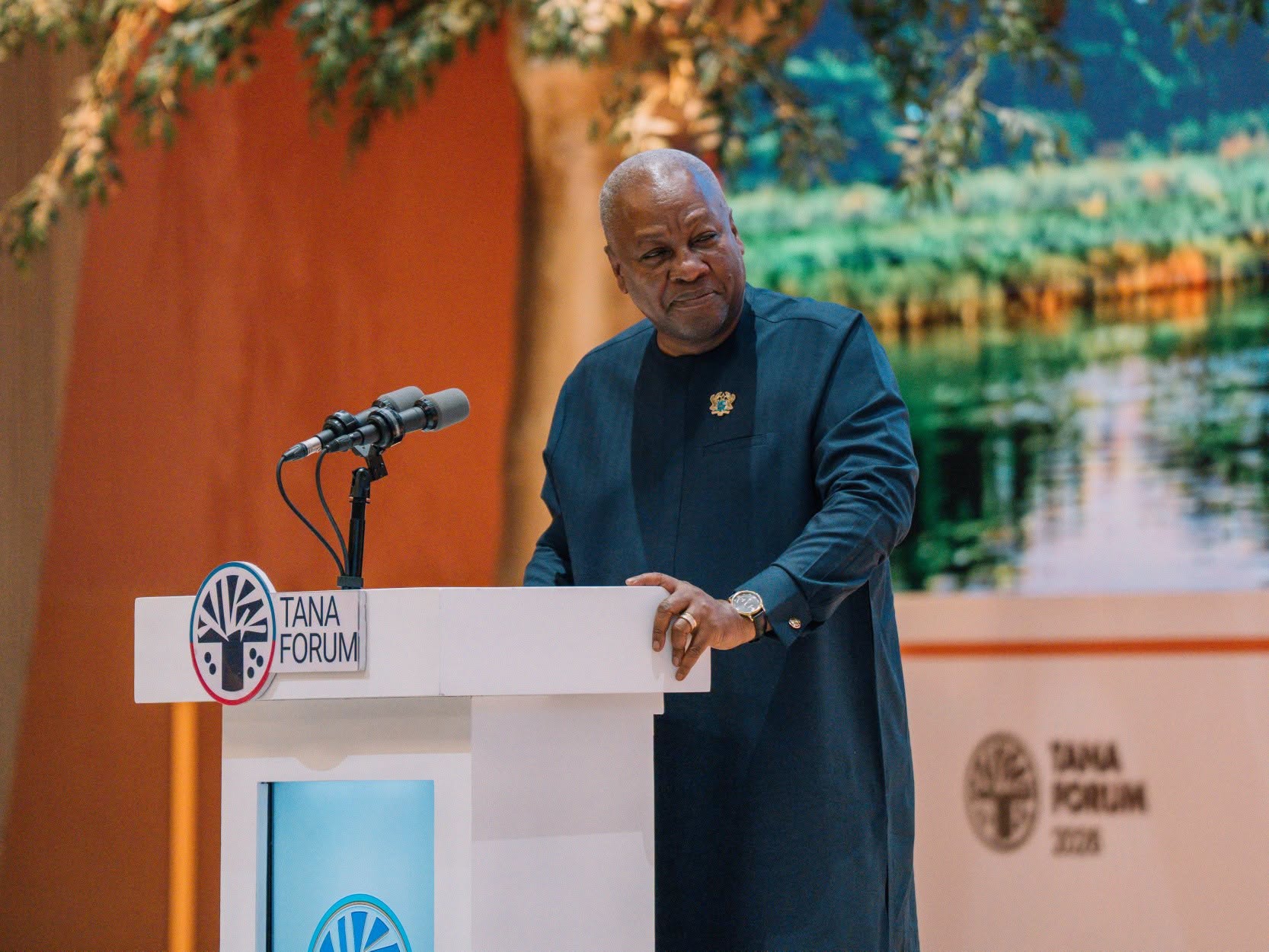
Addis Ababa, October 24, 2026 (FMC) — African countries must overcome structural economic dependency, strengthen domestic productive capacity and take greater responsibility for financing their own peace and development to secure lasting stability, Ghanaian President John Dramani Mahama said while opening the 12th Tana High-Level Forum on Security in Africa in Bahir Dar.
Addressing African leaders, former heads of state, diplomats, scholars and civil society representatives, Mahama argued that the continent’s changing geopolitical environment demands a decisive shift toward African ownership, economic sovereignty and greater influence over global decision-making.
He described the Tana Forum, held on the shores of Lake Tana, as a space for candid reflection and African-led solutions, where the continent’s peace, governance and security challenges can be discussed beyond the constraints of formal diplomatic settings.
Having chaired the forum’s board for nearly nine years, he said returning to Bahir Dar reaffirmed its founding vision of collective reflection and continental agency.
This year’s theme, Pathways to Peace in Africa: Economic Sovereignty and Geopolitical Transformation, reflects what Mahama described as a defining challenge for the continent. Intensifying geopolitical rivalries, competition for critical minerals, volatile supply chains and rapid technological disruption are reshaping the international order, he said, warning that Africa must not remain a passive observer or become an arena for external competition.
For Mahama, lasting peace cannot be separated from economic justice. He argued that security remains fragile when young people are excluded from economic opportunity and that Africa cannot sustain stability through borrowed security or conditional aid. Economic sovereignty, he said, must become a central buffer against insecurity.
He outlined a transformation agenda that includes processing raw materials within Africa, expanding domestic industrial capacity, securing food and energy supplies, and turning the African Continental Free Trade Area from a legal framework into an operational engine of shared prosperity.
These measures, he argued, would allow African economies to retain more value, create opportunities and reduce structural dependence.
Mahama also called for a stronger African voice in reforming international financial and governance systems. As the world becomes increasingly multipolar, he said, African countries should align with partners across Latin America, Asia and the Caribbean to press for a more equitable multilateral order.
However, he stressed that international partnerships must complement rather than replace the continent’s own responsibilities. Africa must finance more of its peace and development priorities, including through the African Union Peace Fund, while curbing illicit financial flows and strengthening homegrown technological resilience.
The President urged participants to use the two-day forum to bridge the divide between policy formulation and implementation. Africa’s diverse experiences and collective demographic strength, he said, offer multiple pathways to peace, but those possibilities must be matched by political resolve and practical action.
Mahama closed by inviting delegates to deliberate with intellectual courage, honesty and humility, and to work toward a continent that is prosperous, self-reliant, peaceful and sovereign.