
Ethiopia’s Natural Resource Conservation Efforts Advance Shared Prosperity Across Nile Basin
Addis Ababa, October 30, 2026 (FMC) — Ethiopia’s investments in natural resource conservation, watershed management, and integrated water development are contributing to sustainable regional growth while creating opportunities for shared benefits among Nile Basin countries, the Ministry of Water and Energy has stated.
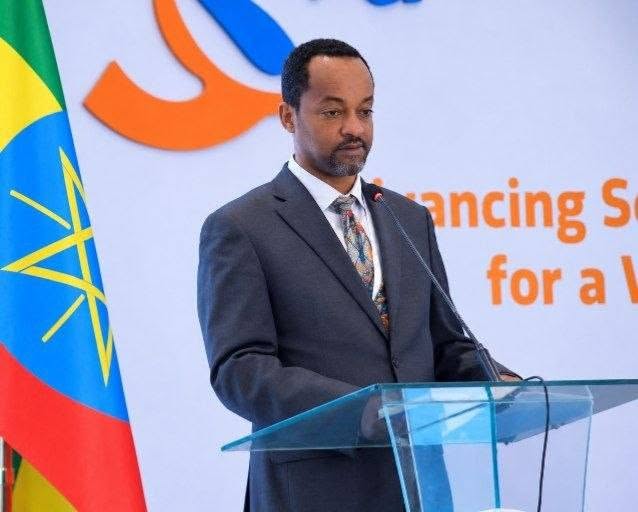
Michael Mehari, advisor to the Minister of Water and Energy, underscored the importance of integrated water resource management in ensuring water, food, and energy security while addressing the development needs of both Ethiopia and other countries in the region.
He made the remarks during the third Ethiopian Water and Energy Week, held under the theme “Advancing Science-Based Policy and Partnerships for a Water and Energy Secure Future.”
Michael emphasized that expanding multipurpose water storage facilities and infrastructure is essential to advancing irrigation development alongside electricity generation, enabling water resources to serve multiple development priorities.
He noted that Ethiopia contributes more than 86 percent of the water entering the Nile Basin system, making the sustainable development and protection of its water resources important not only for national development but also for the shared prosperity of countries across the basin.
Highlighting the country’s extensive work in soil and water conservation, watershed development, and environmental protection, he stressed that preserving ecosystems in the upper Nile Basin has benefits extending beyond national boundaries, particularly for downstream countries.
He called for stronger cross-border river governance based on cooperation, equity, and the fair utilization of shared water resources.
The Ministry advisor also emphasized that decisions concerning water and energy development should be guided by scientific research, empirical evidence, and sound policy frameworks.
He further identified increased investment and the development of domestic contractors’ and private sector capacities as important factors in accelerating progress in the sectors.
According to Michael, adopting an integrated approach to the water-energy-food-ecosystem nexus is indispensable for sustainable development, as these interconnected sectors are closely linked to national survival, economic prosperity, and sovereignty.
The Water and Energy Week has brought together discussions on green energy development, expanded electricity access, environmentally friendly and health-conscious cooking solutions, integrated water resource management, sanitation, and digital innovation.
The annual platform provides an opportunity to examine policy directions, scientific advances, and partnerships needed to strengthen water and energy security and support sustainable development.