
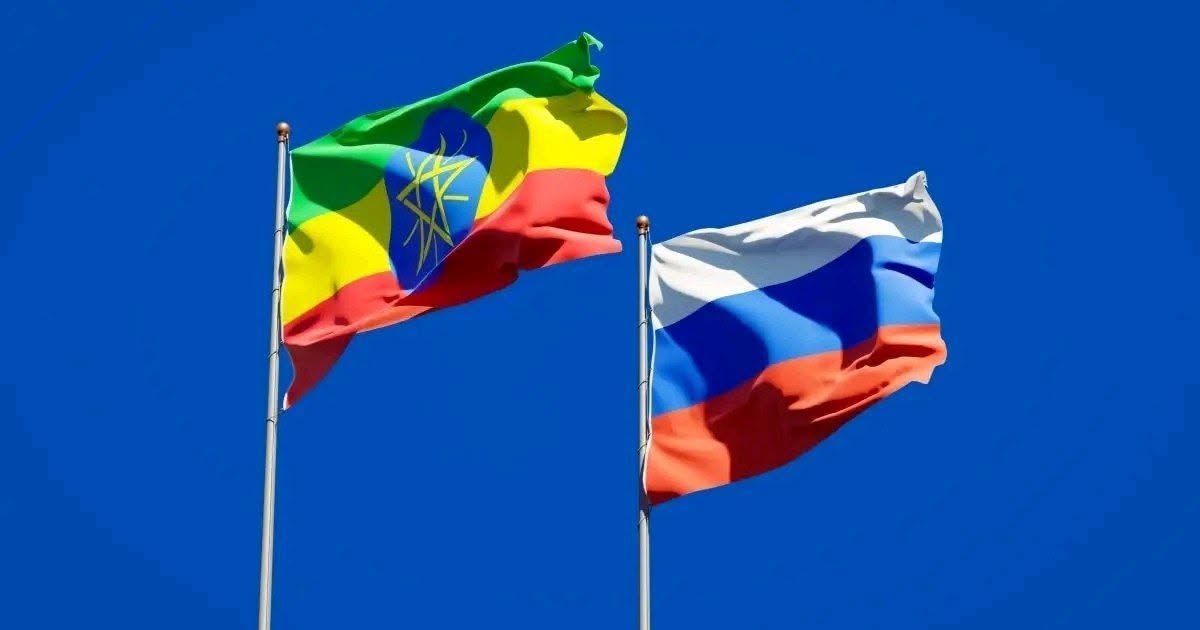
From Pushkin’s Legacy to the BRICS Era: The Enduring Ethiopia–Russia Connection
Addis Ababa, October 29, 2026 (FMC) — The story of Alexander Pushkin, one of Russia’s most celebrated literary figures, offers a compelling cultural entry point into the longstanding connections between Ethiopia and Russia.
Through his African ancestry and the heritage associated with his great-grandfather, Abram Petrovich Gannibal, Pushkin has become an important figure in the shared historical narrative celebrated by the two countries.
Their relationship, however, extends far beyond this cultural connection, encompassing centuries of religious and intellectual exchanges, formal diplomacy, educational cooperation and political engagement, and now a renewed dimension through their participation in BRICS.
Born in Moscow in 1799, Pushkin transformed Russian literature through his poetry, prose and plays, leaving a legacy that continues to shape Russia’s cultural identity.
His great-grandfather, Abram Petrovich Gannibal, was an African-born military engineer who rose to prominence in the Russian Empire under Peter the Great.
The story of Gannibal and his descendant has become a distinctive cultural link between Ethiopia and Russia, commemorated in both countries through memorials and cultural landmarks that reflect the enduring significance of Pushkin’s heritage.
In Ethiopia, the connection carries particular cultural and historical meaning, providing a human dimension to the relationship between the two countries. It illustrates how ancestry, cultural memory and shared historical narratives can connect societies across geographical distances and generations.
Yet the broader story of Ethiopia–Russia relations is much older and more extensive than any single family history, shaped by religious affinity, diplomatic initiatives, scientific exchanges and evolving political interests.
Religious connections played an important role in shaping early interest between the two societies. Ethiopia’s ancient Christian tradition attracted attention among Russian religious figures and scholars, while travel, pilgrimage and intellectual exchanges helped expand knowledge of Ethiopia in Russia.
These encounters developed within a wider tradition of Christian scholarship and international engagement, creating cultural and intellectual foundations for subsequent relations.
By the nineteenth century, cultural interest increasingly intersected with strategic considerations. As European powers expanded their presence across Africa and competition intensified around the Red Sea, Ethiopia sought international relationships that could help safeguard its independence.
Russia, meanwhile, viewed Ethiopia through a combination of religious affinity, diplomatic opportunity and geopolitical interest.
An important step came in 1895, when an Ethiopian mission led by Prince Damto travelled to Russia to seek diplomatic support and assistance amid escalating tensions with Italy.
Ethiopia’s victory at the Battle of Adwa on March 2, 1896, demonstrated the country’s determination and capacity to defend its sovereignty against colonial aggression. The Russian Red Cross mission, comprising 41 people, arrived in Ethiopia in May 1896 to treat wounded Ethiopians, adding a humanitarian dimension to the developing relationship.
Formal diplomatic relations were established in February 1898 under Emperor Menelik II. This milestone provided an official framework for a relationship that had grown through earlier cultural encounters and diplomatic initiatives.
It also reflected Ethiopia’s efforts to develop international partnerships while preserving its independence during a period of intense colonial competition.
The subsequent history of Ethiopia–Russia relations passed through different political eras. The Russian Revolution of 1917 disrupted earlier relations, which were formally restored in 1943.
The Soviet Union’s position during Italy’s invasion of Ethiopia in 1935–1936, including its condemnation of Italian aggression at the League of Nations, became another important episode in the relationship’s history.
The opening of a Soviet cultural institution in Addis Ababa in 1945 further expanded opportunities for cultural and educational exchange.
During the Soviet era, cooperation grew across education, technical training, science, industry, agriculture and military affairs.
Thousands of Ethiopians studied or received professional training in the Soviet Union, developing skills and professional networks that continued to influence Ethiopia’s institutional and technical development.
Scientific engagement also became an important part of the relationship. Soviet botanist Nikolai Vavilov’s expedition to Ethiopia in 1926–1927 documented cultivated plants and agricultural resources, illustrating how scientific inquiry and knowledge exchange contributed to connections between the two countries.
Educational and technical cooperation, meanwhile, created lasting professional links between Ethiopian and Russian institutions.
The dissolution of the Soviet Union in 1991 ushered in a different international environment, requiring both countries to adapt their relationship to new political and economic circumstances.
Yet educational, cultural and diplomatic connections continued to provide a foundation for engagement, even as priorities and institutional structures changed.
Today, Ethiopia and Russia are working to translate their historical ties into cooperation that responds to contemporary development priorities and an evolving international order.
Their engagement encompasses trade and investment, education, technology, energy, agriculture, security and diplomatic coordination. The central opportunity is to build on longstanding relations to deliver practical gains for both countries.
A significant new dimension emerged when Ethiopia became a full member of BRICS on January 1, 2024.
The grouping has expanded Ethiopia’s participation in a multilateral platform bringing together major emerging economies and countries of the Global South, offering additional opportunities for economic cooperation, investment and engagement on international governance.
For Ethiopia, BRICS membership provides a framework to widen economic partnerships, engage with major emerging markets and contribute to discussions on the future of global governance.
For Russia, a founding member of the grouping, Ethiopia’s participation creates additional opportunities to deepen bilateral engagement within a wider multilateral setting.
The platform complements rather than replaces the two countries’ established diplomatic relationship, allowing them to pursue shared interests alongside other members.
The contemporary significance of the relationship was underscored when Ethiopian Prime Minister Abiy Ahmed and Russian President Vladimir Putin met on the sidelines of the BRICS summit in New Delhi on September 12, 2026.
Putin described Ethiopia as a “long-standing and reliable partner” of Russia on the African continent and said relations continued to develop on the principles of equality and mutual benefit.
He also reported that bilateral trade had more than tripled in 2025 and noted that more than 20,000 Ethiopians had received their education in Russia.
The meeting highlighted the importance both countries attach to maintaining high-level dialogue and identifying new areas for cooperation.
It also demonstrated how a relationship shaped by historical connections continues to adapt to contemporary economic and diplomatic priorities.
The potential benefits extend beyond symbolic ties and diplomatic statements. Expanding trade can create opportunities for producers and businesses; educational cooperation can strengthen skills and professional networks; and scientific and technological exchanges can support development when translated into expertise, investment and institutional capacity.
Cooperation in agriculture, energy and other strategic sectors can also contribute to national development priorities. BRICS provides an additional framework for advancing these objectives, although tangible results will depend on sustained commitments and practical implementation.
For Ethiopia, participation in BRICS complements a diversified foreign policy aimed at advancing national interests, widening economic opportunities and contributing to discussions on global governance.
For Russia, stronger engagement with Ethiopia offers opportunities to deepen relations with an important African diplomatic centre and a country whose long history of independent statehood has shaped its international outlook.
The connection represented by Pushkin’s legacy thus opens a window onto a much wider history.
From cultural memory and religious affinity to formal diplomacy, educational exchange and contemporary multilateral cooperation, Ethiopia and Russia have developed their relationship across changing eras and international circumstances.
Their shared heritage provides a point of continuity, while their present engagement creates opportunities to build a partnership responsive to the demands of a changing world.
The relationship is not simply a record of diplomatic milestones or a celebration of cultural connections. It is also a story of people, knowledge, education and evolving interests that have helped sustain engagement between the two countries.
As Ethiopia and Russia look to the future through bilateral cooperation and BRICS, their challenge is to transform this historical foundation into a more productive partnership that advances development, expands opportunities and delivers tangible benefits to both peoples.
By Mesafint Brlie