
𝗙𝗥𝗢𝗠 𝗗𝗜𝗣𝗟𝗢𝗠𝗔𝗧𝗜𝗖 𝗣𝗥𝗘𝗦𝗘𝗡𝗖𝗘 𝗧𝗢 𝗦𝗧𝗥𝗔𝗧𝗘𝗚𝗜𝗖 𝗜𝗡𝗙𝗟𝗨𝗘𝗡𝗖𝗘: 𝗘𝗧𝗛𝗜𝗢𝗣𝗜𝗔’𝗦 𝟰𝗔 𝗗𝗜𝗣𝗟𝗢𝗠𝗔𝗖𝗬 𝗥𝗘𝗦𝗛𝗔𝗣𝗘𝗦 𝗜𝗧𝗦 𝗚𝗟𝗢𝗕𝗔𝗟 𝗘𝗡𝗚𝗔𝗚𝗘𝗠𝗘𝗡𝗧
Addis Ababa, November 2, 2026 (FMC) — In a world increasingly shaped by shifting alliances, geopolitical competition and competing economic interests, diplomatic influence is measured not simply by a country’s presence at international gatherings, but by its ability to turn engagement into strategic opportunities.
Ethiopia is seeking to translate its longstanding diplomatic standing and expanding international participation into stronger partnerships, greater room for manoeuvre and a more consequential voice in regional and global affairs.
This direction is captured in the four pillars of the country’s evolving diplomatic approach: Active, Alternative, Adaptive and Agenda-Setting. The 4As reflect an effort to move beyond diplomacy confined to established relationships or reactive engagement towards a more diversified and purposeful pursuit of national interests.
Under the Medemer Government, these principles provide a framework for engaging different centres of global influence while pursuing cooperation based on mutual benefit and respect for national priorities.
The first pillar, Active diplomacy, is reflected in Ethiopia’s increasingly visible participation in regional and international platforms.
The country has long occupied an important position in African diplomacy, supported by its history, its role in the Horn of Africa and its engagement in continental and multilateral institutions.
Its accession to BRICS as a full member in January 2024 added another significant platform through which Ethiopia can engage emerging economies and participate in discussions on international economic cooperation and global governance.
BRICS membership is particularly significant in the context of Ethiopia’s efforts to widen its economic and diplomatic options.
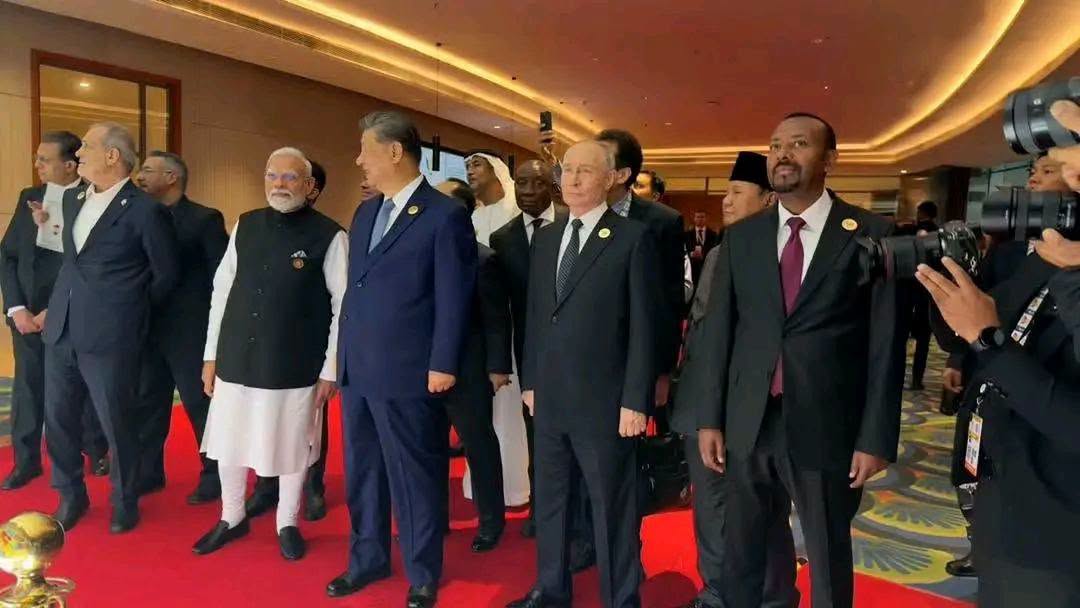
The grouping provides an additional platform for dialogue and cooperation on trade, investment, development finance and other shared priorities. Ethiopia’s participation in the 2026 BRICS Summit in New Delhi further demonstrated its engagement in multilateral discussions and its efforts to advance national priorities within a broader international framework.
The Alternative pillar is equally important. In an international environment where major powers and emerging economies compete for influence, Ethiopia’s approach emphasizes the value of maintaining diversified partnerships rather than limiting its diplomatic and economic engagement to a single bloc.
Its relations with Russia, participation in BRICS and expanding cooperation with countries in the Middle East form part of this broader effort to engage a wider range of international partners.
The objective is to expand opportunities for cooperation while retaining the flexibility to pursue Ethiopia’s interests across different diplomatic and economic platforms.
The Third Russia–Africa Summit in Moscow on October 28–29 offered a recent illustration of this approach. Prime Minister Abiy Ahmed’s participation, together with bilateral diplomatic engagements on the sidelines, provided an opportunity to advance Ethiopia’s relations with Russia and discuss areas of practical cooperation.
The summit also offered a platform for Ethiopia to articulate its development priorities, including food security and productivity, reliable energy supply, and skills and knowledge transfer. Cooperation in these areas is central to the country’s efforts to connect diplomatic engagement with its domestic development agenda.
Adaptive diplomacy, the third pillar, concerns the ability to navigate a changing international environment without losing sight of national interests. It requires flexibility in diplomatic engagement, an understanding of different partners’ interests and the capacity to pursue cooperation across political and economic divides.
Ethiopia’s engagement with different international groupings and bilateral partners reflects this effort to broaden its options and respond to emerging opportunities. The emphasis is on partnerships that can deliver practical value in areas such as investment, technology, energy, trade and food security.
The fourth pillar, Agenda-Setting, concerns Ethiopia’s ambition to contribute more actively to shaping discussions on issues that matter to the country and the wider international community.
The country’s selection to host COP32 in Addis Ababa in 2027 gives it an important platform to bring climate action, development priorities and the concerns of developing countries into a major global discussion. Its engagement within BRICS also reflects an effort to place African development priorities more prominently on the international agenda.
These developments have drawn attention from Ethiopian political and diplomatic scholars. Edosa Degefe, a lecturer in Political Science and International Relations at Bule Hora University, says Ethiopia is strengthening its capacity to negotiate and seek common solutions on international platforms while safeguarding its national interests and positions.
He also points to the country’s selection to host COP32 and its strengthened diplomatic cooperation with Middle Eastern countries as indications of its expanding international engagement.
Delil Ahmed, a lecturer in the Department of Law and Governance at Jimma University, similarly observes that Ethiopia’s diplomatic capacity and participation in international forums have continued to grow.
He identifies the Prime Minister’s engagement at the Third Russia–Africa Summit as one indication of the country’s expanding external relations.
In his assessment, the importance of the summit extends beyond strengthening Africa–Russia relations, offering Ethiopia an opportunity to advance its diplomatic role in the Horn of Africa and the wider international arena.
The scholars’ assessments point to a broader shift in the way Ethiopia is seeking to conduct its foreign relations: not through exclusive alignment with one international partner, but through engagement with different countries and institutions on the basis of shared interests.
This approach is particularly relevant for a country whose development priorities require access to markets, investment, technology, energy cooperation and international partnerships across multiple fronts.
The 4As provide a framework for understanding this diplomatic direction. Active engagement expands Ethiopia’s presence; alternative partnerships widen its choices; adaptive diplomacy helps it navigate changing circumstances; and agenda-setting seeks to give its priorities a place in international deliberations.
Their significance lies not in the formulation itself, but in the ability to translate diplomatic participation into durable partnerships, practical cooperation and outcomes that advance national interests.
For Ethiopia, the task is to ensure that its growing international engagement produces lasting value at home while contributing constructively to regional peace, African development and multilateral cooperation. Its diplomatic trajectory is not simply about being present wherever important international decisions are discussed.
It is about ensuring that Ethiopia’s interests, perspectives and development priorities are part of those discussions—and that the partnerships forged abroad help advance the country’s ambitions.
Ethiopia’s diplomatic engagement is expanding across institutions, regions and strategic partnerships. The 4As articulate the ambition behind that expansion: to engage actively, preserve strategic alternatives, adapt to a changing world and help shape the international agenda rather than merely respond to it.