
From Victory of Adwa to 2050: Can Ethiopia’s Medemer Grand Strategy Advance Africa’s Quest for Economic Sovereignty?
Addis Ababa, November 5, 2026 (FMC) – More than a century after Ethiopia’s victory at Adwa inspired generations of Africans in their struggle against colonial domination, the country is bringing Africa’s political leadership together in Addis Ababa at a defining moment in the continent’s pursuit of economic independence.
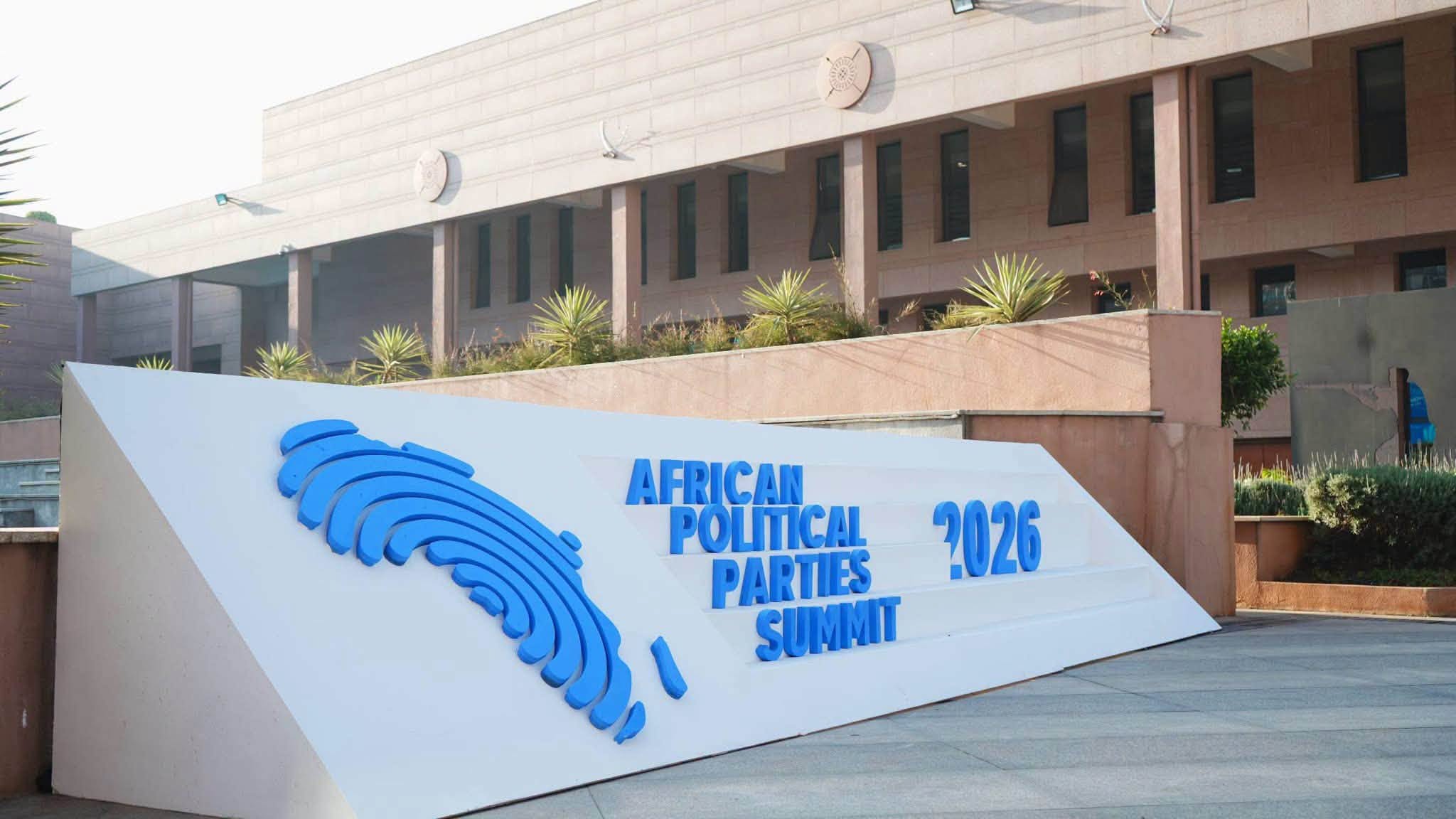
The Second African Political Parties Summit, gathering ruling and opposition parties, political leaders and other stakeholders from across the continent, presents an important opportunity to examine how Africa can translate its historic achievement of political freedom into productive capacity, technological advancement and shared prosperity.
Held at the Adwa Victory Memorial Museum under the theme “Governing for Growth: Political Parties as Architects of Africa’s Economic Future,” the three-day gathering carries a significance that extends beyond political dialogue.
It places before African political parties a fundamental responsibility: to shape development visions, build capable institutions, mobilize national resources and deliver tangible improvements in the lives of their people.
For Ethiopia, hosting this continental conversation also offers an opportunity to share its development experience, its homegrown Medemer philosophy and the ambitious direction of its national transformation.
The historical setting is particularly meaningful. Ethiopia’s victory at Adwa in 1896 was not simply a military triumph; it became a powerful symbol of African dignity, resistance and self-determination.
Its influence reached far beyond Ethiopia, strengthening the spirit of Pan-African solidarity and inspiring anti-colonial movements across the continent and beyond.
The generation that defended political independence established a legacy that continues to shape Africa’s understanding of sovereignty.
Today, the challenge before Africa is to give that sovereignty a stronger economic foundation.
Political independence has not automatically delivered industrial strength, technological self-reliance, financial independence or the capacity to transform the continent’s abundant natural resources into prosperity for its people.
The export of raw materials, dependence on imported technologies, limited domestic processing and persistent infrastructure gaps remain important obstacles to Africa’s economic transformation.
It is against this historical and contemporary background that Ethiopia’s Medemer Grand Strategy, recently announced by Prime Minister Abiy Ahmed and extending to 2050, assumes wider significance.
Rooted in an indigenous Ethiopian philosophy of addition, synergy and collective strength, the strategy seeks to connect national resources, institutional capabilities, human potential and long-term development priorities within a shared national vision.
It reflects an ambition to build on present reforms and investments while preparing the country for the demands and opportunities of the coming decades.
The strategy also provides a timely subject for the African political parties gathering in Addis Ababa. Political parties cannot fulfil their responsibility to society through electoral competition alone.
Whether in government or opposition, they have a role in shaping national development priorities, advancing constructive policy debate, strengthening institutions and ensuring that political commitments translate into better living conditions.
Ethiopia’s experience offers concrete initiatives and policy approaches that African political actors can examine, debate and adapt to their own national circumstances.
One of the most consequential demonstrations of Ethiopia’s development ambition is the Grand Ethiopian Renaissance Dam (GERD), Africa’s largest hydroelectric power project, with an installed generation capacity of 5,150 megawatts.
Inaugurated in September 2025 after years of national mobilization and substantial domestic contributions, the project demonstrates the country’s determination to mobilize its own resources for strategic infrastructure. Its importance extends beyond electricity generation.
Expanded power capacity provides a foundation for industrialization, agricultural modernization, technological development and productive enterprises. It also strengthens Ethiopia’s ability to participate in regional electricity trade and contribute to wider energy cooperation in East Africa.
Ethiopia’s technological ambitions are equally significant. In 2020, the country established Africa’s first Artificial Intelligence Institute, creating an institutional foundation for research, innovation and the development of indigenous technological capabilities.
Its subsequent establishment of a dedicated AI University further demonstrates the ambition to cultivate advanced skills and prepare a new generation for an economy increasingly shaped by artificial intelligence and digital technologies.
This effort is not confined to research institutions. The Five Million Ethiopian Coders initiative seeks to equip young people with digital skills, while the Fayda national digital identification system is building foundational infrastructure for a more connected digital economy.
The Unified MESOB Application, launched in 2026, brings public services from multiple institutions together through a single digital platform. These initiatives demonstrate how technological investment can support institutional modernization, improve public-service delivery and expand economic participation.
The country’s ambitions also extend into space technology. Ethiopia launched its first remote-sensing satellite, ET-RSS1, in 2019, establishing an important foundation for domestic capabilities in satellite-based observation and research.
Such technology has practical applications in agriculture, climate monitoring, forestry, natural-resource management and disaster preparedness. Building scientific and technical expertise in this strategic field is part of a broader effort to develop national capabilities in areas traditionally dependent on external technologies.
Perhaps one of the most striking expressions of Ethiopia’s development approach is the Green Legacy Initiative.
Launched in 2019, the nationwide environmental restoration programme has mobilized millions of citizens in an effort connecting ecological recovery with national development. More than 56.8 billion seedlings had been planted by the end of the 2026 rainy season, according to the programme’s cumulative national target and reported progress.
The significance of the initiative extends beyond the number of seedlings. It connects environmental restoration with watershed protection, soil conservation, agricultural productivity, water security and climate resilience.
It also demonstrates how a national development programme can mobilize citizens on a scale that individual institutions could not achieve alone. Ethiopia’s Green Legacy experience has attracted international attention and cooperation, offering an example of how African countries can organize large-scale environmental action around their own natural-resource priorities.
Ethiopia has also taken a pioneering approach to the transformation of transport and energy consumption. In January 2024, it became the first country in the world to announce a nationwide de facto ban on imports of internal-combustion-engine vehicles.
The policy was designed to reduce dependence on imported petroleum products and encourage the use of the country’s renewable electricity resources.
The subsequent expansion of electric mobility, charging infrastructure and the national E-Mobility Strategy for 2025–2030 demonstrate an effort to turn an ambitious policy decision into a broader transport and industrial transition.
Economic sovereignty, however, requires more than generating electricity or adopting new technologies. It requires the ability to retain greater value from national resources. Ethiopia’s National Precious Metals Refinery, inaugurated at Bole Lemi Special Economic Zone in October 2026, represents an important step in this direction.
With an annual processing capacity exceeding 600 tonnes, the facility is intended to strengthen domestic mineral processing, expand export earnings, create skilled employment and support a more developed value chain.
The underlying principle is central to the Medemer development vision: countries endowed with natural resources should build the capacity to process, refine and manufacture more of what they produce. Exporting raw materials while importing finished products limits the value retained within national economies.
Expanding domestic processing and industrial capabilities can strengthen foreign-exchange earnings, create employment and establish stronger foundations for long-term economic transformation.
Agriculture remains another decisive frontier. Ethiopia’s efforts to expand irrigated farming, mechanization, improved agricultural inputs, wheat production and agricultural commercialization reflect the ambition to mobilize its extensive land and water resources more productively.
Food sovereignty is not merely a matter of increasing output; it requires stronger production systems, improved infrastructure, processing capacity, market access and resilience to climate pressures.
The expansion of agricultural production is therefore closely connected to industrialization, employment and the country’s broader economic reform agenda.
The macroeconomic reform programme is intended to reinforce these transformations by addressing structural constraints, improving the functioning of markets, strengthening the financial system and expanding opportunities for productive investment.
The Homegrown Economic Reform Programme reflects an effort to address longstanding economic imbalances while creating a stronger foundation for private-sector participation, exports and domestic production.
Sustaining these reforms, managing economic pressures and ensuring that growth creates broad-based opportunities remain essential to the country’s long-term ambitions.
Infrastructure development provides another dimension of Ethiopia’s trajectory. Corridor development is transforming urban spaces across dozens of Ethiopian cities, integrating transport infrastructure, public spaces, drainage, lighting and other essential urban facilities.
Meanwhile, the proposed Bishoftu International Airport is designed to expand Ethiopia’s aviation capacity and strengthen its connectivity with African and global markets. These investments reflect an effort to establish the infrastructure required for a larger productive economy and a more integrated continental marketplace.
The airport remains a project under development, but its strategic ambition illustrates the scale of the country’s long-term planning.
Taken together, these initiatives demonstrate the breadth of Ethiopia’s development priorities: energy security, technological innovation, environmental restoration, digital transformation, electric mobility, mineral value addition, agricultural productivity and modern infrastructure.
Some are completed national achievements, others are expanding programmes, and still others are long-term projects.
Their common direction is the effort to build stronger domestic capabilities and mobilize national potential for sustained development.
For African political parties gathered in Addis Ababa, this experience presents an opportunity to move the continent’s development debate from broad declarations to practical questions.
How can countries mobilize domestic resources to finance strategic infrastructure? How can natural wealth be converted into industrial capacity and employment? How can digital technologies and artificial intelligence be developed to address African needs? How can agricultural potential be translated into food security and competitive production? How can environmental restoration become a sustained national development undertaking? And how can political parties build the institutional continuity required to carry national priorities beyond electoral cycles?
These are questions that demand serious engagement from both governing and opposition parties. Development requires political competition to coexist with constructive national dialogue, policy debate and a shared commitment to the public interest.
Governments must demonstrate results and accountability, while opposition parties have an important role in scrutinizing policies, proposing alternatives and strengthening the quality of national decision-making. Across the political spectrum, the ultimate measure of leadership must be its contribution to people’s lives.
Ethiopia’s Medemer philosophy places synergy and collective strength at the centre of its development proposition. Its relevance to Africa’s wider ambitions lies in the idea that national transformation cannot be achieved through isolated efforts.
It requires the coordinated contributions of citizens, institutions, businesses, researchers, political actors and development partners. Each country must identify its own strengths and circumstances, but the exchange of practical experiences can help African nations accelerate progress and avoid repeating one another’s mistakes.
The Addis Ababa summit is therefore more than a meeting of political organizations. It is an opportunity for Africa’s political leadership to reconsider the relationship between politics and development, and to examine how parties can become institutions that help build productive economies, capable states and inclusive societies.
Ethiopia’s experience provides a substantial body of initiatives for that exchange—not as a formula to be copied wholesale, but as practical examples from which other countries can draw relevant lessons and develop their own approaches.
The historical symbolism of Adwa gives this undertaking a deeper meaning. The victory demonstrated that African sovereignty could be defended through unity, determination and collective action.
The contemporary challenge is to build the economic and technological capabilities that make sovereignty meaningful in everyday life. It is a transition from defending independence to strengthening the material foundations of freedom.
The road to 2050 will demand consistency, institutional strength, peace, accountability and the ability to confront economic and social challenges without losing sight of long-term objectives.
The success of the Medemer Grand Strategy will ultimately depend on its capacity to translate national ambition into productive industries, technological innovation, employment, food security, accessible public services and improved living standards.
From Adwa to the Medemer Grand Strategy, Ethiopia’s historical pursuit of sovereignty continues to inform its contemporary development ambitions.
The country that became a symbol of African resistance is now advancing initiatives in energy, technology, environmental restoration, industrialization and domestic resource mobilization that offer important experiences for the continent’s economic transformation.
As ruling and opposition parties deliberate in Addis Ababa on how to govern for growth, the opportunity before Africa is to turn the exchange of political ideas into practical development action.
The continent does not lack resources, talent or ambition. It needs institutions and political leadership capable of mobilizing these strengths, adding value to its resources and creating opportunities for its people.
The question is not whether Africa can imagine economic sovereignty. It is whether its political leadership can build the institutions, policies and productive capabilities to achieve it.
Ethiopia’s Medemer Grand Strategy to 2050 offers one national experience for that continental conversation. The challenge now is to translate the lessons, aspirations and commitments emerging from Addis Ababa into measurable progress across Africa.