
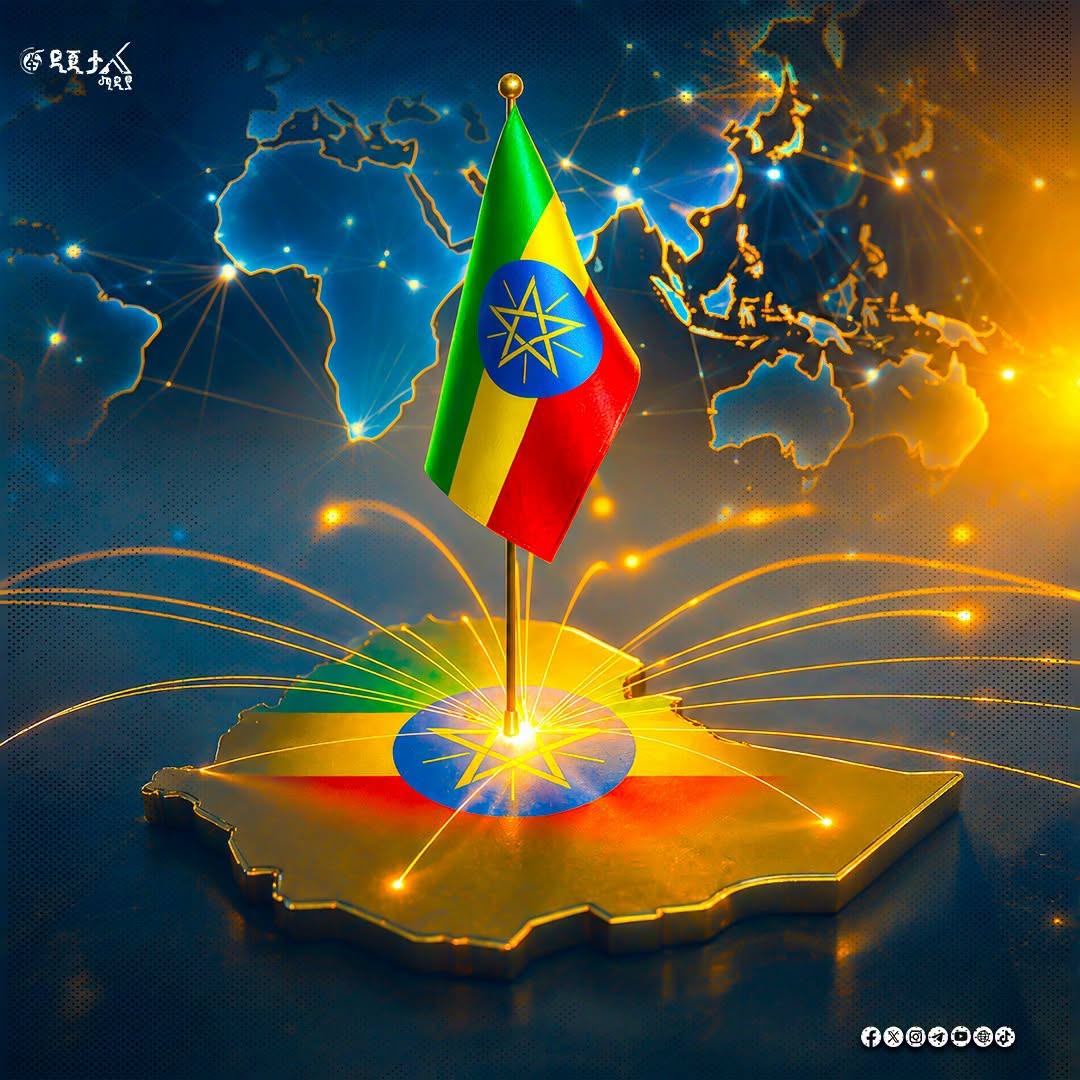
Beyond Congratulations: What Africa’s Messages to Ethiopia Reveal About a Continent Watching Its Next Chapter
Addis Ababa, October 7, 2026 (FMC) — There is a language of diplomacy that rarely says everything directly.
A congratulatory message may appear to be protocol. A few carefully chosen words about friendship, cooperation, peace or prosperity may appear routine. But when such messages arrive from across a continent, from presidents and continental institutions to senior officials and citizens from different walks of life, their cumulative meaning can extend well beyond ceremony.
That is what makes the African response to Prime Minister Abiy Ahmed’s re-election particularly noteworthy.
Since Ethiopia’s newly constituted Parliament re-elected Abiy for another five-year term and the country entered a new parliamentary and governmental chapter, messages have come from across Africa. Presidents have congratulated him. African Union leaders have spoken of continental cooperation. Senior officials and other African voices have joined the expressions of goodwill.
Taken together, they form something more consequential than a collection of congratulations: a diplomatic snapshot of the expectations surrounding Ethiopia as it begins another political and developmental chapter.
The most striking feature is that African messages have not been confined to personal wishes for the Ethiopian Prime Minister.
They have repeatedly spoken about Ethiopia itself—its development, its economic rise, its national aspirations, its regional relationships and its place in Africa.
That distinction matters.
The Chairperson of the African Union Commission, Mahmoud Ali Youssouf, placed Ethiopia’s political moment within a distinctly continental frame, emphasizing the country’s special place in the African family as host of the AU headquarters and what he described as the diplomatic capital of Africa. He linked continued cooperation with the Ethiopian government to Africa’s integration, peace, security and development agenda.
That is not merely a message to an individual leader.
It is recognition of Ethiopia’s institutional and diplomatic weight within the continental system.
The current AU Chairperson and President of Burundi, Évariste Ndayishimiye, likewise expressed hopes for the enduring growth, unity and prosperity of the Ethiopian people and linked his message to sustainable peace, regional stability, stronger cooperation and shared economic development across Africa.
The diplomatic vocabulary is revealing.
Growth. Unity. Peace. Stability. Integration. Cooperation. Shared development.
These are not isolated themes. They are the vocabulary of an Africa confronting a rapidly changing geopolitical and economic environment and looking for stronger continental capacity to shape its own future.
Kenya’s President William Ruto offered another revealing formulation, describing Abiy’s renewed mandate as a vote of confidence in his leadership and vision for Ethiopia, while expressing Kenya’s readiness to work closely with Ethiopia in advancing shared interests for the benefit of the two countries, the region and the wider global community.
Again, the emphasis moves beyond the individual congratulations.
It points toward expectations of Ethiopia as a consequential regional actor whose trajectory has implications beyond its borders.
Tanzania’s President Samia Suluhu Hassan similarly framed her message around the relationship between the two countries and the broader African interest, emphasizing cooperation for the mutual benefit of their peoples, their nations and the continent. Djibouti’s President Ismaïl Omar Guelleh, meanwhile, highlighted Ethiopia’s economic rise while reaffirming the friendship and solidarity between the two “sister nations.”
The geography of these messages is itself significant.
From the Horn of Africa to East Africa and from the continental institutions in Addis Ababa to governments farther across the continent, the response reflects an Africa that has a direct stake in Ethiopia’s stability, economic performance and regional engagement.
For neighboring countries, Ethiopia’s trajectory is inseparable from questions of trade, connectivity, security, infrastructure, investment and regional stability.
For the wider continent, Ethiopia carries another layer of significance: it is home to the headquarters of the African Union and has historically occupied an exceptional place in the institutional and diplomatic history of modern Africa.
That is why the response to Abiy’s re-election cannot be read solely through the narrow lens of bilateral diplomacy.
It is also a conversation about Africa’s own future.
The messages repeatedly point toward cooperation rather than isolation, shared interests rather than fragmented interests, and development that is understood not simply in national terms but through regional and continental interdependence.
Somalia’s President Hassan Sheikh Mohamud, for instance, expressed a desire for stronger Ethiopia-Somalia relations and continued cooperation for peace, stability and mutual prosperity in the Horn of Africa.
These messages are particularly significant because they come from a neighborhood in which Ethiopia’s political and economic weight is deeply intertwined with the fate of the wider Horn.
They also underline an important diplomatic reality: Ethiopia’s domestic political direction is watched closely by countries whose own security and economic calculations are connected to what happens in Addis Ababa.
But the response has not been limited to presidents and formal state communications.
African Union leadership, senior government officials and people from different African countries and walks of life have also joined the expressions of goodwill surrounding Ethiopia’s new chapter.
That broader participation matters because diplomacy is no longer conducted exclusively through presidential palaces and foreign ministries. Political relationships increasingly acquire depth through institutions, business communities, civil society, professionals, media, academics, youth and ordinary citizens whose interests cross national boundaries.
The breadth of the African response therefore provides a wider lens through which to view Ethiopia’s new five-year political cycle.
It suggests that the expectations surrounding the country extend beyond who occupies the Prime Minister’s office.
There is interest in what Ethiopia does with its economic transformation.
There is interest in whether its development momentum can translate into wider regional opportunity.
There is interest in its contribution to African peace and security.
There is interest in its role in continental integration.
And there is interest in how one of Africa’s largest and most consequential countries positions itself in a world undergoing profound geopolitical realignment.
In that sense, the congratulatory messages have become diplomatic signals.
They signal expectations of continued engagement. They signal an appetite for stronger economic and political cooperation. They signal that stability in Ethiopia matters to the wider Horn and that Ethiopia’s economic trajectory is being watched beyond its national borders.
Most importantly, they place Ethiopia’s new political chapter within an unmistakably African frame.
The message from the continent is not simply: congratulations on another term.
It is closer to this: Ethiopia remains important to Africa’s collective story, and the choices made in Addis Ababa will continue to resonate far beyond Addis Ababa.
That is particularly consequential as Ethiopia enters a new five-year period under a government that has repeatedly placed national transformation, economic sovereignty, regional influence, African integration and a stronger international role at the center of its political narrative.
Africa, in turn, appears to be watching not merely who leads Ethiopia, but what Ethiopia does with the opportunity ahead.
The congratulations, therefore, are only the visible surface.
Beneath them lies a wider diplomatic conversation—about an Ethiopia expected to remain engaged, increasingly consequential and deeply connected to the continent’s search for peace, prosperity, integration and greater strategic agency.
And perhaps that is the most revealing part of the African response.
When a continent speaks to one of its most consequential states, the words may begin as congratulations to a leader.
But they can also become a statement about the place of that country in Africa’s future.