
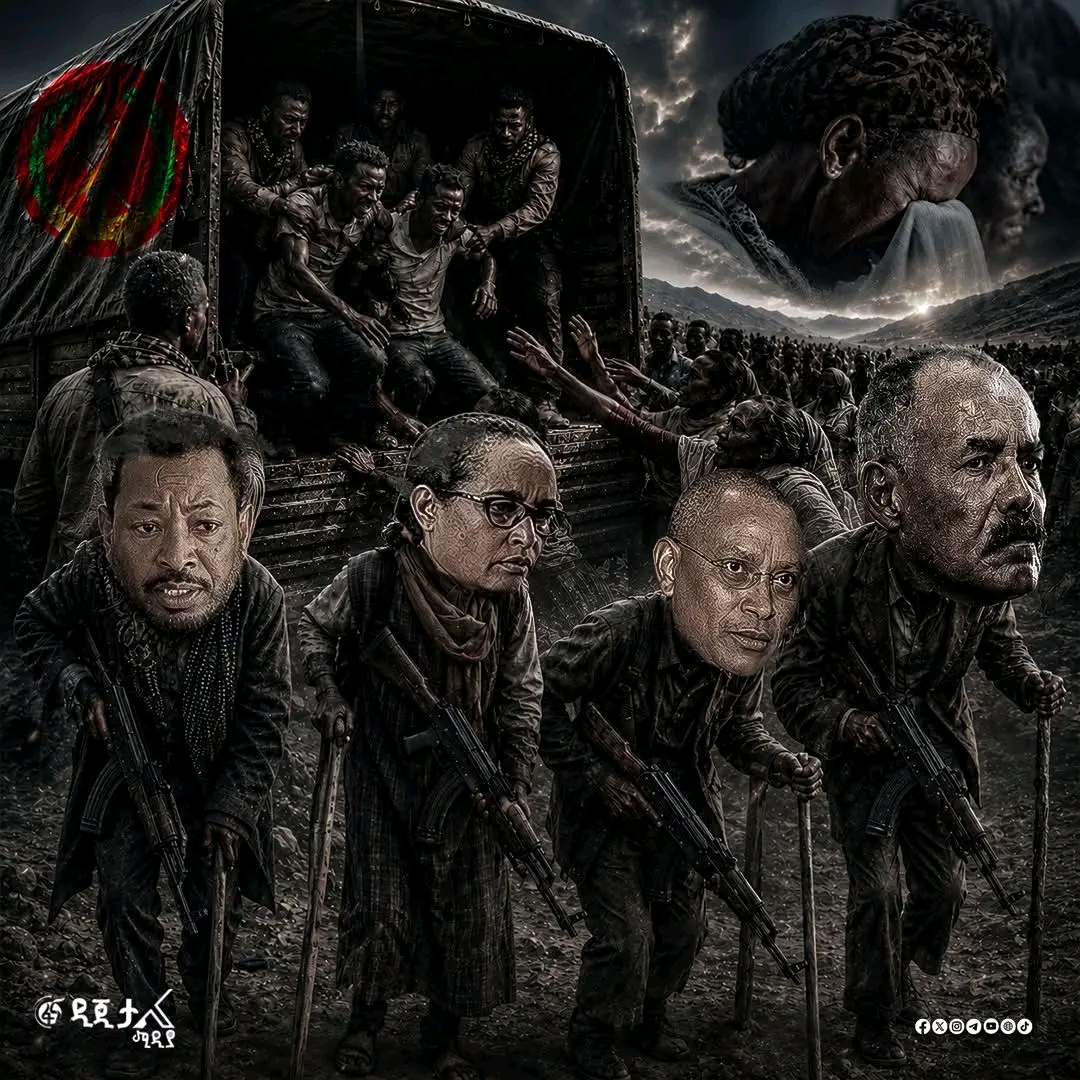
Breaking the Walls of Division and Planting the Trees of Ethiopian Unity
Addis Ababa, August 14, 2026 (FMC) — For three decades, Ethiopia was made to walk through a political maze deliberately crowded with suspicion, division and fear. The walls were not built overnight. They were raised brick by brick through divisive narratives, identity politics and a system that too often treated the country’s immense diversity not as a source of strength, but as a weapon for political survival.
At the center of that dark political architecture stood the banned, illegal and now defunct TPLF group, whose decades-long rule left a legacy that cannot simply be erased by the passage of time.
Its politics turned differences that could have enriched Ethiopia into fault lines to be exploited. Ethnicity, religion and regional identity were repeatedly pushed into the foreground, while the deeper bonds of history, culture, shared sacrifice and coexistence that held Ethiopian communities together were pushed into the shadows.
The damage was never merely political. It seeped into the very fabric of society.
A nation whose people had lived, traded, worshipped, intermarried and stood together through generations was increasingly encouraged to look at itself through fractured mirrors. Instead of seeing fellow Ethiopians, communities were too often taught to see political categories. Instead of dialogue, suspicion gained ground. Instead of fraternity, confrontation was cultivated.
The result was a wound inflicted on the social fabric of the country.
And that wound was accompanied by another legacy: the alleged systematic capture of national resources for the benefit of narrow political and economic interests.
During the former ruling order, public institutions and economic structures became deeply entangled with a system accused of patronage, corruption and systematic economic exploitation. Resources generated by the labor of ordinary Ethiopians, investment opportunities and foreign currency were supposed to strengthen the national economy and improve citizens’ lives. Yet the material presented in this commentary depicts a system in which such resources were increasingly concentrated within privileged networks.
The consequences were painfully tangible.
Capital that should have strengthened productive investment, public services and national development was allegedly captured by a narrow circle. Foreign currency that could have expanded the productive economy became entangled in opaque networks of privilege. Loans, aid and domestic revenues intended to advance social and economic development were alleged to have found their way into private pockets and undisclosed accounts.
When public wealth is captured by a few, poverty is no longer simply an economic condition. It becomes the shadow cast by political choices.
The ordinary Ethiopian pays the price through lost opportunities, diminished services, unemployment, displacement and the daily struggle to secure a livelihood. A country’s wealth can be vast, yet its people can remain poor when the machinery meant to distribute opportunity is captured by those who treat public office as private property.
Even projects born from extraordinary national sacrifice were not beyond the reach of this culture.
The Grand Ethiopian Renaissance Dam emerged as one of the clearest symbols of Ethiopia’s collective determination. Millions of citizens contributed from their modest earnings because they understood that national development could not be outsourced. Yet the material underlying this commentary maintains that major project contracts during the former ruling period were sometimes awarded to inexperienced contractors, contributing to waste, delays and inefficient use of resources.
The lesson is larger than any single project.
When public resources are squandered, ordinary citizens pay the bill.
The farmer pays through lost opportunity. The young person pays through unemployment. Families pay through inadequate services. The country pays through delayed development.
Political division and economic exploitation therefore cannot be viewed as unrelated legacies. They are two faces of the same political logic: a citizenry divided is easier to control, and a state captured by narrow interests is easier to exploit.
That is why confronting the legacy of the illegal and outlawed TPLF group cannot be reduced to a contest between political factions. It is fundamentally about deciding what kind of country Ethiopians want to build and what kind of political culture they are prepared to leave behind.
The choice before Ethiopia is increasingly clear.
The country can continue nurturing the poisonous politics of separation, or it can reclaim the deeper Ethiopian tradition of coexistence.
The walls of suspicion must come down.
The language of permanent grievance must give way to a language of shared citizenship. Diversity must no longer be turned into a political weapon. Ethiopia does not need its citizens to erase their identities; it needs them to carry those identities with confidence while recognizing that they belong to a larger national home.
This is where the struggle against the divisive legacy of the banned TPLF group must be understood correctly. It is not a struggle against the people of Tigray region. Quite the opposite. Separating the people from a political organization that claims to speak in their name is essential to restoring the people’s political space and dignity.
The people of Tigray region deserve peace. They deserve development. They deserve accountable institutions, functioning public services and economic opportunity. Above all, they deserve a future in which the aspirations of their children are not repeatedly placed at the altar of political ambition.
They deserve schools instead of trenches, opportunity instead of forced political loyalty, and development instead of another cycle of destruction.
The same principle applies to the whole country.
Ethiopia’s future cannot be built by teaching one generation to fear another. It cannot be secured by reopening old wounds whenever political interests demand it. And it cannot advance while divisive narratives continue to turn citizens against one another.
The antidote is not another wall.
It is connection.
The country’s shared history, intertwined cultures, religious traditions, economic interests and countless stories of ordinary people living together provide a far stronger foundation than any political narrative designed to divide them.
That foundation must now be strengthened.
The defunct TPLF group’s divisive political architecture may have left deep scars, but scars do not have to remain open wounds. A nation can confront its past without becoming imprisoned by it. It can remember without perpetuating hatred. It can hold perpetrators accountable while refusing to condemn entire communities for the actions of political organizations.
That is where the principle of national unity becomes more than a slogan. It becomes a development strategy, a peace strategy and a national survival imperative.
Ethiopia cannot afford another generation consumed by the politics of fragmentation.
The country needs roads that connect communities, institutions that protect citizens, markets that create opportunity and a political culture that rewards cooperation rather than confrontation. It needs young people building businesses and technologies, not being turned into instruments of political violence. It needs communities competing in education, innovation and prosperity—not in grievance and destruction.
The task, therefore, is both simple and profound: tear down the divisive fences and plant the great trees of solidarity.
Trees take root slowly. They require patience, care and collective effort. But once they grow, their branches extend far beyond the hands that planted them, offering shade to generations yet unborn.
So too must Ethiopia’s renewed unity.
The country has endured political storms, economic hardship and cycles of conflict. Yet its deepest strength has always rested elsewhere—in the resilience of its people and in the bonds that have survived every attempt to break them.
Those bonds must now be nurtured deliberately.
The fences of division can be dismantled. The politics of fear can be rejected. The narratives that turn neighbors into enemies can be exposed and replaced with a stronger story: one of shared citizenship, mutual respect and common destiny.
The walls that separated Ethiopians can be broken. What must rise in their place is something stronger—a national canopy under which every Ethiopian can stand, contribute and prosper.