
Bridging Distance, Awakening Possibility: Ethiopia’s New Journey Through the Countryside
842
Addis Ababa, August 21, 2026 (FMC) — Across Ethiopia, a new rural development story is taking shape—one in which the measure of progress is moving beyond the buildings, roads and facilities that rise from the ground to the changes they bring to the people who live around them.
The vision was reaffirmed by the Office of the Prime Minister today, emphasizing that rural development must ultimately be judged by how people’s lives change as a result. At the center of this approach is the Rural Corridors Initiative, which seeks to improve connectivity, create better living conditions and unlock economic opportunities within rural communities.
The ambition is broader than a collection of individual projects. It is to move away from fragmented interventions and toward rural areas that are productive, connected, resilient and attractive places to live and work.
That vision is increasingly being reflected in developments reported across different parts of the country.
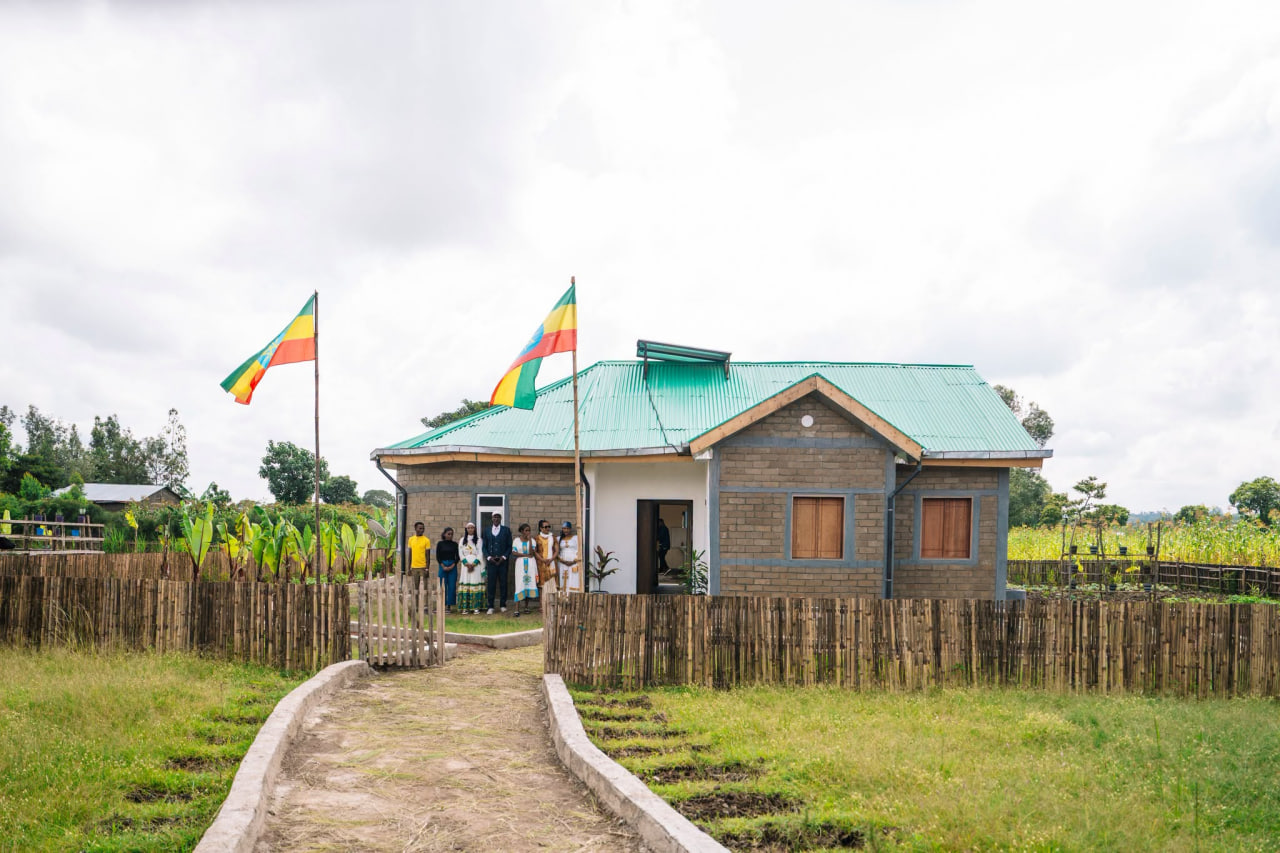
In Central Ethiopia, where the rural-corridor model began taking visible shape in 2025, model villages were developed using locally available materials and designed around healthier and more dignified living conditions for farmers. The surrounding development was being linked with irrigation, maize seed multiplication, and fruit and vegetable production, bringing housing improvements and agricultural productivity into the same development picture.
By October 2025, model rural villages had been handed over to residents in parts of Central Ethiopia. The homes incorporated solar power, biogas systems, separate living spaces, toilets and service quarters, alongside separate animal shelters intended to improve hygiene and living conditions. The government indicated that the model was intended to expand as part of a wider effort to raise rural living standards.
The approach has since extended beyond its initial areas.
In the South West Ethiopia Peoples’ Region, a model development site brought together modern residential units, electricity, agricultural activities, livestock shelters, chicken coops, beehives and diversified fruit and vegetable gardens. Solar power and biogas were also incorporated, illustrating an integrated approach in which housing, energy and livelihoods are developed together rather than separately.
In Oromia and other regions, rural development has likewise been connected with agricultural productivity and wider economic activity. Government reporting has highlighted mechanized farming clusters, irrigation development and upgraded routes linking productive agricultural areas with other parts of the country, demonstrating how rural transformation is increasingly being conceived as a combination of production, connectivity and improved living conditions.
The same direction has emerged in the north and east. In the Amhara Region, rural-corridor model homes have been linked with access to healthcare, electricity and clean water, while community participation has been incorporated into construction through the use of local materials alongside modern engineering approaches. The experience was presented as part of a broader effort to extend modernization, services and opportunity beyond urban centers.
This widening geographic footprint matters because it shows that the rural-corridor idea is being applied not as a single standardized construction project, but as a development approach capable of responding to different local conditions.
From connectivity to opportunity
A central element of the strategy is connectivity.
For rural communities, connectivity can determine how easily agricultural produce reaches markets, how quickly people reach essential services and how effectively local economic activity can link with wider markets.
Recent results from the Rural Connectivity and Accessibility for Food Security Program illustrate the scale of this effort. By July 2026, 1,123 infrastructure projects across 126 districts had been completed and put into operation, benefiting more than 3.4 million rural residents. The reported improvements have eased the movement of agricultural produce to markets, brought healthcare and education closer to communities, reduced post-harvest losses and generated employment opportunities.
This gives practical meaning to the idea of rural corridors.
A road is no longer viewed only as a route between two points. Connectivity becomes part of a larger chain—linking farmers with markets, communities with services and productive areas with wider economic networks.
The transformation therefore begins with physical connections but does not end there.
Building a different rural environment
The emerging model also places unusual emphasis on the environment in which rural families live.
The model villages reported across Ethiopia have incorporated elements ranging from separate animal shelters and sanitation facilities to solar energy, biogas, gardens and livestock-related activities. Such features point to an attempt to bring together household welfare, clean energy, agricultural production and environmental considerations within the same rural development space.
This is important to the broader objective articulated by the Prime Minister’s Office: making rural communities not merely places of agricultural production, but places where people can live and work with greater dignity and opportunity.
The strategy is also being linked with agricultural modernization. In Central Ethiopia, the early model-village developments were accompanied by irrigation and diversified agricultural production, while developments elsewhere have incorporated livestock, beekeeping, horticulture and other livelihood activities.
The result is an increasingly integrated picture of rural development—housing alongside production, energy alongside livelihoods, and connectivity alongside market access.
A transformation measured in lives
The deeper significance of the initiative lies in its attempt to change the definition of rural development itself.
For decades, development has often been measured through the physical things that can be counted: kilometers of roads, buildings completed, facilities constructed or hectares developed.
Ethiopia’s rural-corridor approach is putting another question alongside those measurements:
What difference do those investments make in the lives of rural people?
That question is at the heart of the Prime Minister’s Office message today.
It also helps explain why the initiative has increasingly brought together elements that are traditionally treated as separate development sectors. A rural household’s quality of life is shaped not by housing alone, but also by access to energy, sanitation, water, connectivity, productive land, markets and opportunities to generate income.
The emerging model seeks to bring these pieces closer together.
The experience recorded since 2025—from the first model villages in Central Ethiopia to developments in the South West, Oromia, Amhara and other parts of the country—suggests an effort to turn that principle into a more visible national development pattern.
From fragmented interventions to a connected vision
The significance of the Rural Corridors Initiative, therefore, may ultimately lie less in any individual village or infrastructure project than in the development logic connecting them.
The strategy seeks to replace isolated interventions with a more coherent rural landscape—one in which infrastructure supports production, production creates opportunity, improved living conditions strengthen communities, and connectivity allows rural economies to engage more fully with the wider economy.
It is a vision that recognizes that rural transformation cannot be achieved through a single intervention.
It requires roads that connect, homes that improve living conditions, energy that powers daily life, agricultural systems that create productivity, and economic opportunities that give communities a stronger foundation for the future.
Across Ethiopia’s regions, that vision is beginning to acquire a physical form.
And as the latest message from the Prime Minister’s Office makes clear, the ultimate destination is not simply a better-built countryside.
It is a countryside where distance gives way to connection, connection opens the door to opportunity, and development is ultimately reflected in better lives.