
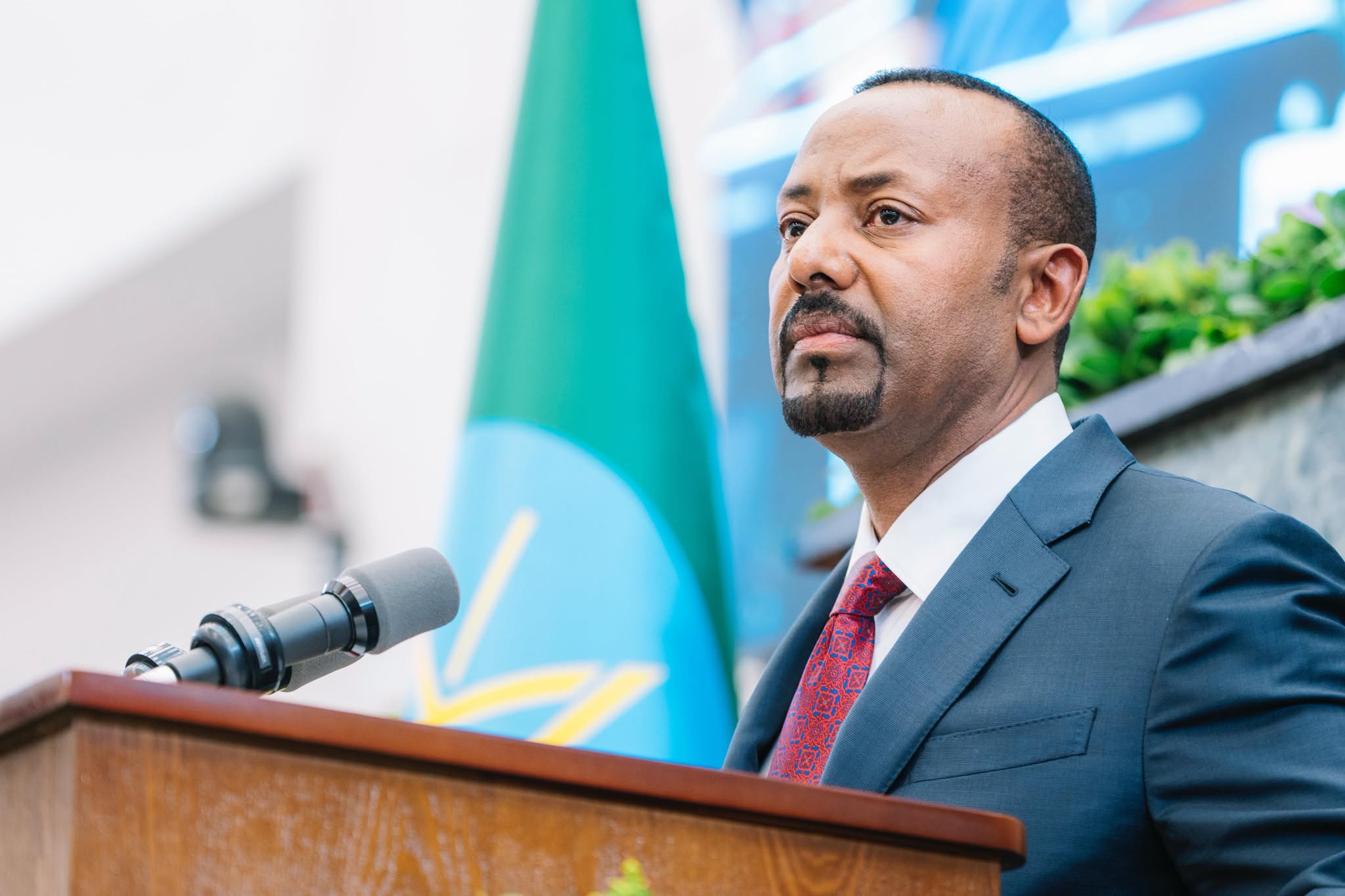
Ethiopia’s Resilience Rests on Unity, Preparedness and Medemer – Prime Minister Abiy
Addis Ababa, October 5, 2026 (FMC) — Ethiopian Prime Minister Abiy Ahmed has underscored national unity, strategic preparedness and the indigenous Medemer philosophy as foundations of Ethiopia’s resilience, warning that the country must remain vigilant as profound geopolitical changes reshape its neighborhood and the wider region.
Addressing the inaugural proceedings of Ethiopia’s 7th House of Peoples’ Representatives today, PM Abiy said Ethiopia’s enduring national identity had withstood internal challenges and external invasions because Ethiopians have continued to move forward through a path of unity and collective strength.
“Ethiopianism has not been weakened by challenges or broken by foreign invasions because Ethiopians are walking together on the path of Medemer,” he said.
Reflecting on Ethiopia’s historical experience, the Prime Minister said the country must draw lessons from periods when inadequate preparation exposed it to avoidable costs. He pointed to the Second Italian Invasion as an example of the consequences of failing to prepare after a historic victory.
The invading force that had returned from the Battle of Adwa defeated had spent decades preparing before launching its renewed campaign, while Ethiopia, he said, failed to maintain the same level of preparedness after its victory.
“There is no darker day than confronting a front for which we are unprepared,” PM Abiy said, stressing the need to ensure that such circumstances do not recur.
He challenged Ethiopians to consider how prepared the country is today and urged a shift away from dwelling on one another’s shortcomings toward looking outward and understanding the broader environment in which Ethiopia operates.
PM Abiy said the geopolitical landscape surrounding Ethiopia is changing rapidly, with developments unfolding across neighboring countries, the Horn of Africa, the Red Sea, the Gulf and the wider Middle East.
Ethiopia’s position in East Africa, he noted, presents both challenges and opportunities, making strategic awareness and preparedness essential.
“It is impossible for the rain of change falling in East Africa to pass without reaching us,” he said, stressing that regional transformations will affect Ethiopia whether the country seeks them or not.
The Prime Minister said the current geopolitical environment is changing at a rapid pace and requires Ethiopia to confront emerging challenges with determination.
“If we can confront this complexity with strength, it is certain that we will prevail; if we become weak and complacent, the cup we will drink will be that of defeat,” he said.
PM Abiy also linked Ethiopia’s long-term stability to the gradual construction of institutions and a political order suited to the country’s circumstances.
He said a political system cannot be built overnight, but develops through a process requiring patience, perseverance, wisdom and composure.
According to the Prime Minister, previous political systems attempted to address Ethiopia’s challenges through ideas and models borrowed from elsewhere, leaving the country exposed to repeated difficulties.
He said the search for an approach capable of addressing Ethiopia’s own challenges led to an indigenous political philosophy: Medemer.
“We examined what kind of idea could solve Ethiopia’s problems, and we found an indigenous idea capable of addressing Ethiopia’s challenges. That is Medemer,” PM Abiy said.
He further argued that Ethiopia’s national identity has endured not because the country has been free of challenges, political divisions or external threats, but because Ethiopians have continued to find strength in coming together.
“Ethiopianism that has not been weakened by challenges, divided by political elites or broken by foreign invasions has endured because Ethiopians are walking on the path of Medemer,” he said.
The Prime Minister’s remarks came as Ethiopia formally opened the first working year of its 7th parliamentary term and began the formation of the new Medemer Government following the June 1, 2026 General Election.