
Ethiopia’s Rise as the Region’s Anchor State Under the Medemer State
Addis Ababa, September 28, 2026 (FMC) — East Africa is a region where geography, security, trade, energy and diplomacy intersect with unusual intensity. At the centre of that intersection, Ethiopia has been steadily expanding the reach of its national interests and the weight of its regional engagement.
Under the Medemer State, this diplomatic trajectory has been guided by four priority areas—Citizens First, Neighbors, Regional Cooperation and Global Partnership—and anchored by the four As articulated by Prime Minister Abiy Ahmed: Active, Alternative, Adaptive and Agenda-Setting. Together, they provide a framework through which Ethiopia has sought to connect national interests with regional responsibility and wider global engagement.
The results are increasingly visible across the Horn and beyond.
Ethiopia’s regional role begins with its immediate neighborhood, where peace and security remain inseparable from its own stability and development. Its long-standing contribution to peace operations and its engagement in Somalia, South Sudan and Sudan have kept Ethiopia deeply involved in efforts to address regional crises through African and regional mechanisms.
Through the African Union and IGAD, Ethiopia has continued to participate in mediation, dialogue and regional peace and security initiatives. In 2026, the two institutions have remained engaged on Sudan, South Sudan and Somalia, underscoring the interconnected nature of security across the Horn.
But Ethiopia’s regional engagement increasingly extends beyond security.
Energy has become an important instrument of regional connectivity. Ethiopia’s expanding renewable-energy capacity has enabled electricity exports to neighboring countries, including Sudan, Djibouti and Kenya, while cross-border power integration is becoming an increasingly important part of Eastern Africa’s economic cooperation.
The Grand Ethiopian Renaissance Dam is therefore more than a national power project. Its generation capacity forms part of Ethiopia’s wider ambition to expand renewable energy and contribute to a more interconnected regional energy system.
The same principle applies to trade and infrastructure. Ethiopia’s economic geography makes efficient corridors, logistics, markets and cross-border connectivity central to its development. Strengthening these links also advances the wider African vision of an integrated market under Agenda 2063 and the African Continental Free Trade Area.
At the centre of this regional and continental engagement stands Addis Ababa, home to the African Union and the United Nations Economic Commission for Africa. The city’s diplomatic importance gives Ethiopia a unique platform from which regional, continental and global questions are continuously discussed.
Yet Ethiopia’s diplomatic gains are not confined to its immediate neighborhood.
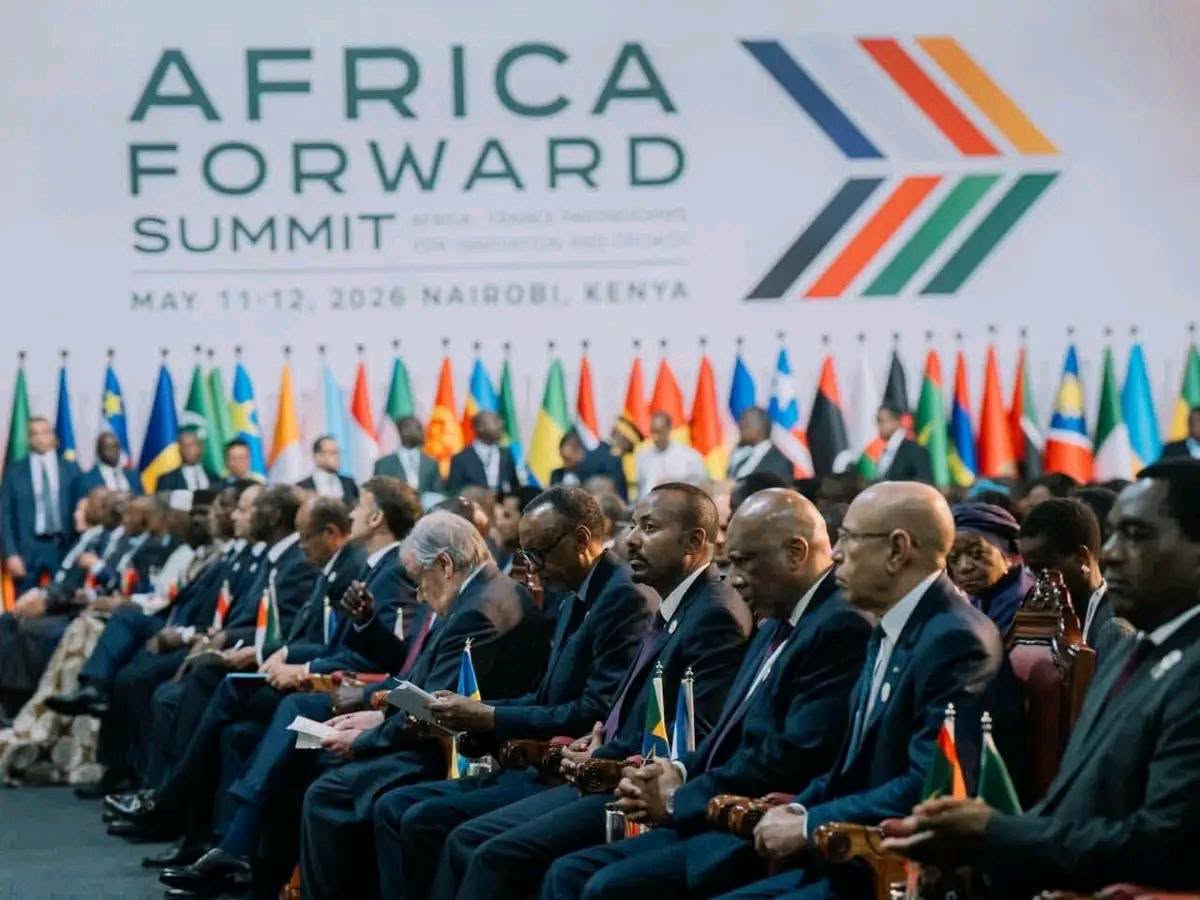
Its accession to BRICS in 2024 expanded its engagement with major emerging economies and the wider Global South, while its broader diplomatic network now spans Africa, Asia, the Middle East, Europe and North America.
This reflects the Alternative dimension of Ethiopia’s diplomacy: widening partnerships and strategic options in a changing international environment. The Active dimension is visible in the sustained expansion of engagement; the Adaptive dimension in Ethiopia’s response to rapidly changing regional and global realities; and Agenda-Setting in its efforts to place Ethiopian, African and developing-country priorities on wider international tables.
That agenda increasingly includes regional connectivity, renewable energy, climate resilience, development finance, African integration, global governance reform and maritime connectivity.
Ethiopia’s environmental diplomacy offers another illustration. The Green Legacy Initiative, launched as a national restoration programme, has increasingly acquired regional and continental relevance. In 2026, IGAD recognized the regional importance of Ethiopia’s environmental efforts and expressed support for Ethiopia’s COP32 presidency.
The citizen-first principle gives this wider diplomacy its purpose.
Diplomatic engagement is increasingly linked to trade, investment, technology, tourism, diaspora relations, employment and opportunities for Ethiopians. In this sense, foreign policy is being connected more directly to national development and the interests of citizens.
From there, the logic moves outward: stable relations with neighbors support national security; regional cooperation expands markets and connectivity; and wider global partnerships create additional opportunities for investment, technology, trade and diplomatic engagement.
This is where Ethiopia’s emerging regional role becomes most visible.
An anchor state is not defined simply by geography or size. Its weight is reflected in the systems around it—the peace processes in which it participates, the markets and infrastructure it helps connect, the energy it can supply, the institutions it helps strengthen and the regional questions it helps bring to wider forums.
Across these areas, Ethiopia’s diplomatic trajectory has acquired greater breadth.
Its regional security engagement connects the Horn’s stability with Ethiopia’s own interests. Its energy and infrastructure ambitions create new forms of regional interdependence. Its position at the heart of African diplomacy gives it a platform for continental engagement. Its BRICS membership and wider partnerships have expanded its global diplomatic space. And its increasingly active role in discussions on development, climate, integration and connectivity has given national priorities a broader regional and international setting.
Under the Medemer State, therefore, diplomacy has increasingly become an instrument for translating national capacity into regional value and regional engagement into wider partnerships.
The 4As provide the diplomatic anchors. Citizens First, Neighbors, Regional Cooperation and Global Partnership define the priorities.
Together, they describe a trajectory in which Ethiopia is seeking not merely to occupy space in East Africa, but to help anchor its stability, connectivity and shared prosperity.
The measure of an anchor is ultimately not how prominently it appears on a map, but how much stability, connection and possibility gathers around it.