
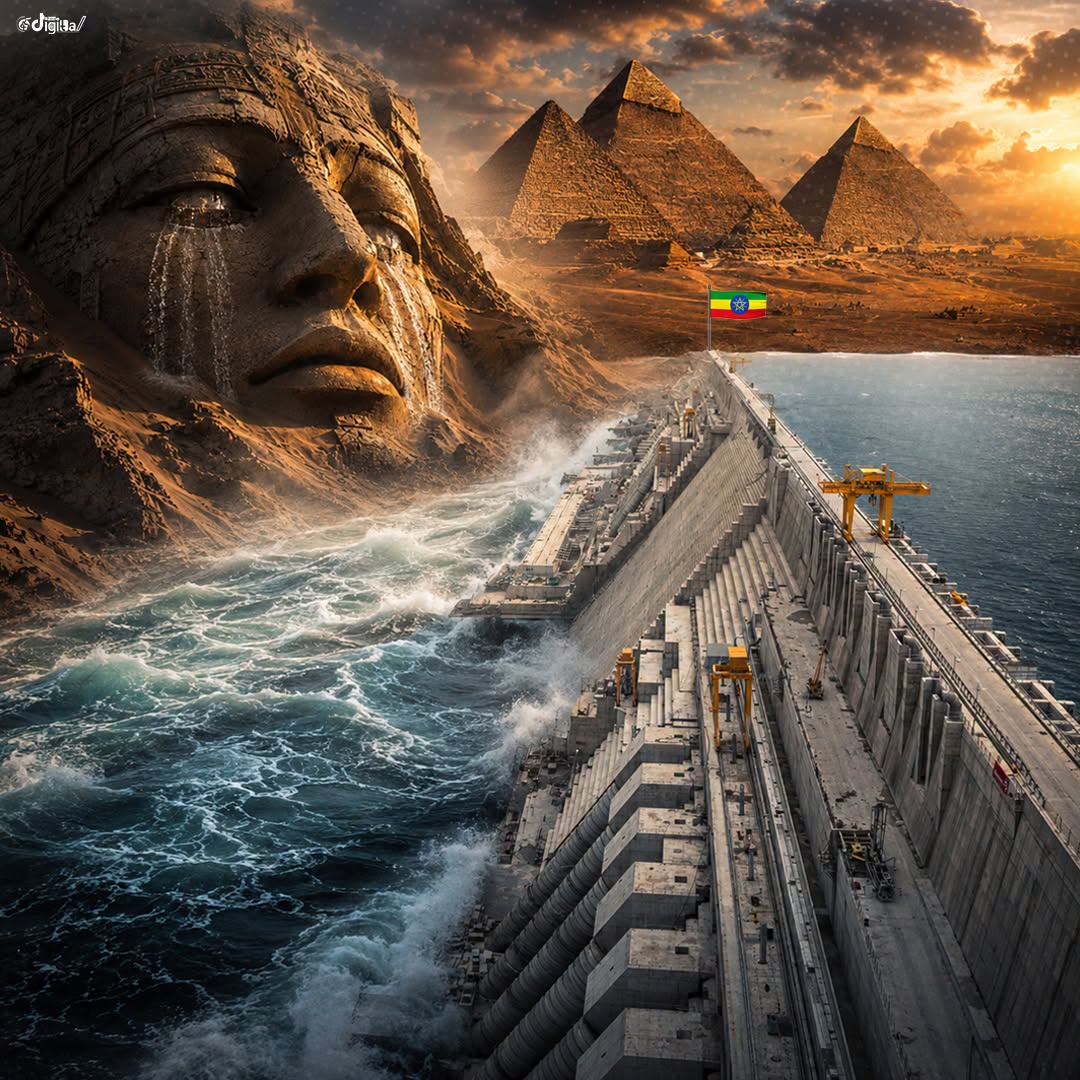
Exposing Cairo’s Destabilization Conspiracy Against Ethiopia and the Entire Horn of Africa
Addis Ababa, October 22, 2026 (FMC) — Egypt’s destabilizing policy in the Horn of Africa has not ended. It has grown more aggressive, expanded its reach, and adapted its methods to sustain regional instability and advance Cairo’s strategic ambitions at the expense of its neighbors.
In Sudan, Egypt continues to interfere directly and indirectly in the country’s internal affairs, carrying out aerial bombardments against the Sudanese people, stoking conflict among brotherly communities, and relentlessly pursuing control over Sudan’s resources.
Rather than allowing the Sudanese people to determine their own future in peace, these interventions deepen the crisis and place the country’s stability and sovereignty under further strain.
In Ethiopia, Cairo is channeling substantial financial resources into prolonging internal instability, supplying weapons and financial assistance to armed groups through Eritrea and Sudan, and seeking to drag the region into yet another destructive cycle of conflict.
This is not a path to regional peace or African solidarity. It is a course that threatens the security of neighboring states, undermines mutual trust, and obstructs the economic integration and shared prosperity the Horn of Africa urgently needs.
The consequences extend far beyond individual national borders. A region repeatedly pushed toward confrontation cannot fully realize its economic potential, strengthen its regional institutions, or build the durable partnerships its people deserve.
The Horn of Africa cannot advance while its stability is undermined by rival ambitions and attempts to dictate the political and economic choices of sovereign nations.
Africa’s Future Cannot Be Held Hostage to Outdated Ambitions
Egypt’s apparent insistence on securing an exclusive path to prosperity in East Africa reflects an outdated political outlook that stands in direct conflict with African unity, national sovereignty, and collective development.
No country can claim a privileged right to prosper by restricting the development of its neighbors. No nation’s ambitions can supersede the fundamental rights of other African peoples.
Ethiopia and other African nations have every right to harness their natural resources, lift their people out of poverty, accelerate development, and defend their sovereignty.
These rights are neither favors to be granted by another state nor concessions to be withdrawn whenever a neighbor objects. They are fundamental to the continent’s pursuit of economic independence and a future shaped by Africans themselves.
Diplomatic pressure cannot erase these rights. Economic coercion cannot extinguish them.
Military interference cannot legitimately dictate how sovereign nations use their resources or determine their development priorities.
Africa must reject any political doctrine that treats the prosperity of one nation as a threat simply because another nation is advancing.
The Nile must become a force for African cooperation, not a weapon of political domination. Its waters should support equitable resource utilization, sustainable development, food security, energy generation, and shared economic advancement.
The river offers an opportunity to build enduring partnerships among African nations; it must not be reduced to an instrument through which one country seeks to constrain the aspirations of others.
African solidarity demands more than declarations. It requires the courage to reject domination, the determination to defend sovereign rights, and the conviction that the continent’s resources must contribute to the well-being of its peoples.
Africa cannot build a prosperous future by allowing inherited rivalries and obsolete geopolitical ambitions to dictate the limits of its development.
History has demonstrated that African peoples can resist domination and defend their right to determine their own destiny. That same determination must guide the continent today.
Attempts to monopolize shared resources, obstruct legitimate development, or destabilize neighboring countries cannot be allowed to define Africa’s future.
Egypt’s pursuit of exclusive control over the Nile cannot extinguish Africa’s determination to achieve equitable development.
The continent’s future cannot be dictated by a single country’s ambitions, nor can the aspirations of millions be held hostage to a political outlook that places domination above cooperation.
The Nile belongs to a shared African future—one founded on sovereignty, mutual respect, equitable development, and lasting prosperity.
Its potential will be realized not through confrontation and coercion, but through cooperation among nations determined to turn their natural resources into a foundation for peace and collective advancement.