
Former Kenyan President Sees Ethiopia Poised to Become Africa’s Largest Economy Through Peace and Stability
Addis Ababa, August 22, 2026 (FMC) — Former Kenyan President Uhuru Kenyatta has projected a transformative economic future for Ethiopia, saying sustained peace, security, stability and unity could position the country to become Africa’s largest economy within seven years and join the ranks of developed nations within a generation.
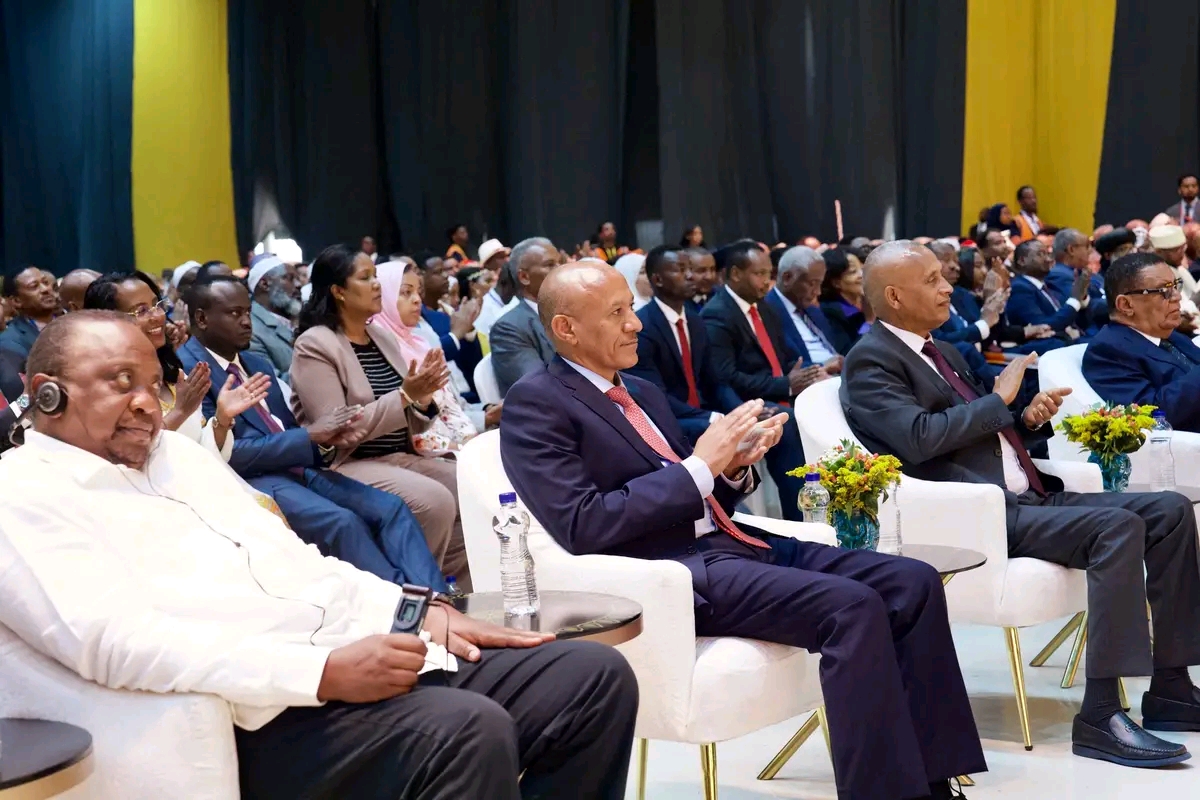
Speaking at the closing ceremony of Ethiopia’s first-ever National Dialogue Conference in Addis Ababa, Kenyatta said Ethiopia stands before an opportunity to convert the foundations of peace and national stability into accelerated economic development and long-term prosperity.
Drawing on his experience and understanding of the country, he said Ethiopia’s advantageous position in peace, security, stability, predictability and unity could enable its economy to double its gross domestic product within seven years and emerge as the largest economy in Africa.
He further envisioned Ethiopia becoming part of the developed nations of the world within a generation, describing the prospect as one that Ethiopians themselves can realize by consolidating peace and working collectively toward national development.
Kenyatta said the National Dialogue has created an important foundation for this broader national transformation, emphasizing that peace should not be viewed solely as an end in itself but as an essential condition for development, economic growth and the well-being of citizens.
He stressed that sustainable peace must be comprehensive and inclusive, creating the predictability and stability required for societies and economies to advance.
The former Kenyan president also placed Ethiopia’s current national journey within the exceptional historical relationship between Ethiopia and Kenya, recalling how Ethiopia’s example inspired African leaders during the continent’s struggle against colonialism.
He recounted that his father, Jomo Kenyatta, displayed the Ethiopian green, gold and red flag in his London room in 1931, at a time when Kenya had not yet achieved independence, describing Ethiopia’s flag as a symbol of the possibility that African nations could stand free.
Kenyatta further recalled that when Kenya gained independence, Jomo Kenyatta made Ethiopia’s leadership the first foreign leadership he sought to receive, underscoring the depth of the historical bond between the two countries.
He also highlighted the peaceful settlement of the Ethiopia–Kenya border, noting that the two countries negotiated their common boundary together in 1970 and have never exchanged fire across it.
For Kenyatta, that history demonstrates that peaceful coexistence between neighboring African states is not merely an aspiration but a choice that can be deliberately sustained across generations.
He said the same principle should guide Ethiopia’s internal national journey, emphasizing that unity must be continually chosen and reinforced by each generation.
Kenyatta further linked Ethiopia’s future to that of the wider region, saying stability in Ethiopia would create stronger conditions for secure borders, expanding trade, economic activity and shared prosperity across the Horn of Africa.
He cautioned that Africa cannot achieve continent-wide prosperity while a central country such as Ethiopia remains affected by instability, stressing that Ethiopia’s peace therefore carries consequences well beyond its own borders.
The former Kenyan president reaffirmed his solidarity with Ethiopia as a neighboring country and expressed his commitment, alongside other African leaders, to supporting the country’s efforts toward lasting peace and national development.
He concluded by urging Ethiopians to seize the opportunity created by the National Dialogue and translate its foundations into a future defined by peace, stability, economic advancement and prosperity.