
From Humble Beginnings to the Premiership: What Journey Shaped the Leader Guiding Ethiopia Through Transformation?
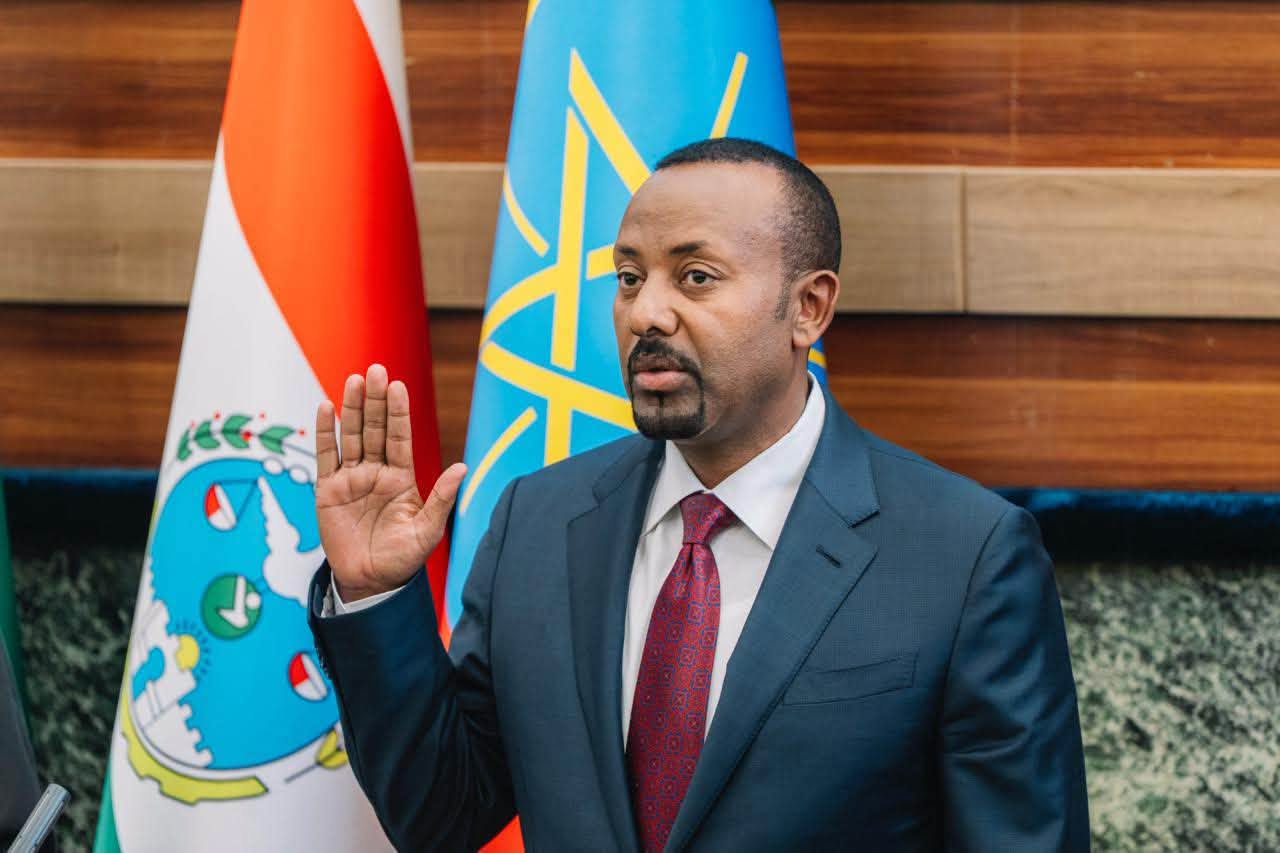
Addis Ababa, October 7, 2026 (FMC) – On October 5, 2026, Prime Minister Abiy Ahmed stood before Ethiopia’s newly constituted Parliament and took the constitutional oath for another five-year term at the helm of the country.
The moment opened a new chapter in the political career of a leader whose journey from the small town of Beshasha in Ethiopia’s Oromia Region to the country’s highest executive office has unfolded alongside some of the most consequential chapters of Ethiopia’s recent history.
For those readers seeking to understand the man behind the office, that journey begins far from the seat of government—in Beshasha, where Abiy was born and raised, and where the early foundations of a life that would pass through military service, peacekeeping, technology, public administration and politics were laid.
A biography presented to Parliament by Deputy Prime Minister Temesgen Truneh, who nominated Abiy on behalf of the ruling Prosperity Party for another term, traced the Prime Minister’s journey from his early years through the experiences that shaped his public life.
Born in Beshasha town in Jimma Zone of Oromia Region, Abiy entered the armed struggle at the age of 14. Following the fall of the Derg, he joined the regular military and served during the Ethio-Eritrean War, rising to the rank of Lieutenant Colonel. He later served as part of the United Nations peacekeeping mission in Rwanda, an experience that exposed him to the complexities of conflict, reconciliation and peacebuilding beyond Ethiopia’s borders.
His early life was also shaped by a strong connection to community and faith. The parliamentary biography highlighted his involvement in peacebuilding efforts in his hometown of Beshasha, reflecting an aspect of his public journey that would later become closely associated with reconciliation and dialogue.
Alongside his military career, Abiy pursued education in technology and leadership. He earned a bachelor’s degree in Computer Engineering from Microlink Information Technology College, an MBA in Transformational Leadership from Leadstar College, and a master’s degree from the University of Greenwich. He later obtained a PhD in Peace and Security Studies from Addis Ababa University.
His professional path subsequently moved into intelligence, technology and public administration. He became one of the founders of the country’s Information Network Security Agency (INSA) and later served as Minister of Science and Technology, experiences that brought him into the intersection of technology, state institutions and national development.
His political rise accelerated during the political changes that culminated in his assumption of the premiership in 2018. His leadership since then has been marked by an ambitious reform agenda and by a conception of Ethiopia’s future increasingly articulated through the philosophy of Medemer.
At the heart of that philosophy is an emphasis on bringing together Ethiopia’s diversity and shared national interests, while drawing selectively on useful experiences from around the world. The parliamentary presentation portrayed Medemer as an idea rooted in Ethiopia’s history, social bonds and shared civilization, while seeking to adapt governance and development to contemporary realities.
Abiy has also associated his leadership with a broad development agenda spanning agriculture, environmental restoration, digital transformation, infrastructure, manufacturing, mining, energy and institutional reform.
Among the initiatives highlighted in the parliamentary presentation was the Green Legacy programme, under which the country has planted tens of billions of seedlings. The presentation also pointed to advances in wheat production and agricultural productivity, fruit exports, livestock development and efforts to strengthen food self-sufficiency.
Digital transformation has been another defining feature of the period. Digital public services, digital identity, digital finance and broader technology-based systems have been presented as components of an effort to modernize the Ethiopian state and expand access to services and economic opportunities.
The parliamentary biography also highlighted infrastructure and urban development, including major projects in Addis Ababa and other parts of the country, as part of a broader effort to reshape Ethiopia’s cities and improve their capacity to support economic activity and international engagement.
In the economic sphere, Abiy’s government has pursued macroeconomic reforms, investment reforms and efforts to restructure state assets and institutions. The development of Ethiopia’s mining sector and the continuation of work toward completing the Grand Ethiopian Renaissance Dam were also highlighted as major elements of the country’s development trajectory.
His leadership has unfolded amid profound challenges. Ethiopia has faced armed conflicts, political tensions, the COVID-19 pandemic, locust invasions, drought and wider economic pressures during his time in office. The parliamentary presentation described his government’s response to these challenges as part of a broader effort to preserve national cohesion while continuing the country’s development trajectory.
Peace and political reconciliation have remained recurring themes in Abiy’s public leadership. The National Dialogue process, efforts to strengthen political participation and the creation of a multinational political structure have formed part of his broader approach to Ethiopia’s political order.
The presentation also recalled his engagement on the battlefield during periods of intense conflict, portraying such moments as emblematic of his determination to remain directly engaged during national crises.
Internationally, Abiy’s leadership gained global recognition following the 2018 Ethiopia-Eritrea peace initiative, for which he was awarded the Nobel Peace Prize. His government has since sought to pursue what it describes as a pragmatic, action-oriented foreign policy grounded in Ethiopia’s national interests and its relations with neighboring and global partners.
The country’s regional and international role has also featured increasingly prominently in his political vision, including Ethiopia’s interest in strengthening its economic and diplomatic position, expanding regional cooperation and pursuing access to the sea through mutually beneficial arrangements.
The parliamentary presentation pointed to several other ambitions associated with Abiy’s leadership, including the expansion of digital identity, cluster farming, new approaches to pastoralist development, urban infrastructure and the continued modernization of Ethiopia’s defence capabilities.
His political philosophy has likewise developed around the idea that Ethiopia’s future depends on combining national unity with recognition of the country’s diversity. In this conception, Medemer is not simply a political slogan but a framework through which Abiy seeks to interpret Ethiopia’s history, present challenges and future aspirations.
The journey from Beshasha to the premiership therefore encompasses more than a rise through political office. It passes through the military, peacekeeping, technology, intelligence, public administration and politics, while intersecting with Ethiopia’s own efforts to navigate conflict, reform, development and a rapidly changing regional and global environment.
As Abiy begins another five-year term following the formation of Ethiopia’s new Medemer Government, his biography enters another chapter. The journey that began in Beshasha now continues from the highest office of the Ethiopian state, against the backdrop of a country pursuing institutional reform, economic transformation, national reconciliation and a larger role in its region and beyond.