
Horn of Africa Moves to Turn El Niño Forecast Into Coordinated Early Action
Addis Ababa, September 17, 2026 (FMC) — IGAD Member States and regional and international partners are moving to translate forecasts of a potentially strong El Niño during the October–December 2026 season into coordinated preparedness, anticipatory financing and early action to protect lives, livelihoods and critical infrastructure across the Horn of Africa.
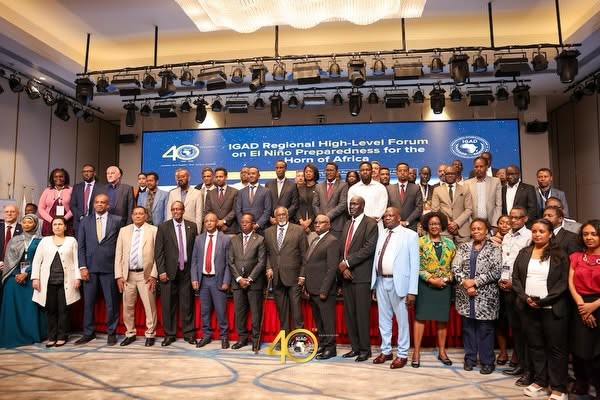
The call came at the ministerial segment of the IGAD High-Level Ministerial Forum on El Niño Preparedness in the Horn of Africa, held in Addis Ababa as the culmination of a three-day regional process focused on assessing preparedness, identifying priority risks and strengthening cross-border action ahead of the anticipated climate impacts.
Speaking on behalf of the Government of Ethiopia, Deputy Commissioner of the Ethiopia Disaster Risk Management Commission Ayderus Hassan said the potential impact of El Niño 2026 requires technical preparedness to be matched by political leadership, national ownership, regional solidarity, timely financing and early action.
He said Ethiopia is strengthening its disaster management system to become increasingly multi-hazard, impact-based, anticipatory and multi-sectoral, linking monitoring, forecasting, impact assessment, early warning, preparedness, anticipatory action and response.
“For El Niño 2026, this means continuously monitoring risks, identifying potential hotspots, preparing vulnerable communities and sectors, strengthening contingency planning, and taking anticipatory measures before a crisis,” Ayderus said.
He underscored the need for early financing, noting that Ethiopia’s Disaster Risk Response Fund provides a mechanism for predictable financing for disaster risk management, including preparedness, early warning, anticipatory action, response and resilience.
Ayderus also called for stronger regional cooperation through cross-border information sharing, joint risk analysis, interoperable early warning systems and coordinated anticipatory action, as El Niño-related risks could simultaneously affect agriculture, livestock, food security, water, health, infrastructure, livelihoods and population movements.
He said the high-level segment would consider the technical findings, discuss national priorities and endorse the IGAD High-Level Call to Action for El Niño preparedness, with clear responsibilities, resources and mechanisms for monitoring implementation.
IGAD Deputy Executive Secretary Mohamed Abdi Ware said the region’s experience had demonstrated that disasters do not respect national borders and therefore require collective action.
He said IGAD’s climate-centred impact assessment indicates a 90-percent chance of above-normal rainfall over southern Ethiopia, central and southern Somalia and northeastern Kenya, with the closest parallels being the El Niño events of 2023 and 1997.
According to Mohamed, floods in 2023 claimed at least 352 lives across Ethiopia, Kenya and Somalia and displaced more than 2.4 million people. In Somalia, damage and losses in 16 assessed districts exceeded 176 million U.S. dollars, while recovery needs surpassed 210 million dollars.
Recalling his experience as a humanitarian worker during the 1997 El Niño episode, he said the event demonstrated how excessive rainfall could devastate crops and livestock, disrupt livelihoods and contribute to disease outbreaks and economic losses.
“We cannot stop the rain, but we can decide what it finds when it arrives,” Mohamed said, stressing the importance of preparing for foreseeable risks before they materialize.
He said member states are expected to activate their preparedness plans, share warnings across borders, undertake anticipatory measures and monitor and report on actions delivered throughout the season.
Representing Somalia, Minister of Agriculture Mohammed Abdi Hayir stressed the need to draw lessons from the 2023 El Niño experience and ensure that early warning systems lead to rapid and concrete action, supported by adequate financing, operational contingency plans, prepared communities and effective coordination.
The Somali minister also highlighted the interconnected nature of climatic, humanitarian, economic and security risks facing the region.
Representing Djibouti, Executive Secretary for Disaster Risk Management Ahmed Mohamed Mogad said his country is committed to establishing a national multi-hazard early warning system, complemented with IGAD support by a crisis management room connected to five regional branches.
He said flooding, population displacement, food insecurity, health risks, pastoral mobility and trade flows transcend national borders and require a regional response.
Director of the UNDP Resilience Hub for Africa Zeynu Jemal Ummer said weaknesses exposed by recent climate shocks in financing, cross-border coordination, infrastructure and evacuation planning should be viewed as long-term development gaps rather than seasonal shortcomings.
He called for preparedness priorities to be incorporated into national development plans, sector strategies and IGAD frameworks, alongside the integration of disaster-risk financing into national budgets.
Zeynu also urged investment in water storage, transboundary water-transfer systems, watershed restoration, resilient transport corridors and joint management of shared basins to address both flooding and persistent water stress.
IOM Deputy Regional Director for Operations Nihan Erdogan said El Niño should be viewed not only as a climate event but also as a potential mobility and displacement crisis.
She urged countries to “act early, act together, and act for the longer term,” calling for prepositioned supplies, forecast-based financing, evacuation plans, safe sites and protection measures, alongside continuous preparedness and resilient investment.
UNICEF Representative Aboubacar Kampo said more than 162 million children across Eastern and Southern Africa are exposed to the effects of the event, warning that climate shocks could deepen existing food insecurity, displacement, conflict and disease while placing additional pressure on essential services.
He called for forecasts and agreed triggers to unlock financing and action before losses occur, while emphasizing the need to protect climate-resilient water and sanitation, health, nutrition, education, child protection and social protection services.
Kampo also stressed that preparedness must be locally led and adequately resourced, while international and climate-financing institutions should provide timely, flexible and equitable financing for adaptation and anticipatory action.
The three-day forum, held from September 15–17 in Addis Ababa, has brought together ministers, government representatives, technical experts and development and humanitarian partners to assess national and regional preparedness, strengthen cross-border coordination and advance anticipatory financing ahead of the anticipated October–December climate impacts.
The ministerial segment is set to culminate in endorsement of the IGAD Ministerial Call to Action and the Regional Preparedness and Early Action Technical Report, reinforcing the region’s effort to move from forecast to action.