
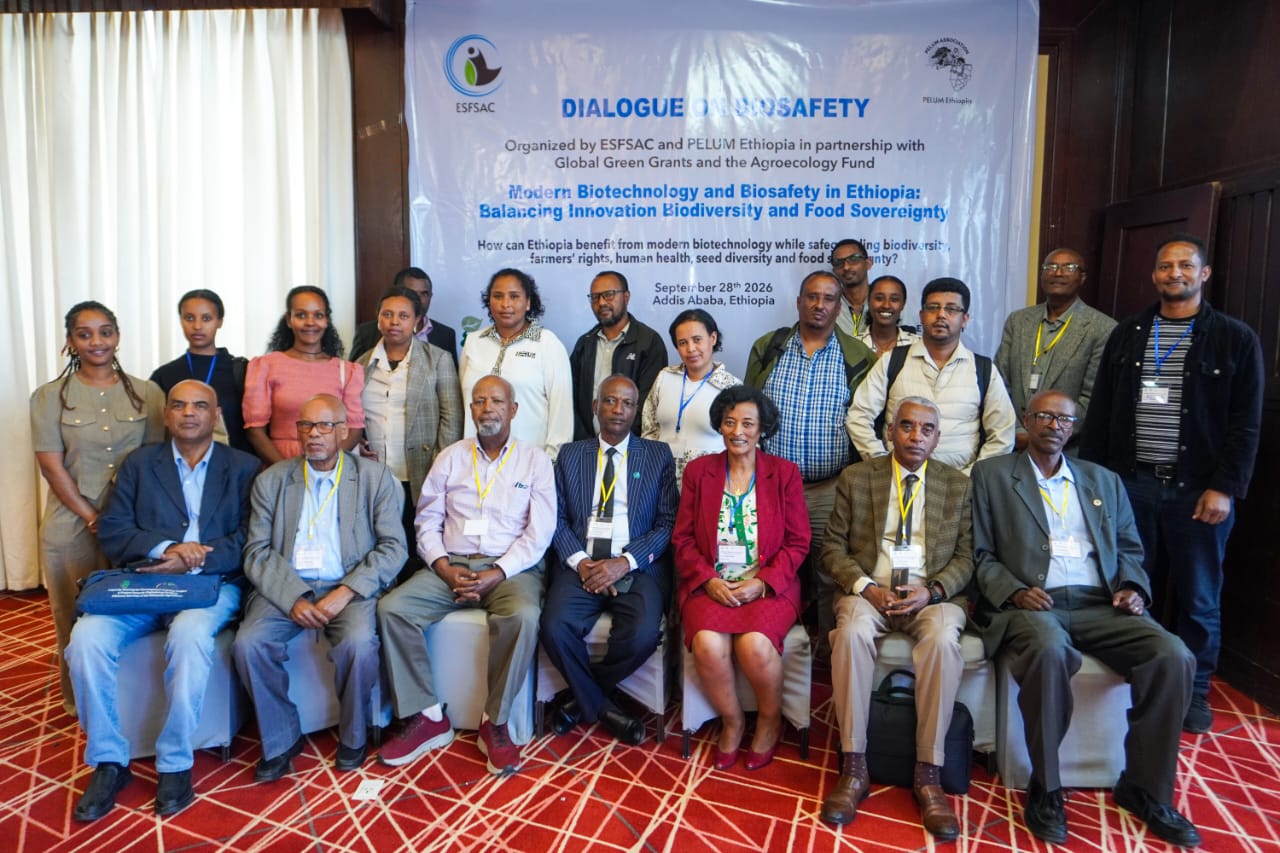
How Ethiopia Can Benefit from Modern Biotechnology While Safeguarding Biodiversity, Farmers’ Rights
Addis Ababa, September 28, 2026 (FMC) — Ethiopia’s efforts to benefit from modern biotechnology must go hand in hand with safeguarding biodiversity, farmers’ rights, human health, seed diversity and food sovereignty, ESFSAC Executive Director Dr. Bayush Tsegaye said, framing the central question at a national dialogue on biotechnology and biosafety held in Addis Ababa.
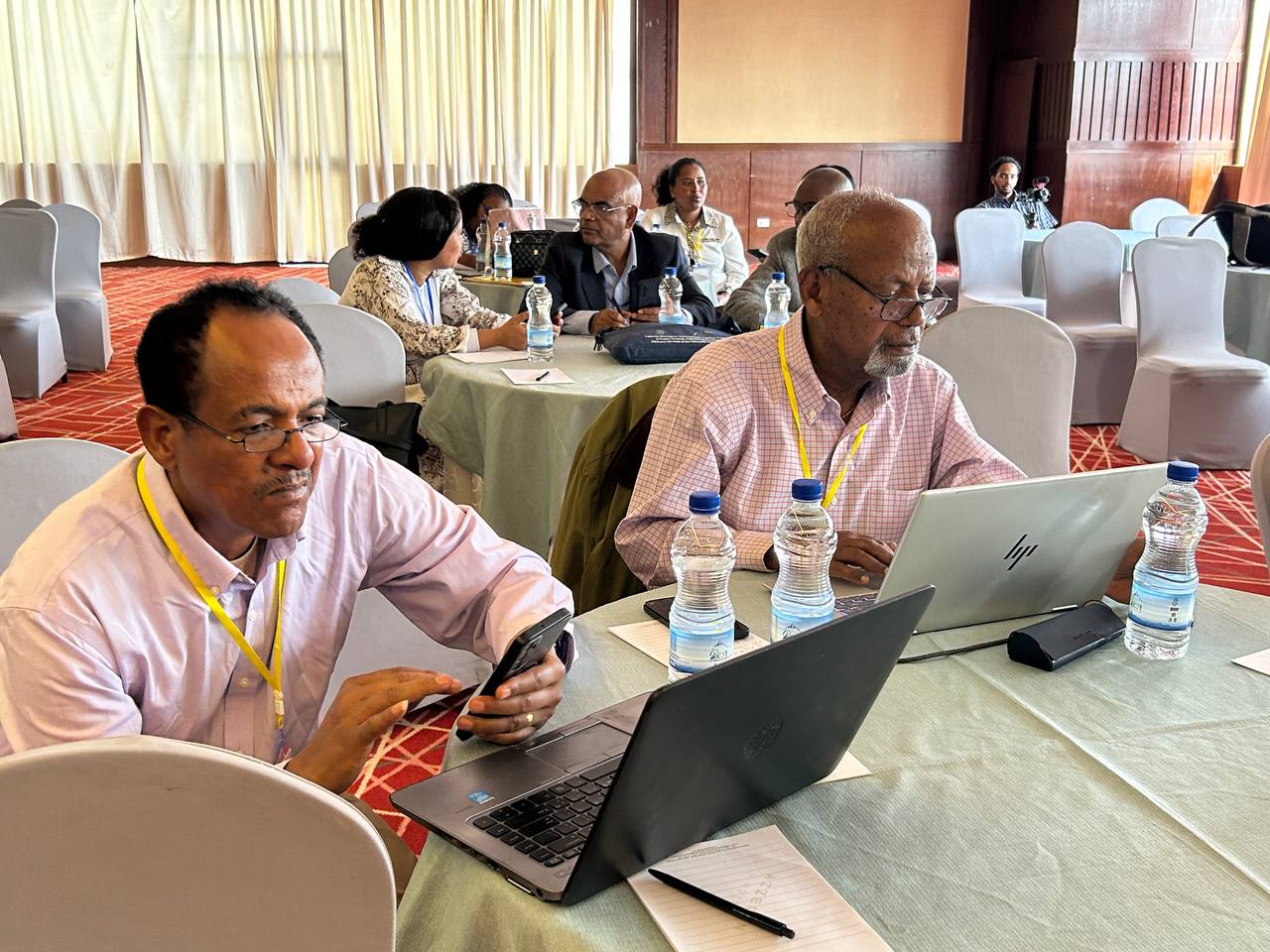
The dialogue, held under the theme “Biosafety and Modern Biotechnology: Balancing Innovation, Biodiversity and Food Sovereignty,” brought together government officials, researchers, academics, civil society organizations, farmers, development partners and other stakeholders to examine the opportunities, challenges and governance considerations surrounding modern biotechnology in Ethiopia.
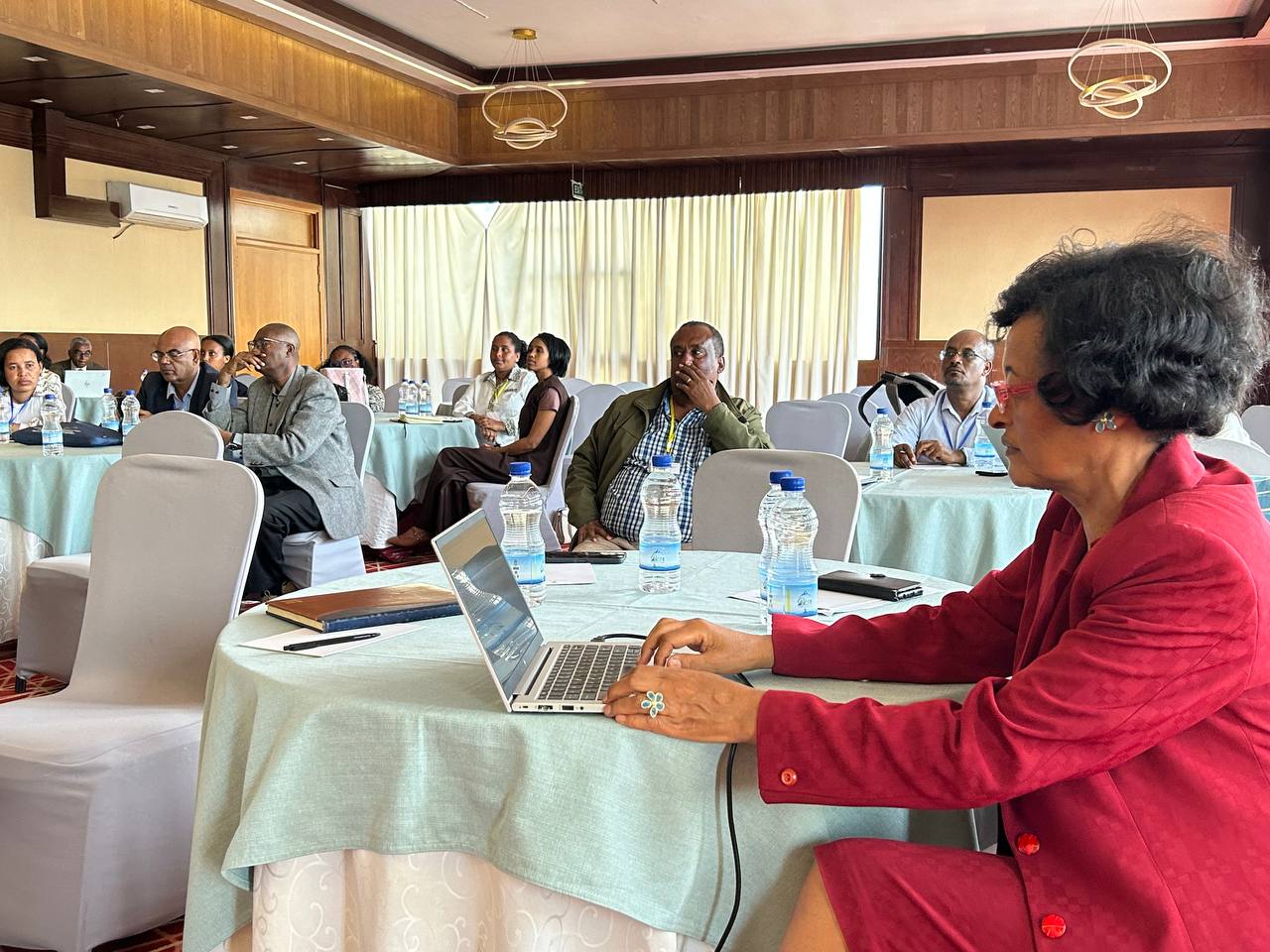
Organized by the Ethiopian Sustainable Food Systems and Agroecology Consortium (ESFSAC) in partnership with PELUM Ethiopia, the dialogue provided a multi-stakeholder platform for evidence-based information exchange and discussion on biosafety, biodiversity, food systems, farmers’ rights and seed systems.
Opening the dialogue, Dr. Bayush said modern biotechnology is developing rapidly and presents opportunities as well as questions that require careful consideration as Ethiopia seeks to transform its agriculture and food systems.
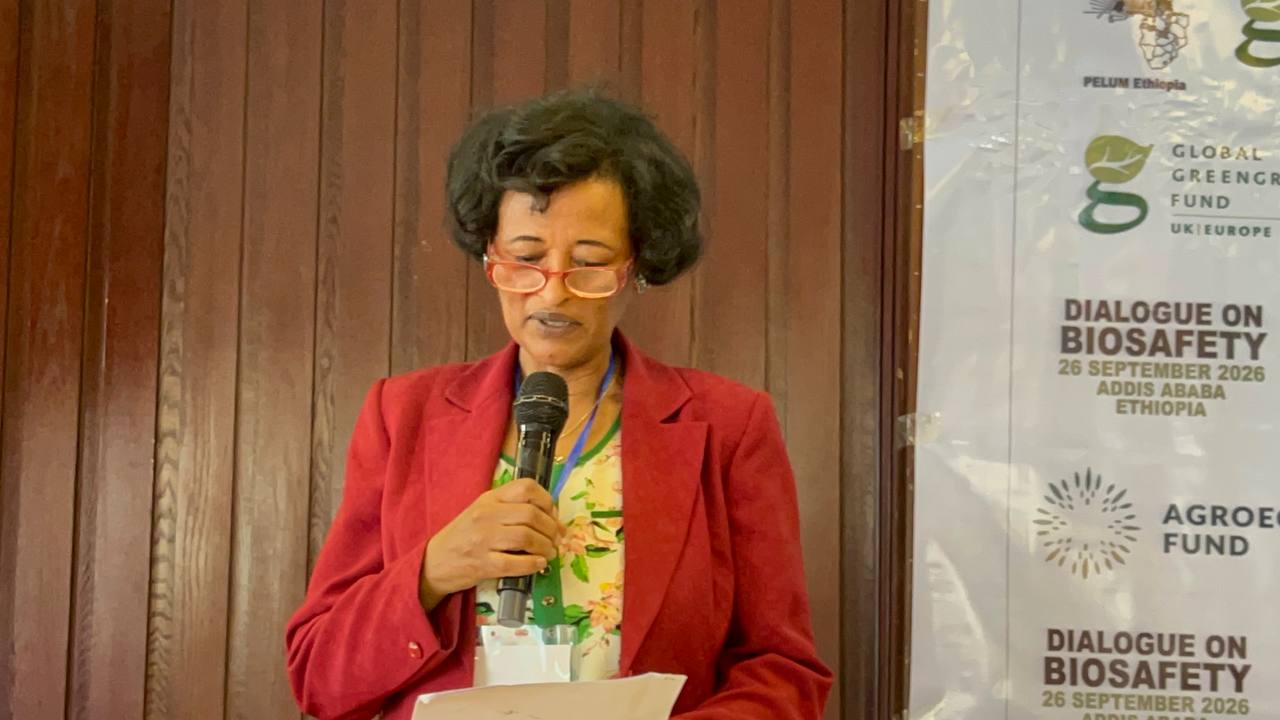
She said the central question is how Ethiopia can benefit from modern biotechnology while safeguarding biodiversity, farmers’ rights, human health, seed diversity and food sovereignty.
Dr. Bayush stressed that the question cannot be answered by science alone, regulation alone or ideology, but requires bringing together scientific evidence, farmers’ knowledge and experience, environmental considerations, legal and regulatory safeguards, economic realities and the aspirations of Ethiopian society.
She said the purpose of the dialogue was not to promote a particular position on modern biotechnology, but to create space for open, informed and respectful discussion in which different perspectives can be heard, evidence examined, questions raised and areas of common ground identified.
“Innovation matters. But so do biodiversity, farmers’ rights, human health, seed diversity, and food sovereignty,” she said.
Dr. Bayush highlighted the significance of Ethiopia’s agricultural biodiversity, noting that the country’s agricultural systems are built on a remarkable diversity of crops, varieties, landscapes, farming systems, practices and ecological systems.
She said farmers have conserved, selected, exchanged and adapted seeds to diverse agroecological zones over generations, making agricultural biodiversity an important foundation for resilience, nutrition, livelihoods and the future of food systems.
She also underscored the need for agricultural innovation that responds to the realities of millions of farmers, while stressing that farmers’ seed systems are not simply mechanisms for distributing planting materials but systems of knowledge, adaptation, culture and local decision-making for resilience.
Any technological development affecting these systems, she said, therefore deserves careful attention to farmers’ rights, choices and participation.
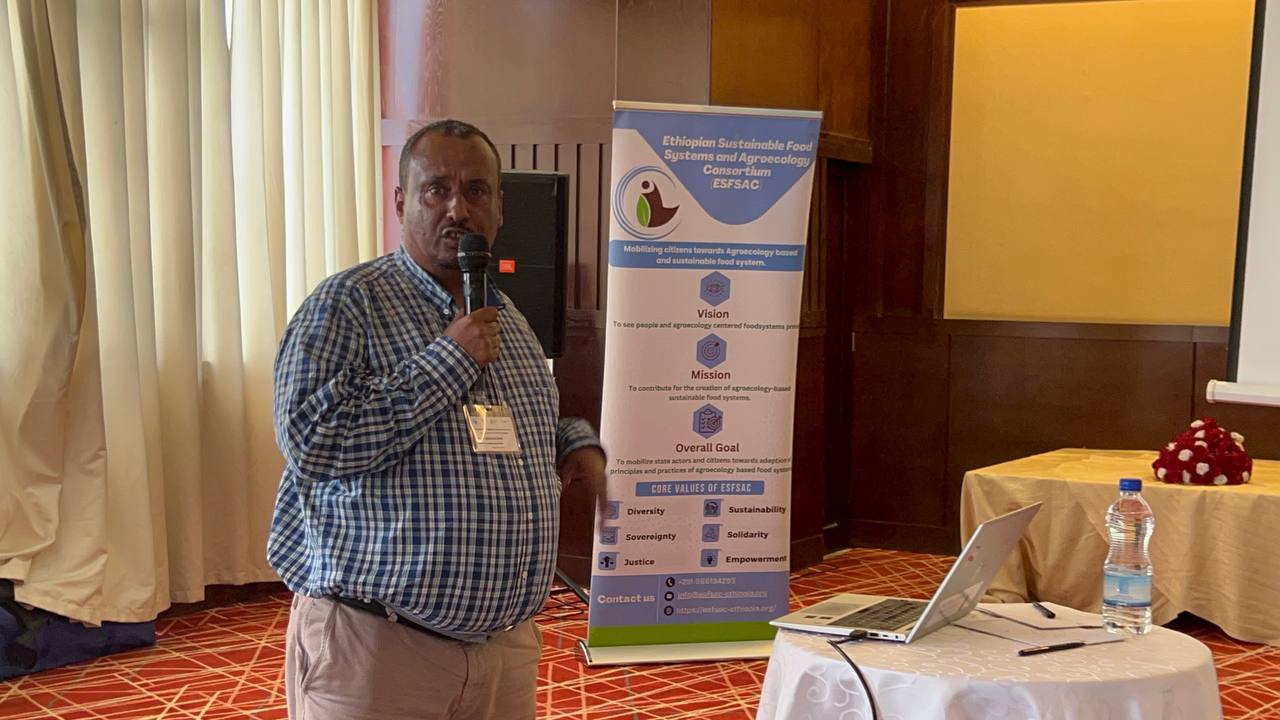
The discussions examined biosafety, biodiversity, food systems, farmers’ rights and seed systems, alongside Ethiopia’s experience with GM cotton pre-release research.
Participants also considered an example of linking innovation and technology with enset value addition for food sovereignty without compromising diversity, bringing practical food-system experience into the broader discussion on how innovation can respond to local priorities.
Government officials, researchers and academics delivered presentations on different dimensions of modern biotechnology, while a panel discussion brought together diverse perspectives on the opportunities, challenges and governance considerations associated with its use in Ethiopia.
The exchange provided an opportunity to consider scientific evidence alongside regulatory, environmental, agricultural and community perspectives, with participants engaging on how biotechnology-related decisions can be informed by evidence while remaining attentive to Ethiopia’s biodiversity and food-system priorities.
Turning to biosafety, Dr. Bayush said appropriate governance becomes increasingly important as technologies evolve.
She said effective biosafety systems help ensure that decisions concerning modern biotechnology are informed by evidence and supported by appropriate risk assessment, monitoring, transparency and accountability, creating confidence among institutions, communities and the wider public.
She emphasized that biosafety should not be viewed as an obstacle to innovation, but as an important part of responsible innovation and good governance.
In her closing remarks, Dr. Bayush said the dialogue had demonstrated why continued discussion on modern biotechnology and biosafety is important and called for further dialogue.
She said the discussions had highlighted the potential of modern biotechnology, its opportunities and challenges, biosafety governance, and lessons from innovations related to enset processing and value addition without compromising diversity.
She stressed that food production has social, economic, cultural and ecological significance and cannot be viewed merely as a commodity.
Dr. Bayush said the issue should not be reduced to a simple question of being for or against biotechnology. Instead, she said, the central concern is how innovation can be governed responsibly and how its development and application can remain consistent with Ethiopia’s broader social, environmental and food-system priorities.
She identified biodiversity, farmers’ rights and food sovereignty, and biosafety governance among the areas requiring sustained attention.
Dr. Bayush called for an evidence-based approach in which demonstrated benefits are considered openly, risks and uncertainties are assessed and managed, knowledge gaps are addressed through research and monitoring, and decisions affecting farmers, pastoralists, consumers and the environment are made through participation and transparency.
She also emphasized the need to strengthen technical skills, human resources, facilities and financing where capacity gaps exist.
A further priority, she said, is strengthening local capacity and understanding Ethiopia’s own problems and potentials, while making full use of available options before moving to external technologies that could create dependency.
She said constructive learning can provide an actionable middle ground for advancing the discussion.
Dr. Bayush called for stronger collaboration among government, research and academic institutions, regulators, civil society, farmers, communities and the private sector, as well as the generation and sharing of credible research and farmer-based evidence.
She stressed that farmers should be recognized as researchers and holders of knowledge and involved from the identification of problems through decision-making.
She said decisions concerning modern biotechnology should consider biodiversity, farmers’ rights, seed diversity, human health and food sovereignty alongside the opportunities presented by technological innovation.
The dialogue concluded with an emphasis on continued learning, collaboration, responsible decision-making and future-focused engagement on Ethiopia’s biotechnology and biosafety agenda.