
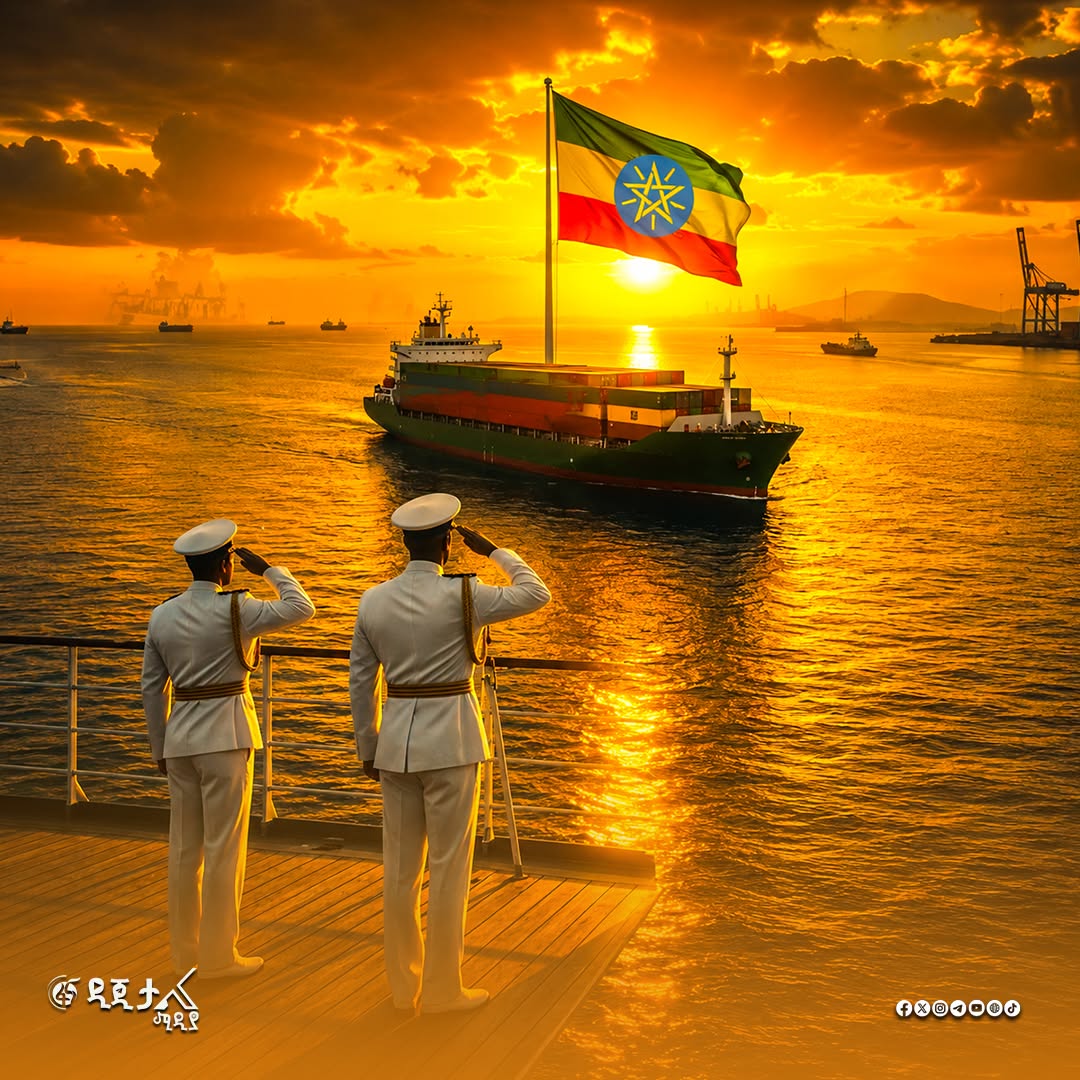
Is Ethiopia’s Return to Its Historic Red Sea Coastline Now Imminent?
Addis Ababa, August 11, 2026 (FMC) — For Ethiopia, the Red Sea is no longer merely a distant horizon on the map. It is increasingly becoming a horizon toward which the country’s diplomacy, strategic thinking and regional engagement are steadily converging. After decades of separation from direct access to the sea, Ethiopia’s determination to regain a direct Red Sea outlet is gathering momentum, with the country’s diplomatic engagements with global partners increasingly reinforcing the prospect of a new chapter in its relationship with the sea.
For a country of Ethiopia’s demographic, economic and geopolitical weight, the question of sea access has never been simply about a port. It is about connectivity, economic opportunity, national development and the country’s place in a rapidly changing regional order. The Red Sea is one of the world’s most consequential maritime corridors, linking markets, production centres and strategic trade routes across regions. Ethiopia’s renewed push to regain a direct outlet therefore carries implications far beyond the movement of goods.
The country’s position is increasingly being framed around a principle of shared prosperity: access to the sea should become a foundation for cooperation rather than confrontation, and maritime connectivity should create opportunities for countries to grow together. Ethiopia’s aspiration is thus not presented as a zero-sum proposition, but as part of a broader vision in which ports, trade corridors, infrastructure and investment become instruments of regional integration.
That vision has gained particular weight as Ethiopia continues to expand its economy, industrial base, infrastructure networks and international trade. A growing economy requires efficient and reliable access to global markets. A country seeking to deepen manufacturing, expand exports, attract investment and strengthen regional commerce cannot afford to remain disconnected from the maritime arteries through which much of global trade flows.
This is why Ethiopia’s renewed maritime agenda has increasingly moved to the centre of its strategic diplomacy. Prime Minister Abiy Ahmed and other senior Ethiopian officials have repeatedly reaffirmed the country’s determination to pursue its legitimate interests through diplomacy, dialogue and mutually beneficial arrangements. At the same time, Ethiopia’s diplomatic engagements with global partners on the matter are gaining traction, strengthening the sense that its return to the Red Sea is no longer an abstract aspiration but an emerging strategic direction.
The significance of this momentum lies not only in Ethiopia’s diplomatic efforts, but also in the depth of domestic support behind the country’s maritime aspirations. The Ethiopian people widely view direct access to the sea as a legitimate national interest tied to the country’s economic future, sovereignty and historic relationship with the Red Sea. That broad backing gives the diplomatic initiative a strong national foundation and reinforces the determination with which Ethiopia is pursuing it.
History, geography and international law form important parts of the conversation. Ethiopia’s relationship with the Red Sea predates the modern political arrangements that eventually left the country landlocked. Its historical connection to the maritime space has remained deeply embedded in the country’s economic, political and cultural experience. The question now is how that historic relationship can be translated into a modern, lawful and mutually beneficial framework suited to the realities of the 21st century.
The answer increasingly lies in connectivity. A direct maritime outlet would not stand alone. It would connect Ethiopia’s agricultural and industrial production to international markets, facilitate the movement of imports and exports, strengthen logistics, reduce trade-related costs and create new opportunities for investment. It could also stimulate the development of roads, railways, energy networks, digital infrastructure, logistics centres and industrial clusters extending far beyond the coastline.
The benefits would not necessarily stop at Ethiopia’s borders. Efficient maritime connectivity can create wider commercial networks in which goods, capital, technology and services move more freely across the region. Ports can become gateways to industrialisation; transport corridors can become engines of commerce; and logistics infrastructure can connect producers with consumers across national boundaries.
This is precisely why Ethiopia’s maritime aspiration should be understood within the larger picture of regional economic integration. The Red Sea can serve not as a dividing line, but as a bridge between economies. Its ports and shipping routes can support investment, trade, industrialisation and employment while strengthening the economic interdependence that gives countries greater incentives to preserve peace and stability.
A direct Ethiopian outlet would also give greater strategic depth to the country’s long-term economic transformation. Ethiopia has been investing heavily in infrastructure, manufacturing, agriculture, energy, tourism and digitalisation. The more these sectors expand, the more important efficient access to international markets becomes. Maritime connectivity can therefore become a critical missing link between domestic economic transformation and global commerce.
The same logic applies to the development of border and transport corridors. A maritime gateway connected to Ethiopia’s interior through modern roads and railways would have the potential to transform entire economic landscapes, creating logistics hubs, warehouses, processing facilities, industrial parks and new centres of commerce. What begins as a maritime connection can ultimately become an economic corridor reaching deep into the country.
There is also a broader geopolitical dimension. The Red Sea is undergoing profound strategic change, with maritime security, trade routes, energy flows and international competition placing the region at the centre of global attention. Ethiopia’s emergence as a more economically connected and maritime-oriented actor would inevitably add a new dimension to the regional balance, while also creating an opportunity for a more integrated and economically interdependent Red Sea region.
For Ethiopia, however, the objective is not confrontation. The country has consistently emphasized diplomacy, dialogue, cooperation and peaceful engagement in advancing its national interests. Its maritime ambition is increasingly being presented as a quest for a durable arrangement capable of serving Ethiopia while contributing to the prosperity and stability of the wider region.
That distinction matters. A direct outlet does not have to mean isolation from regional cooperation; rather, it can provide a stronger foundation for it. Ethiopia’s objective is direct access to the sea, but the larger vision is connectivity, commerce and shared development. The country’s maritime future can therefore become a platform through which regional economies are brought closer together rather than pushed apart.
The momentum now building around Ethiopia’s Red Sea agenda reflects the convergence of several forces: a rapidly transforming national economy, strong public support for maritime access, sustained diplomatic engagement, growing international attention to Ethiopia’s position and a regional environment in which connectivity is becoming increasingly indispensable.
The sea that once appeared to Ethiopia as a lost horizon is consequently coming back into the country’s strategic field of vision. What lies ahead will depend on diplomacy, international engagement, regional cooperation and the ability to translate Ethiopia’s maritime aspirations into a lawful and mutually beneficial reality. Yet the direction is becoming increasingly unmistakable: Ethiopia is looking toward the Red Sea not as a distant memory, but as part of its emerging future.
Its return to the sea, therefore, is increasingly being imagined not simply as the recovery of an outlet, but as the opening of a new economic and geopolitical horizon—one in which Ethiopia’s landlocked past gives way to a more connected future and the Red Sea once again becomes an important part of the country’s national trajectory.