
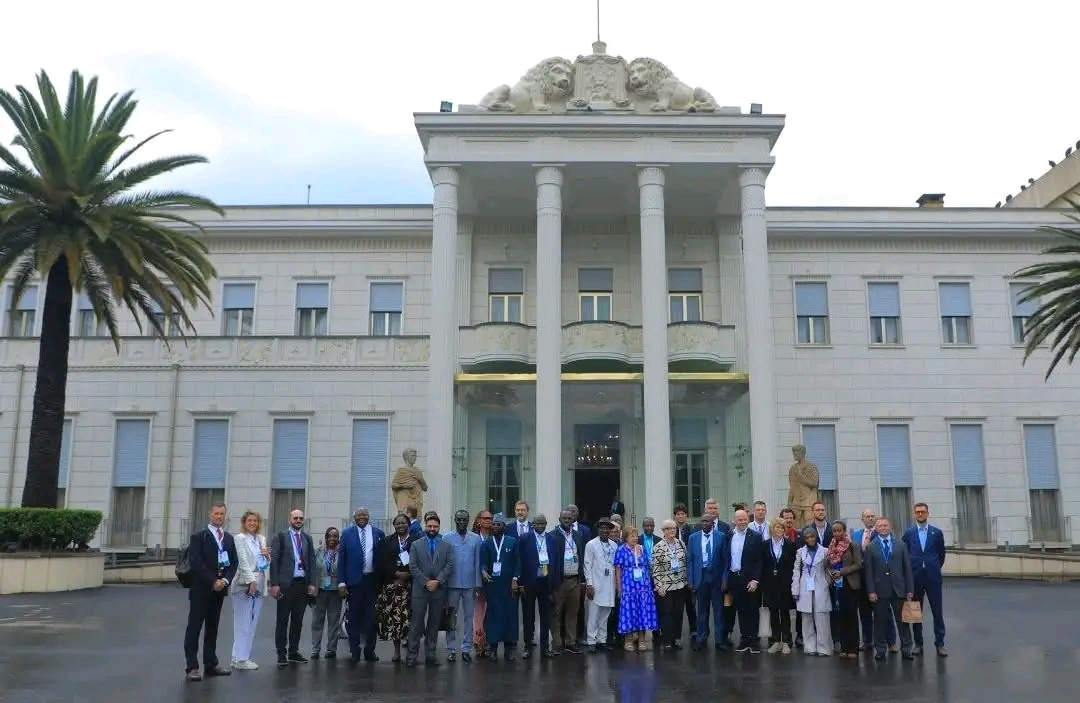
PI-SF Delegates Explore Ethiopia’s Historical Legacy at National Palace, Adwa Victory Memorial
Addis Ababa, July 12, 2026 (FMC) — International delegates attending the Parliamentary Intelligence-Security Forum (PI-SF) in Addis Ababa visited Ethiopia’s National Palace and the Adwa Victory Memorial, gaining firsthand insights into the country’s historical legacy, diplomatic heritage, and institutional development.
The visit was part of the forum’s official post-conference program aimed at providing participants with a deeper understanding of Ethiopia’s history, statehood, and governance journey, while complementing discussions held during the forum on democratic oversight, security cooperation, and Africa’s evolving security architecture.
At the National Palace, delegates explored exhibitions highlighting Ethiopia’s ancient civilization, centuries-old diplomatic traditions, and the palace’s role in the country’s political and institutional evolution from the imperial period to the present.
The participants described the National Palace as a symbol of Ethiopia’s enduring civilization and Africa’s longstanding diplomatic heritage, noting that the visit offered valuable context on the country’s contributions to regional peace, state-building, and continental cooperation.
The delegates also toured the Adwa Victory Memorial, where they viewed historical artifacts, archival documents, photographs, and interactive digital exhibitions documenting the Victory of Adwa.
Museum guides briefed the visitors on Ethiopia’s historic defense of sovereignty and the global significance of the 1896 Battle of Adwa.
The delegates described the Victory of Adwa as a landmark symbol of African courage, unity, resilience, and resistance against colonialism, saying Ethiopia’s victory more than a century ago inspired anti-colonial movements and broader struggles for freedom across Africa and beyond.
They also praised the Adwa Victory Memorial as a center of history, culture, and national memory that projects messages of dignity, resilience, and hope for Ethiopia, Africa, and the wider world.
The visitors commended the memorial’s modern design and the use of digital technologies in preserving and presenting historical artifacts, saying such innovations help make Ethiopia’s heritage more accessible to younger generations and international visitors.
The delegates further highlighted Ethiopia’s ongoing institutional modernization efforts, particularly its growing application of artificial intelligence and digital technologies, describing them as aligned with broader continental efforts to advance governance, innovation, collective security, and regional integration.
They said the visits provided practical insight into Ethiopia’s commitment to peace, continental integration, institutional resilience, and technological advancement — priorities that correspond with the objectives of the Parliamentary Intelligence-Security Forum.
Held in Addis Ababa from July 10–11, 2026, under the theme “Strengthening Democratic Oversight and Security Cooperation for Africa’s Security Architecture,” the PI-SF brought together parliamentarians, intelligence and security leaders, cybersecurity experts, policymakers, and other stakeholders from Africa and beyond.
Hosted by the House of People’s Representatives of Ethiopia, the high-level forum served as a platform to advance discussions on democratic accountability, intelligence governance, cybersecurity cooperation, and coordinated responses to emerging regional and global security challenges.
Ethiopia hosted the international gathering in recognition of its strategic diplomatic role in advancing Africa’s peace and security agenda, as well as its growing engagement in digital transformation, technology governance, and regional cooperation.
By hosting the forum, Ethiopia became the second African country after Kenya to host the Parliamentary Intelligence-Security Forum, further highlighting its role in shaping continental dialogue on governance, security, innovation, and sustainable development.