
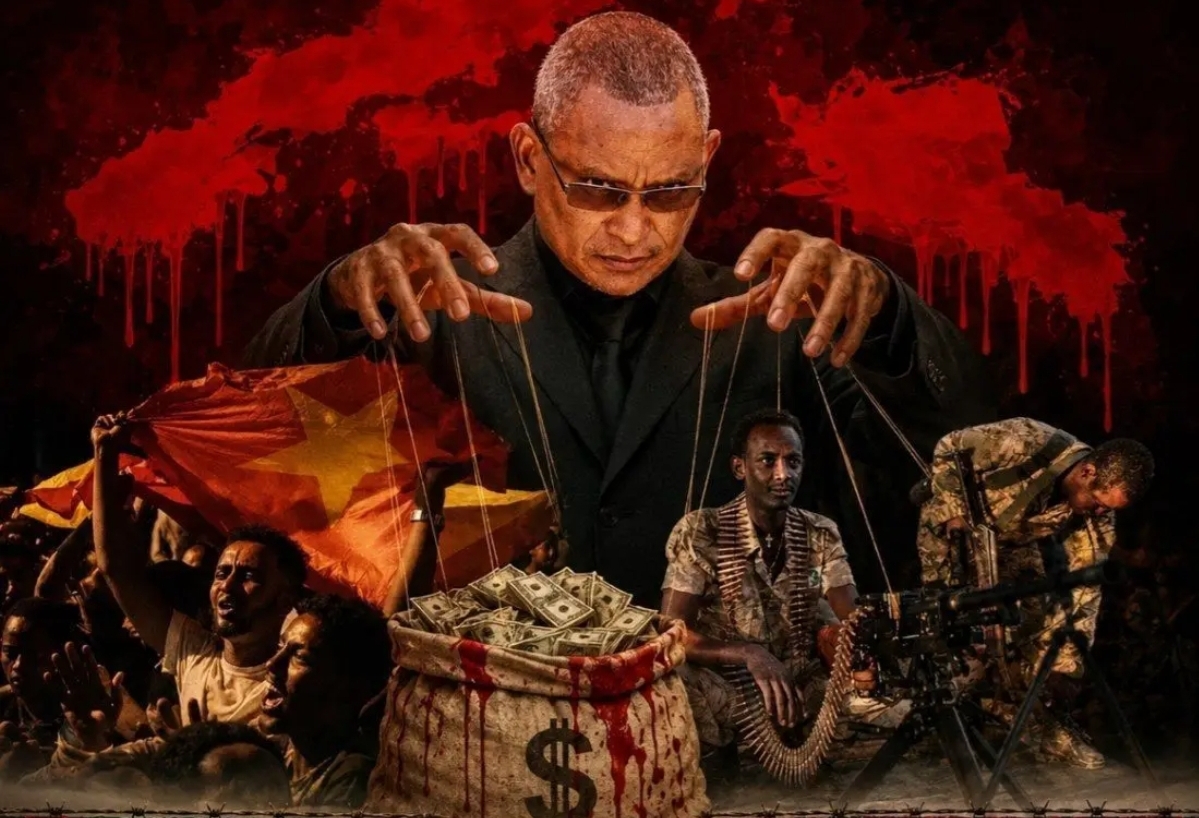
The TPLF’s Politics of Division: Branding Amhara “Chauvinists,” Oromo “Narrow Nationalists,” and Others Mere “Partners”
Addis Ababa, August 11, 2026 (FMC) — Ethiopia’s modern political history has passed through profound upheavals and successive transformations. Among its most consequential chapters was the 27-year rule of the TPLF-led EPRDF, a period that left deep scars across the country’s social, economic and political landscape.
At the heart of that system was a politics of division. The principle of divide and rule, coupled with intimidation and exclusion, did not bring Ethiopia’s peoples closer together. It fed suspicion, resentment and mistrust, turning the country’s diversity from a source of strength into a political instrument.
The irony is difficult to miss. The very force that presented itself as the indispensable guardian of Ethiopia’s stability built its political dominance around a system that kept communities divided and politically wary of one another. Ethnic identity became not merely a marker of diversity but a tool of political classification and control.
The illegal TPLF’s most potent political weapon was the deliberate use of ethnic labels to intimidate and discredit. Amhara were systematically branded “chauvinists,” presented as responsible for historical wrongs, while Oromo were stigmatized as “narrow nationalists” whenever they raised fundamental questions concerning rights and identity.
These were not harmless political descriptions. They served to shame communities, weaken legitimate demands and create a political climate in which asserting rights could itself be portrayed as a threat. The result was a politics in which identity became a battlefield and political loyalty became a measure of belonging.
The consequences extended far beyond political rhetoric. As the rule of law deteriorated, human-rights violations became a visible feature of the political order. Political prisoners included large numbers of Oromo and Amhara citizens. The scale of arrests in federal detention centers became so pronounced that the bitter expression emerged that “the language of the prisons was Afaan Oromo.”
The contradiction was stark. Amhara and Oromo political organizations were incorporated into the EPRDF coalition through ANDM and OPDO, yet their actual influence over national decision-making and their equitable share in the country’s economic benefits remained severely constrained. The coalition structure offered the appearance of representation while real power remained concentrated at its core.
Nor did this exclusion stop with the country’s two largest communities. Many others were pushed to the margins of political power and treated as secondary participants in their own country.
Even the people of Tigray were ultimately made political instruments of the group that claimed to speak in their name. Beyond the four founding EPRDF organizations—the TPLF from Tigray, ANDM from Amhara, OPDO from Oromia and the then Southern Ethiopia People’s Democratic Movement—regions such as Afar, Somali, Gambela, Benishangul-Gumuz and Harari were designated “partners” and kept outside the central circle of decision-making.
Their role was partnership in name, but exclusion in substance. They were denied a meaningful voice in determining the country’s future and faced constraints in freely administering their own regions. A political order had emerged in which communities outside the core structure were made to feel like lesser participants in the affairs of their own country.
That historical injustice eventually became impossible to contain. Across the country, public resistance grew, while reform-minded figures from within the ruling coalition—including Prime Minister Abiy Ahmed—took decisive political risks that helped bring about the national political transformation.
The illegal TPLF, however, appears unwilling to accept that the political era it once dominated has ended. Instead of reckoning with the legacy of its rule, it continues to behave as though yesterday’s political calculations can simply be revived today. It is attempting to sustain its relevance by joining forces with actors of similar disposition and historical external adversaries, seeking once again to pull the country toward confrontation.
There is a deeper contradiction here. When the illegal TPLF held federal power, ethnic difference was not treated primarily as Ethiopia’s shared national wealth. It was turned into a mechanism for dividing society, weakening political rivals and extending the political dominance of a narrow group.
Branding Amhara as chauvinists, stigmatizing Oromo as narrow nationalists, filling prisons with citizens from particular communities and reducing others to the status of “partners” were different expressions of the same political logic.
That logic exacted a price from the entire country. It prevented citizens from enjoying equitable political participation, encouraged communities to look at one another with suspicion and transformed legitimate questions of identity and rights into instruments of political control.
Ethiopia has since moved beyond that political order. The central question now is whether the country will allow the old politics of division to regain its footing—or whether its peoples will finally consign that chapter to history and build a political order in which diversity is a bond of shared citizenship rather than a weapon of political survival.