
TPLF’s Record of Violence and Destruction Has Mortgaged Tigray Region’s Future, PM Abiy Ahmed Says
Addis Ababa, October 19, 2026 (FMC) — Prime Minister Abiy Ahmed has condemned the illegal TPLF’s decades-long record of violence, repression and destructive political choices, describing an organization that has repeatedly sacrificed the lives, dignity and future of the people of Tigray Region to preserve its own power.
He said the group’s conduct, from its early years to its recent actions, reveals a persistent disregard for human life and a determination to prevent the emergence of a generation capable of building a future beyond its control.
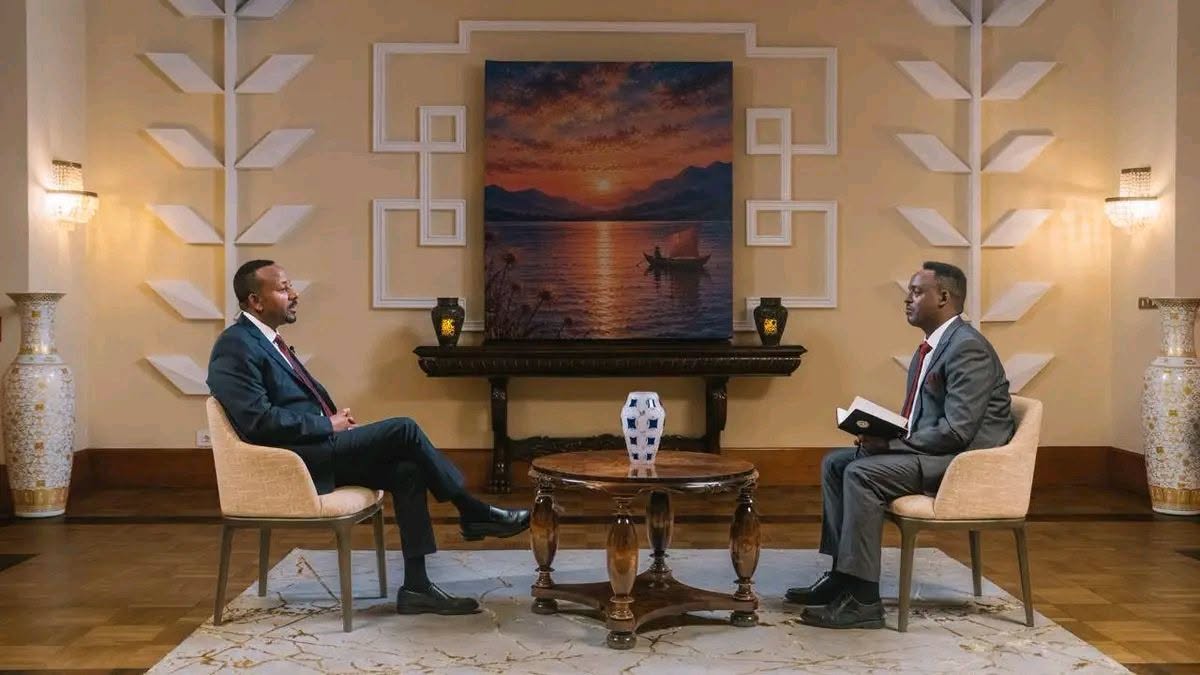
In his Tigrigna-language interview broadcast on October 19, the Prime Minister said the illegal TPLF had sought to leave no successor generation in Tigray Region, reflecting a mentality captured in an Ethiopian proverb, “If I die, let no grass grow.”
Its actions, he argued, were driven by a desire to ensure that the region could not flourish beyond the organization itself. That objective had failed, he stressed, because the people of Tigray Region and their future are far greater than any political group.
The Prime Minister contrasted the lives of TPLF members who exploit the region’s resources and build properties abroad with the suffering of people left behind. In Mekelle, he said, people who had lost limbs in the fighting were struggling in poverty, while members of the organization benefited from wealth and opportunities unavailable to those who had paid the price of conflict.
The contrast, he argued, exposes the gap between the group’s rhetoric about serving the people and its treatment of them in practice.
He also pointed to what he described as years of lost development in Tigray Region. While Ethiopia has pursued corridor development and other infrastructure initiatives in different parts of the country, the illegal TPLF had devoted its attention to acquiring weapons and ammunition, including drones, rather than investing in the region’s productive capacity.
The Prime Minister said no comparable corridor development had been carried out in Tigray Region during the past eight years, despite the resources and opportunities that could have been directed towards improving people’s lives.
The diversion of resources, he said, has come at the expense of vulnerable citizens, including people displaced by conflict.
The Prime Minister condemned the organization for taking from those already struggling to survive while its members built villas and held entertainment events. He portrayed such conduct as evidence of a political leadership that prioritizes private comfort and organizational survival over the basic needs and dignity of the population it claims to represent.
Among the most troubling examples he raised was the decision to pursue renewed conflict during a period of drought. The Prime Minister said the illegal TPLF closed roads and the airport, restricting movement and obstructing efforts by people to overcome the effects of drought. At a time when communities needed access, assistance and the freedom to sustain their livelihoods, the renewed confrontation brought further hardship.
He said the decision demonstrated the organization’s disregard for the consequences its political choices imposed on ordinary people.
The Prime Minister’s criticism extended beyond recent events to the group’s history of violence and internal repression. Recalling abuses during its struggle, he said young people had been sent to cross landmines and die, while wealthy farmers from Tigray Region were branded “feudalists,” imprisoned in pits and killed.
He also recalled instances in which members and leaders of the Tigray Liberation Front were invited to dinner and subsequently killed while they slept.
He further described the treatment of fighters after the organization secured victory, saying thousands were humiliated and expelled as useless. Following the victory at Badme, he said, those who expressed dissent were labelled members of a “faction” and subjected to persecution.
These episodes, as recounted by the Prime Minister, formed part of a longer pattern in which the organization turned against people who had fought alongside it or challenged its leadership.
The same disregard for human life, he argued, has continued in more recent conflicts. The Prime Minister referred to young people being shot, killed and maimed during the war in 2013 E.C. and in subsequent clashes.
PM abiy presented these experiences as evidence that the organization’s treatment of the people of Tigray Region has repeatedly contradicted its public claims to defend their rights and interests.
He said the contradiction between the illegal TPLF’s rhetoric and conduct is especially evident in its invocation of historical figures such as Emperor Yohannes IV and Ras Alula. According to the Prime Minister, the organization claims to inherit their legacy while aligning itself with forces that fought Emperor Yohannes and insulted Ras Alula.
Prime Minister Abiy also challenged its claim to defend the Constitution while cooperating with forces that reject constitutional order. He described these contradictions as a profound absurdity that exposes the absence of consistent principles in the organization’s political conduct.
For the Prime Minister, the central issue is not simply the record of a political organization but the future of an entire population. Tigray Region’s history, identity and people predate the illegal TPLF by generations, and they will endure beyond it.
No organization, he said, has the right to treat the population as an instrument for its own survival or to sacrifice successive generations in pursuit of political power.
He called for a future in which the people of Tigray Region can live in dignity, recover from conflict and direct their energy towards development rather than renewed violence. The region’s resources, institutions and human potential must serve its people, not a political group that has repeatedly placed its interests above their welfare.
The Prime Minister’s message was clear: the people of Tigray Region must not be held hostage to the history, ambitions or survival of the illegal TPLF. Ending the cycle of violence and reversing years of lost opportunities require putting human life, accountability, peace and development ahead of the interests of those who have kept the region trapped in conflict.