
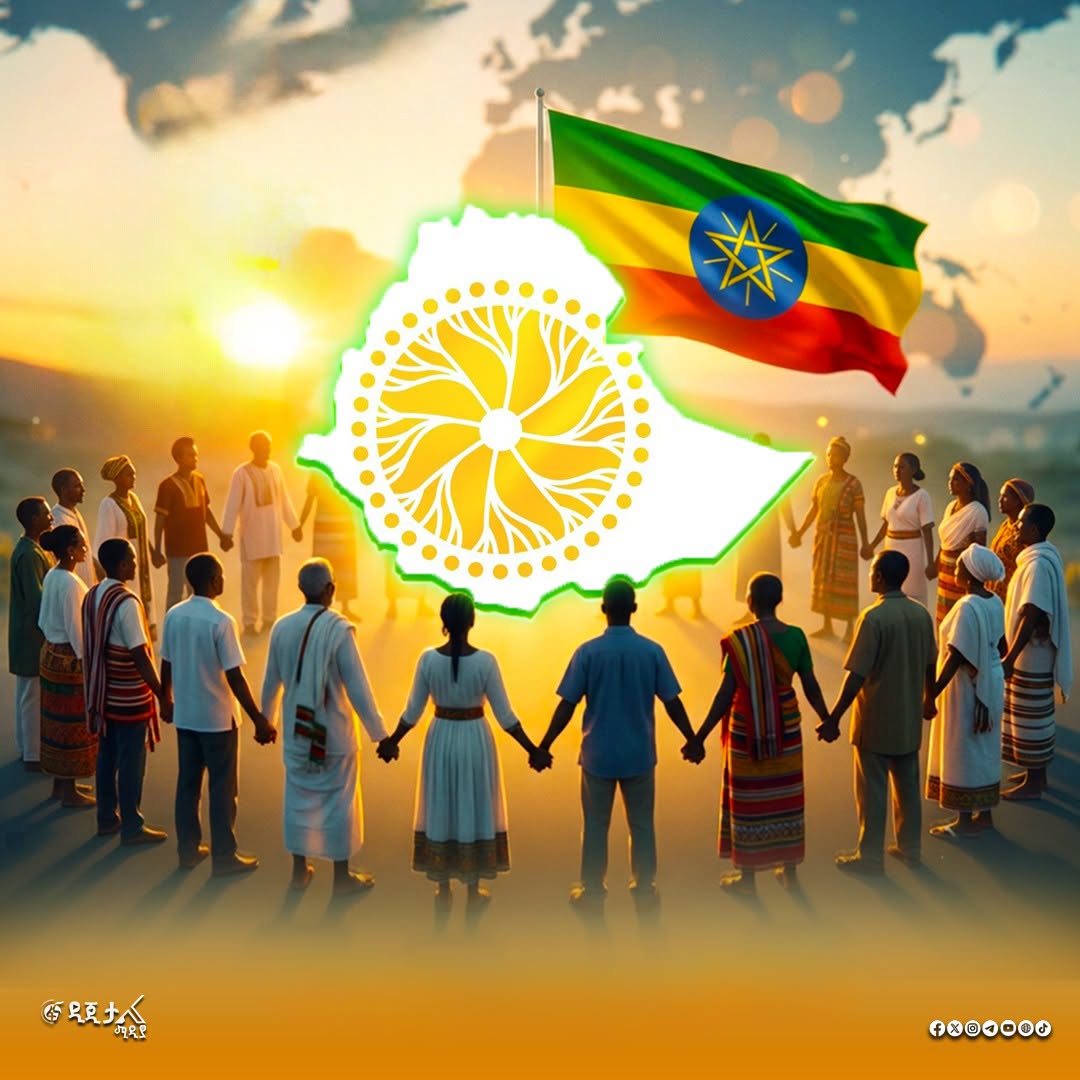
𝗘𝗜𝗚𝗛𝗧 𝗔𝗚𝗘𝗡𝗗𝗔𝗦, 𝗢𝗡𝗘 𝗛𝗜𝗦𝗧𝗢𝗥𝗜𝗖 𝗧𝗔𝗟𝗞: 𝗘𝗧𝗛𝗜𝗢𝗣𝗜𝗔 𝗣𝗥𝗘𝗣𝗔𝗥𝗘𝗦 𝗙𝗢𝗥 𝗔 𝗗𝗘𝗙𝗜𝗡𝗜𝗡𝗚 𝗡𝗔𝗧𝗜𝗢𝗡𝗔𝗟 𝗗𝗜𝗔𝗟𝗢𝗚𝗨𝗘
Addis Ababa, July 10, 2026 (FMC) — After years of gathering voices, identifying national concerns, and validating public inputs from across Ethiopia, the country’s National Dialogue process is approaching a defining stage where some of its most fundamental questions will be placed at the center of a historic national conversation.
The upcoming National Dialogue Conference, scheduled to begin on July 15, 2026, will be guided by eight major agenda pillars identified through an extensive nationwide consultation process.
These agendas represent broad national questions under which detailed issues, concerns, and possible pathways toward consensus will be deliberated over the course of the three-week forum.
Rather than emerging from a top-down political design, the eight agendas are the outcome of a broad public engagement process that sought to capture the grievances, aspirations, hopes, and concerns of Ethiopians from diverse backgrounds.
They reflect issues that have shaped the country’s political, social, economic, and institutional debates for decades.
The National Dialogue Commission has described the agendas as the foundation for structured discussions aimed at creating a platform where differing perspectives can be addressed through dialogue, mutual understanding, and consensus-building.
The first major agenda focuses on nation-building, addressing questions surrounding national identity, historical narratives, shared values, language, culture, and heritage.
These issues have long been central to Ethiopia’s political discourse, and the dialogue seeks to provide a platform for discussing how a diverse society can build a common sense of belonging while respecting its plurality.
Closely connected to this is the agenda on the structure and form of government, political and electoral systems, which covers fundamental questions related to Ethiopia’s governance arrangements, federal structure, power-sharing, political representation, and constitutional issues.
The discussions are expected to provide an opportunity for stakeholders to examine competing perspectives on governance and explore areas of possible consensus.
Another major area of discussion concerns federal cities, particularly Addis Ababa and Dire Dawa.
The agenda addresses questions related to the administration, status, ownership, and benefits associated with these cities, which have historically been subjects of political and social debate. Through dialogue, stakeholders will seek approaches that promote peaceful coexistence and mutual benefit.
The conference will also deliberate on religious affairs, including relations between religious institutions and the state, religious freedom, and the role of faith communities in society.
The discussions aim to strengthen Ethiopia’s longstanding traditions of religious coexistence while addressing concerns that have emerged around religion and public life.
Institution building, rule of law, and human rights form another central pillar of the dialogue.
The agenda focuses on strengthening democratic and judicial institutions, ensuring effective governance, protecting fundamental rights, and building institutions capable of serving citizens with trust and legitimacy.
Economic concerns are also among the key national questions to be addressed, particularly through the agenda on socio-economic issues, including the concerns of farmers and pastoralists.
Discussions under this pillar will examine issues related to livelihoods, land, economic opportunities, equitable development, and the participation of rural communities in national growth.
The agenda on corruption and good governance focuses on strengthening transparency, accountability, and institutional effectiveness.
It addresses concerns related to abuse of power, inequality in access to opportunities, and challenges that have affected public confidence in governance systems.
The eighth pillar, peace-building, addresses one of Ethiopia’s most pressing national challenges. It covers issues related to the causes of conflicts, conflict resolution mechanisms, armed groups, reconciliation, ceasefire arrangements, and transitional justice, with the aim of identifying sustainable approaches to peace and stability.
Together, these eight agendas represent interconnected national questions rather than isolated discussion topics.
They capture the complex realities of a country seeking to address historical disagreements, strengthen institutions, promote inclusive development, and build a more stable political environment.
The agenda-setting process was carried out through consultations involving a wide range of participants, including political actors, civic organizations, religious leaders, traditional representatives, women, youth, academics, and community members.
The process extended across more than 1,200 woredas, making it one of the broadest public consultation efforts undertaken in Ethiopia’s recent history.
Established in 2021, the Ethiopian National Dialogue Commission was mandated to facilitate an inclusive dialogue process aimed at helping Ethiopians address issues that have contributed to political divisions and social tensions through peaceful engagement.
As the country moves toward the conference, the significance of the eight agendas lies not only in the issues they contain but also in the method through which they will be addressed.
The dialogue represents an effort to shift political engagement away from confrontation and toward structured conversation, where differences can be debated and solutions explored around the table.
The upcoming three-week conference therefore represents more than a single national event. It marks a critical stage in Ethiopia’s broader effort to create a shared understanding of its challenges and aspirations, and to build consensus around questions that will influence the country’s future trajectory.