
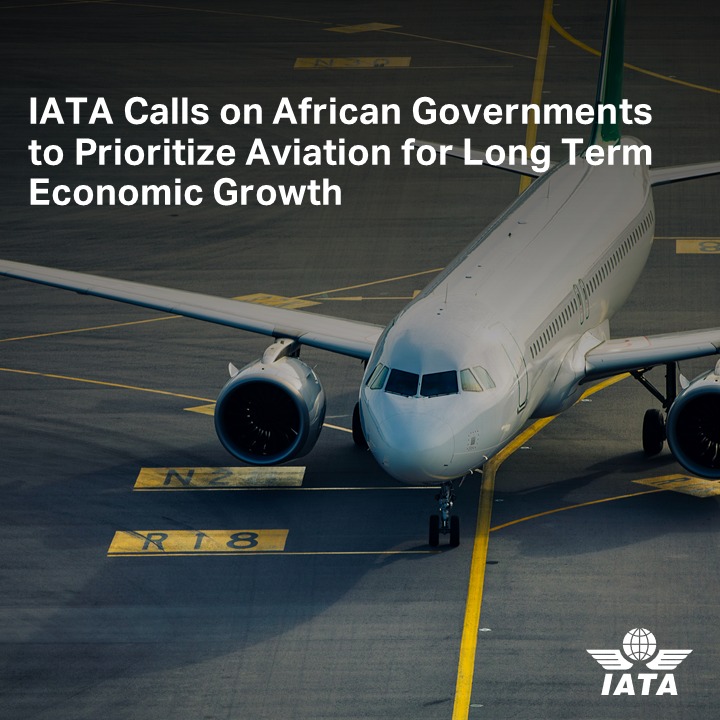
IATA Calls on African Governments to Prioritize Aviation for Long-Term Economic Growth
Addis Ababa, April 29, 2026 (FMC) — The International Air Transport Association (IATA) has called on African governments to prioritize aviation as a strategic driver of economic and social development, underscoring its role as essential economic infrastructure for the continent.
“Aviation is economic infrastructure for Africa. Its value lies in the long-term benefits it delivers,” said Kamil Alawadhi, IATA Regional Vice President for Africa and the Middle East, noting that a focus on safety, cost competitiveness, energy security and sustainability, and ease of doing business would support jobs, trade, tourism, and regional integration.
Speaking at the Focus Africa Conference in Addis Ababa, IATA highlighted that Africa’s aviation safety performance has improved, with accident rates declining from 12.13 per million sectors in 2024 to 7.86 in 2025, although this remains above the global average of 1.32.
It urged stronger implementation of ICAO Standards and Recommended Practices, improved publication of accident investigation reports, and wider application of global safety audit systems such as IOSA, ISSA, and ISAGO.
The association also stated that the cost of doing aviation business in Africa remains about 15% higher than the global average, largely due to taxes and charges.
It raised concern over high API-PNR charges in several countries and called for implementation of the ECOWAS decision to eliminate aviation taxes and reduce selected charges by 25%, while cautioning against source-based corporate taxation proposals that could lead to double taxation.
IATA further highlighted challenges in ease of doing business, particularly in the repatriation of airline revenues, noting that USD 774 million remains blocked globally as of March 2026, with African countries accounting for the largest share.
It cited Algeria, the XAF Zone, Mozambique, Eritrea, and Angola among the countries with significant blocked funds, and also called for easing visa restrictions, noting that nearly half of intra-African travel still requires visas.
On sustainability and energy security, IATA pointed to Africa’s potential in sustainable aviation fuel production and CORSIA participation, noting that the continent could supply 57.6 million Eligible Emission Units and up to 106 million tonnes of SAF-suitable feedstock by 2050 from agricultural residues, forestry waste, and municipal solid waste, provided that supportive policies and investment frameworks are in place.