
DISCOVER ETHIOPIA | Where the Forest Breathes: Kaffa’s Timeless Covenant with Nature
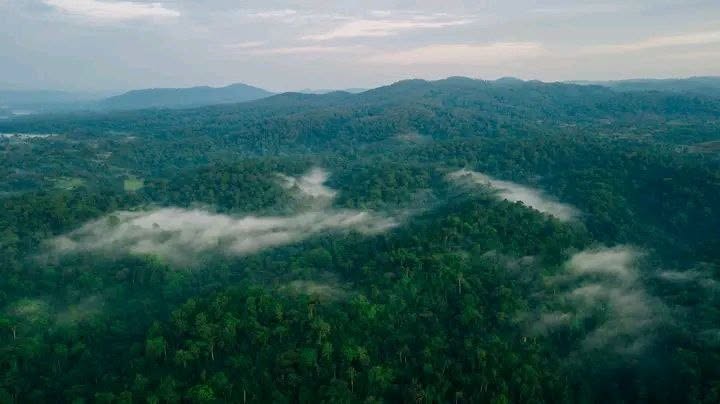
Addis Ababa, July 1, 2026 (FMC) — In the deep southwest of Ethiopia, where mist settles gently over endless green canopies and the air carries the scent of wild coffee and wet earth, lies Kaffa—a land where nature is not simply a backdrop to life, but its very foundation.
For centuries, this landscape has remained remarkably preserved, its forests standing as living archives of ecological abundance and cultural wisdom. Birds announce each dawn from dense treetops, rivers carve their paths through ancient terrain, and natural bridges formed over time quietly connect one green world to another. Coffee and spices grow in harmony beneath towering indigenous trees, completing a landscape that feels both timeless and alive.
Kaffa is widely recognized for its extraordinary ecological richness. The area is home to the Kaffa Biosphere Reserve, designated by the United Nations Educational, Scientific and Cultural Organization (UNESCO) in recognition of its global significance as a center of biodiversity.
Spanning more than 760,000 hectares, the biosphere reserve is among the most ecologically diverse landscapes in the world. It shelters over 250 plant species, around 300 mammal species, and more than 300 bird species.
Within its dense vegetation thrive ancient wild coffee forests, African redwood, bamboo stands, and a wide variety of indigenous trees that have shaped the ecological identity of the region for generations.
Yet the story of Kaffa is not only written in its biodiversity. It is equally defined by the people who have lived within it—the Kaficho community—whose way of life is inseparable from the forest itself.
For the Kaficho people, the forest is not an external resource to be extracted, but a living presence to be respected. Over centuries, they have developed an intricate cultural and ethical relationship with nature, guided by indigenous knowledge systems that place responsibility toward future generations at the center of daily life.
According to cultural expert Worku Woldemariam, the forest is deeply embedded in the identity of the Kaficho people.
For them, it is not merely land covered by trees, but a reflection of who they are—something to be protected with reverence and care.
This philosophy is not abstract. It is embedded in a set of customary institutions and unwritten social laws that have governed human interaction with the environment for generations.
One of the most striking of these traditions is a deeply rooted belief that a tree is not just plant life, but a living entity whose destruction carries the moral weight of taking a human life. Within this worldview, cutting down a tree without the consent of the community is not only forbidden but regarded as a profound violation of collective ethics.
Those who violate this norm face consequences that extend beyond legal judgment into the social fabric itself—ostracization, public accountability, and moral sanction.
At the center of this traditional governance system is a community court known as Shodekelo, where environmental offenses are publicly addressed and adjudicated. It is here that accountability is enforced not only through punishment but through communal consensus, reinforcing the shared responsibility of protecting the forest.
Alongside this institution is Kumbe Gudo, a long-standing indigenous management structure that oversees the protection and sustainable use of forest resources. Its function closely mirrors modern conservation frameworks, yet it is rooted in centuries of lived experience and communal stewardship.
Equally significant is the Kobo system, an arrangement through which forest areas are collectively managed and allocated. Under Kobo, community members may benefit from forest resources in sustainable ways—such as beekeeping or harvesting spices—while strict prohibitions remain against cutting trees or degrading the ecosystem. Even the act of carrying an axe into protected forest areas without purpose is considered a violation of community norms.
Another layer of this environmental ethic is found in Dejo, a traditional belief and value system that reinforces respect for nature. Through Dejo, teachings are passed across generations emphasizing that actions such as deforestation, burning forests, hunting wildlife, or disturbing ecological balance are strictly prohibited.
Together, these systems form a comprehensive indigenous conservation framework—one that has enabled Kaffa’s forests to endure through centuries of change, ensuring that ecological wealth is not only preserved but actively lived.
Today, Kaffa stands as a rare example of a landscape where biodiversity and culture remain inseparable. Its forests are not relics of the past, but living ecosystems sustained by an unbroken chain of cultural responsibility.
This legacy finds resonance in Ethiopia’s broader environmental journey. While Kaffa’s conservation ethic has been sustained through traditional systems for centuries, the country has also undertaken large-scale environmental restoration efforts in recent years through the Green Legacy Initiative.
Since 2019, billions of tree seedlings have been planted nationwide, contributing to Ethiopia’s expanding forest cover, which reached 23.6 percent in the previous fiscal year. These nationwide efforts continue to strengthen ecological restoration and environmental resilience across the country.
Seen together, Kaffa’s ancestral conservation philosophy and Ethiopia’s modern environmental campaigns reflect a shared truth: that the protection of nature is most effective when it becomes both a cultural value and a national commitment.
As the forests of Kaffa continue to breathe through generations of stewardship, they stand not only as a sanctuary of biodiversity, but as a reminder that humanity’s relationship with nature is ultimately one of responsibility, continuity, and care.