
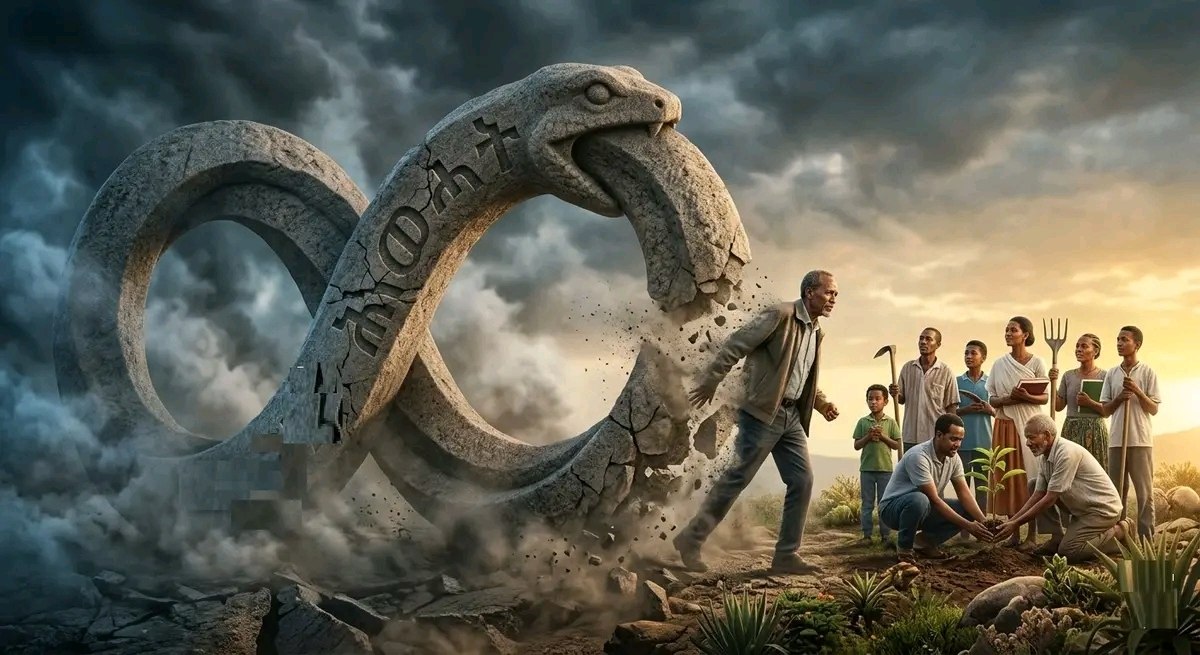
The Defunct TPLF’s Path of Self-Destruction: A Half-Century of Repeated Political Failure
Addis Ababa, July 1, 2026 (FMC) — For over five decades, the Tigray People’s Liberation Front (TPLF) has remained anchored in a rigid, exclusionary political mindset. This ideological inflexibility has not only stifled the development of the Tigray region but has repeatedly imperiled the sovereign stability and constitutional order of the Ethiopian state.
A critical examination of the organization’s history reveals a self-defeating cycle. It is a legacy defined by an inherent inability to embrace reform, a disdain for democratic norms, and a persistent reliance on force as an instrument for political survival.
While Ethiopia has undergone profound social, economic, and political transformation over the past decade, the defunct TPLF remains trapped in the ideological framework of the 1960s.
By clinging to the outdated concept of “revolutionary democracy,” the group has alienated itself from the modern political realities of a transitioning nation.
Had the leadership prioritized internal democracy and generational renewal, the organization might have successfully integrated into Ethiopia’s evolving political landscape. Instead, it has opted for institutional stagnation, failing to adapt to a new generation of citizens who prioritize peace and socioeconomic development.
The group’s history is fundamentally defined by a consistent rejection of constructive, peaceful dialogue. Rather than fostering internal discourse, the organization has historically resorted to purges and the systematic elimination of dissenting voices.
This destructive pattern was starkly illustrated by the catastrophic Northern Ethiopia War that erupted in 2020. Even after the 2022 Pretoria Peace Agreement—which provided a historic opportunity to exit this cycle of violence—hardline factions proved unable to abandon the mentality of armed insurrection.
Instead, these elements have chosen to prioritize military reorganization over the vital work of regional recovery. They are actively inciting fresh hostilities that threaten to undo years of progress.
A central pillar of this survival strategy has been the manipulation of public sentiment through the manufacturing of existential fear. Whenever the group faces accountability, it propagates the narrative that the people of Tigray are under an imminent existential threat.
By framing its own administrative failures as external attacks, the faction suppresses legitimate internal demands for reform.
This cynical approach ensures the continuation of a cycle that imposes an immense humanitarian cost on the people of Tigray and the nation at large.
The recent move to forcibly dismantle the legitimate Tigray Interim Regional Administration and the imposition of coercive military conscription decrees in June 2026 represent the latest, most dangerous iterations of this power-struggle trap.
By rejecting the constitutional mandate of the interim government, the TPLF faction has signaled its definitive abandonment of the Pretoria framework.
Domestic officials, alongside international observers, have converged on the conclusion that these maneuvers are direct and flagrant breaches of the peace process. Such actions jeopardize the region’s hard-won recovery and divert vital resources away from essential development programs and reconstruction efforts.
As the faction continues to treat regional governance as a prize to be seized by force, it is evident that the cycle can only be broken through the total abandonment of armed struggle. This requires a fundamental leadership overhaul and a sincere commitment to face accountability for decades of recurring conflict.
As the group pursues its current path, it is not merely facing a political crisis; it is locked in a process of self-destruction. This trajectory confirms that the organization lacks the capacity for the self-correction necessary to secure a peaceful and prosperous future for the region.