
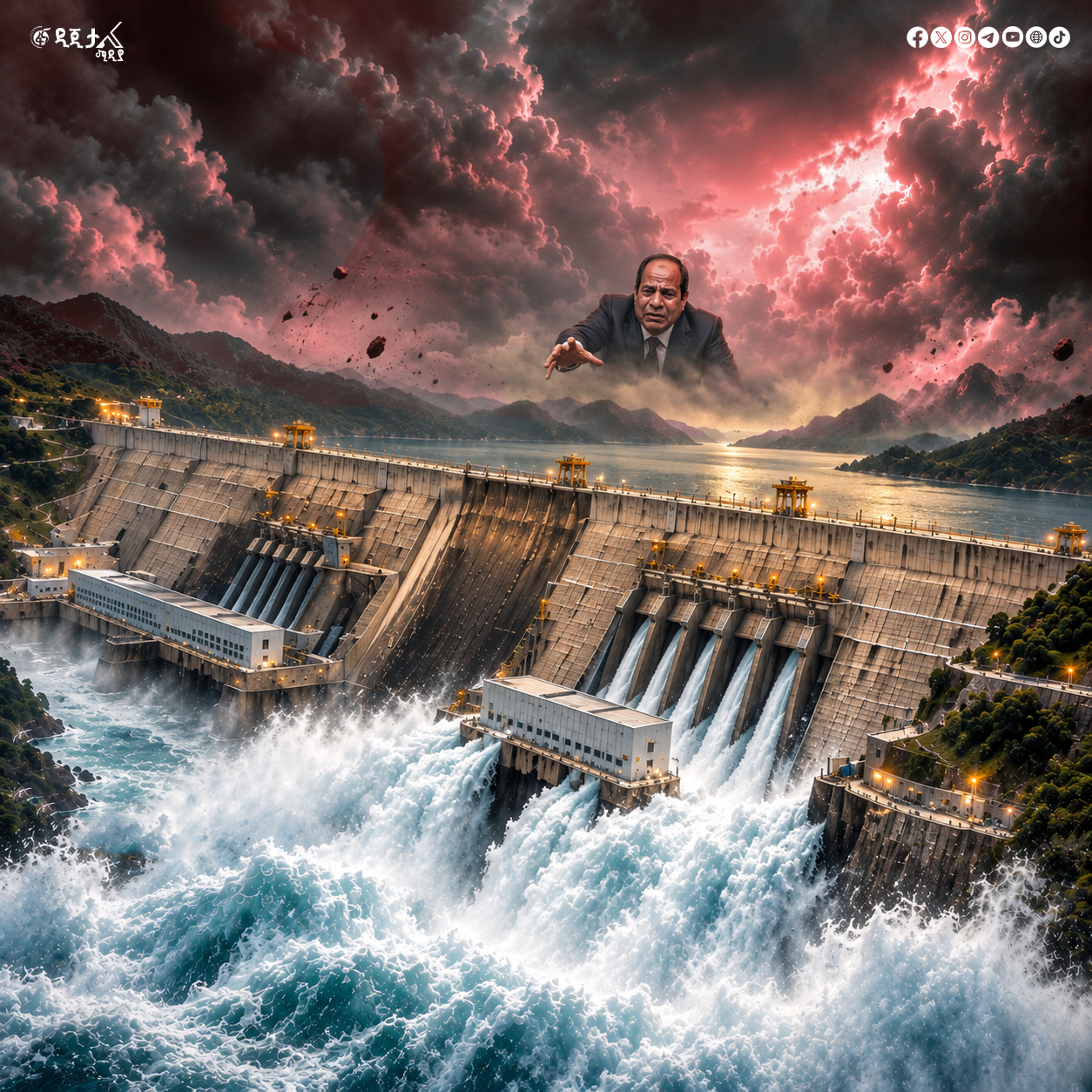
Cairo’s Water-Security Rhetoric Pushes the Abbay into a Conflict Narrative Ethiopia Has Never Embraced
Addis Ababa, August 29, 2026 (FMC) — Egypt’s Foreign Minister Badr Abdelatty’s remarks on Ethiopia, the Grand Ethiopian Renaissance Dam (GERD) and the Abbay River, aired in The National News’s “On The Record with Hadley Gamble,” reveal how Cairo continues to cast Ethiopia’s sovereign development efforts through the prism of existential threat and confrontation.
The interview was published by The National on August 25, 2026, with the outlet itself reporting Abdelatty’s characterization of Ethiopia’s dam projects as an “existential” issue for Egypt.
Abdelatty’s central argument rested on Egypt’s near-total dependence on the Nile and his assertion that Ethiopia must recognize Egypt’s “right to life to exist.”
Yet that framing fundamentally shifts the question from how sovereign Nile Basin states can develop their resources equitably and responsibly to whether Egypt’s dependence can effectively constrain Ethiopia’s development.
Ethiopia has never disputed Egypt’s legitimate interests in the Abbay and Nile system. What Ethiopia rejects is the notion that those interests confer a veto over Ethiopia’s sovereign development choices.
The GERD is a hydropower project designed to generate electricity, not to consume the river’s waters. Ethiopia has consistently maintained that its utilization of transboundary waters must be equitable and reasonable and must not cause significant harm to downstream countries.
The distinction is critical. Water used to generate electricity is not water permanently removed from the river system.
The Abbay is being harnessed to power Ethiopia’s development, expand electricity access and strengthen regional energy integration. Turning that development into an existential security threat does not alter the physical purpose of the dam.
Yet Abdelatty went further. After 13 years of negotiations, he said Egypt had reached a deadlock and asserted that Cairo would not accept unilateral action.
He invoked Article 51 of the UN Charter, maintaining that if harm occurred that interrupted the flow of water, Egypt would have the right to defend itself under international law.
The National likewise reported that Abdelatty said Egypt reserved the right to act after the negotiations reached a stalemate.
That language is consequential.
A dispute over the management of a transboundary river is being placed increasingly inside a security framework in which a development project is characterized as an existential threat and military self-defense is invoked as a possible response. Such a trajectory carries consequences far beyond Cairo’s political rhetoric.
Ethiopia, by contrast, has consistently kept its position anchored in development, cooperation and sovereign equality.
Addis Ababa has pursued the GERD as part of a broader effort to overcome its severe energy deficit, expand productive capacity and transform its natural resources into economic opportunity.
The project does not represent an Ethiopian campaign against Egypt; it represents Ethiopia’s determination to develop Ethiopia.
The wider historical context is equally important. Egypt’s reliance on the Nile is real and serious, but dependence does not create ownership.
Nor can historical arrangements concluded without Ethiopia’s participation permanently determine Ethiopia’s developmental rights. The 1959 Nile Waters Agreement was concluded between Egypt and Sudan; Ethiopia was not a party to it.
The future of the Nile therefore cannot rest on an inherited hierarchy in which downstream dependence automatically translates into upstream restraint.
The Abbay is a vital Ethiopian resource. Ethiopia has a sovereign right to utilize it for development while respecting the legitimate interests of downstream countries. That right is not a concession to be granted by Cairo; it is part of the broader principle of sovereign equality.
Abdelatty’s invocation of Egypt’s water security also deserves to be viewed against the nature of the GERD itself.
Ethiopia has repeatedly maintained that the dam’s primary purpose is hydropower generation and that cooperation can ensure that downstream interests are protected. The project has also opened possibilities for regional electricity trade and integration.
This is precisely where Cairo’s security-centered narrative becomes problematic: it risks transforming a potentially shared development opportunity into a permanent strategic confrontation.
Egypt’s water concerns can and should be addressed through technical dialogue, negotiated arrangements and transparent cooperation.
But such engagement must begin from recognition that Ethiopia is a sovereign upstream country with legitimate developmental needs—not from the assumption that Ethiopia’s development is itself a threat.
The same principle applies to the language of force. Egypt’s military exists to defend Egypt. Ethiopia’s development institutions exist to develop Ethiopia. Neither country benefits when a hydropower project is rhetorically transformed into a military flashpoint.
The Nile Basin requires a different strategic imagination.
Ethiopia has consistently pursued a course in which water resources can become engines of development rather than instruments of confrontation.
The GERD demonstrates that approach: electricity for Ethiopia, opportunities for regional power integration and a model of development based on harnessing natural resources rather than weaponizing them.
Cairo’s existential framing does not erase these realities.
Nor does Egypt’s dependence on the Nile entitle it to determine what Ethiopia may build on Ethiopian territory.
The Abbay is not an Egyptian possession, and Ethiopia’s development is not an act of aggression.
The durable answer to Nile questions lies not in threats, militarized narratives or inherited claims of privilege, but in sovereign equality, equitable and reasonable utilization, scientific cooperation and mutual benefit.
Ethiopia has chosen development.
It has chosen cooperation.
And it has repeatedly demonstrated that its ambition is not to deprive its neighbors, but to harness its own resources to transform the lives of its people.
That position remains firm. The Abbay will continue to serve Ethiopia’s development, while Ethiopia continues to defend its sovereign rights and pursue a cooperative future for the Nile Basin.