
The Harvest Behind the Hard Currency: Ethiopia’s Agricultural Shift from Import Bills to Export Power
Addis Ababa, September 21, 2026 (FMC) — A tonne of wheat grown at home can mean more than food in a national silo. It can mean foreign currency retained, pressure eased on the import bill and a little more room for a country to finance its own priorities.
A tonne of coffee exported can bring in the hard currency needed to pay for machinery, fuel, medicine and the technologies that domestic production still requires.
This is the economic story increasingly taking shape in Ethiopian agriculture: the sector is being repositioned not only as a source of food and rural livelihoods, but also as an instrument of foreign-exchange conservation, export expansion and wider economic transformation.
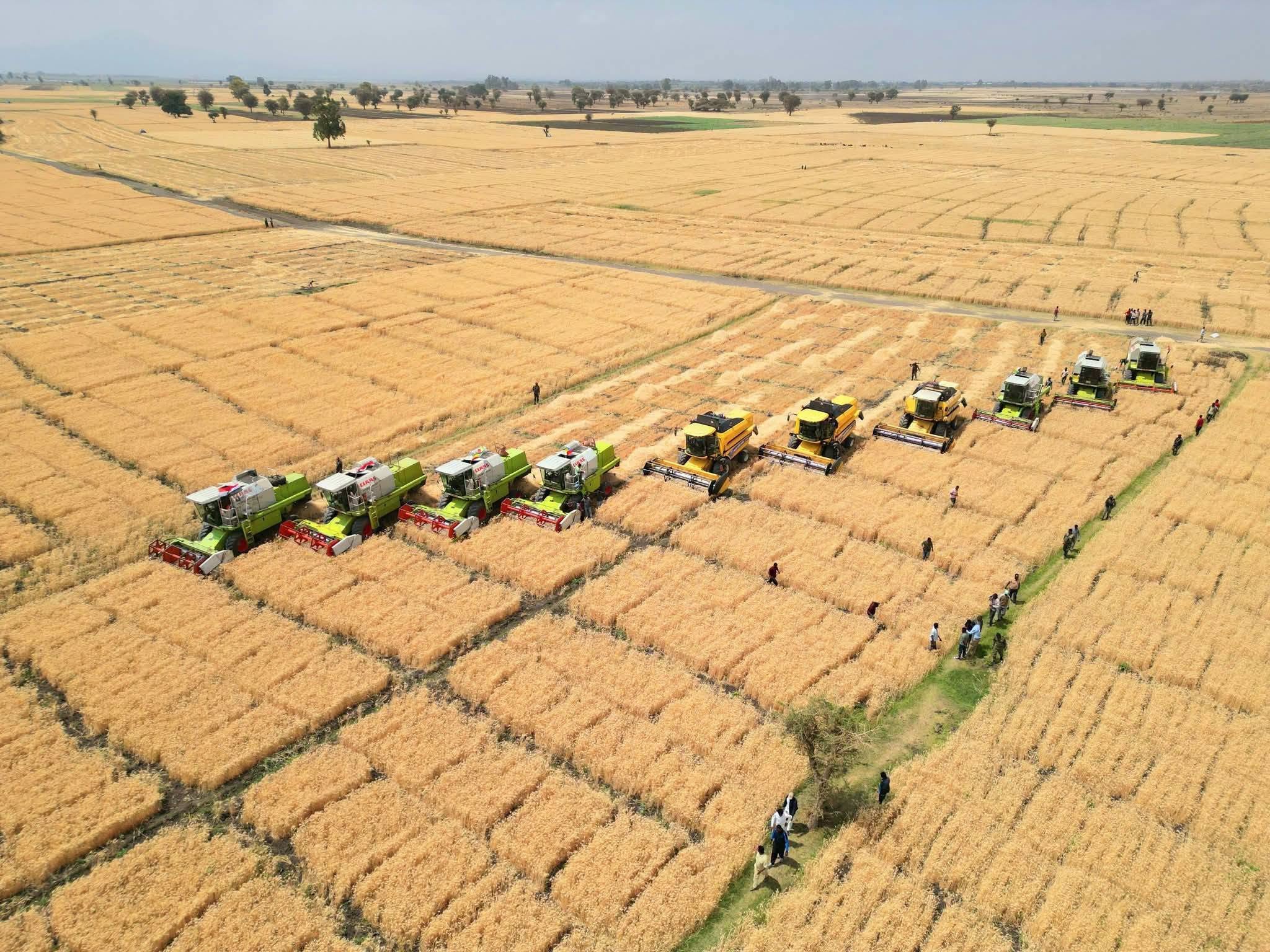
For years, wheat imports represented a substantial recurring demand on Ethiopia’s foreign currency. The Ministry of Agriculture says the country had been spending as much as one billion US dollars annually on wheat imports.
The expansion of domestic production across rainy and dry seasons has since sharply altered that picture. In 2025, Ethiopia produced a reported 280 million quintals of wheat, while the ministry estimated that domestic output had replaced 2.6 million quintals of imports and saved an average of one billion dollars annually.
The significance lies in the change to the country’s economic arithmetic. When a staple can be supplied increasingly from domestic farms, foreign exchange that would otherwise have gone toward imports can be retained for other national needs.
The gain is not automatic or unlimited: import requirements depend on domestic demand, harvest performance, prices and market conditions.
But the direction of the policy is clear—expand local productive capacity and reduce the structural cost of relying on overseas supply.
Wheat is only one side of that equation. Export agriculture provides the other.
Coffee, Ethiopia’s signature agricultural export, has become a major source of foreign currency. In the 2024/25 fiscal year, the country exported more than 470,000 tonnes of coffee and earned approximately 2.65 billion dollars.
In July 2026, the government announced that coffee export earnings had reached a new record of three billion dollars in the current fiscal year.
The coffee sector also illustrates how the value captured from agriculture depends on more than the size of the harvest. Quality improvements, productivity, direct export opportunities for farmers and access to international markets all influence how much value reaches producers and the national economy.
Ethiopia’s efforts to expand value-added coffee exports reflect a further ambition: to capture a larger share of the value generated beyond the farm gate, rather than relying predominantly on exports of raw beans. <Cite refs={[“turn0search7″,”turn0search36”]}/>
Agriculture’s broader expansion adds depth to this shift. Ethiopia’s Government Communication Service reports that total agricultural output rose from 41.7 million tonnes to around 150 million tonnes over seven years, while cluster farming expanded to 9.5 million farmers cultivating 12.8 million hectares. Such growth enlarges the potential supply base for domestic markets, agro-processing and export-oriented production.
The strategic opportunity is to connect these gains into a functioning economic chain: higher productivity reduces import dependence; reliable surpluses create export opportunities; stronger value chains raise earnings; and domestic processing can retain more value within the country.
That chain requires investment in storage, transport, quality control, finance, processing and market access.
Production alone cannot guarantee foreign-exchange gains if the supporting systems remain weak.
Nor does agricultural expansion mean Ethiopia has outgrown its food-security challenges. The country continues to face vulnerability to climate shocks, conflict-related disruptions and market pressures. The USDA’s 2025 outlook, for example, projected that wheat imports would remain significant in the 2025/26 marketing year despite increased domestic production.
That distinction matters. Ethiopia’s agricultural transformation is not a declaration that imports or food insecurity have disappeared. It is a drive to reduce exposure, expand domestic supply and improve the country’s ability to earn foreign exchange from what its land and farmers produce.
The deeper change is in agriculture’s place within the national economy. Fields are increasingly connected to the balance of payments; harvests to industrial inputs; export crops to foreign-currency earnings; and food production to the country’s wider economic autonomy.
For Ethiopia, the harvest is becoming more than a measure of what the country can eat or sell. It is increasingly part of how the country finances what it wants to build.