
Cairo’s Latest Attack on Ethiopia Exposes a Mummified Nile Mindset Still Clinging to a Pharaoh-Era Sense of Entitlement
Addis Ababa, September 22, 2026 (FMC) — There is something striking about the language coming from Cairo: the more Africa changes, the more some of its arguments seem determined to remain frozen in another age.
The latest remarks by Egypt’s Minister of Water Resources and Irrigation, Hani Sewilam, are a revealing case. Speaking to foreign correspondents in Cairo, Sewilam said Ethiopian politicians “need to be educated” about the difference between constructing something inside their own country and building a dam on an international river. He compared dam construction to “laying a carpet” at home and rejected Ethiopia’s assertion of sovereign rights over dams constructed on the Nile.
The choice of words matters.
It is not merely another exchange in a long-running dispute over the Nile. It brings into sharp relief the fundamental question underneath the rhetoric: can an African country use the natural resources within its sovereign territory to pursue development while respecting the rights and interests of its neighbours—or must development first pass through the approval of a downstream state?
Ethiopia’s answer has been consistent: its development cannot be placed indefinitely behind somebody else’s veto.
That position, however, is not a declaration that transboundary rivers belong to one country alone. International watercourse law itself recognizes both equitable and reasonable utilization and the obligation to take appropriate measures to prevent significant harm to other states sharing an international watercourse. It also recognizes the duty of cooperation and participation in the use, development and protection of such waters.
Ethiopia has repeatedly invoked precisely those principles.
The country’s argument is therefore not that the Nile exists outside international law. It is that international law does not transform a downstream country into the proprietor of an upstream country’s natural resources.
That distinction is at the heart of the Ethiopian position.
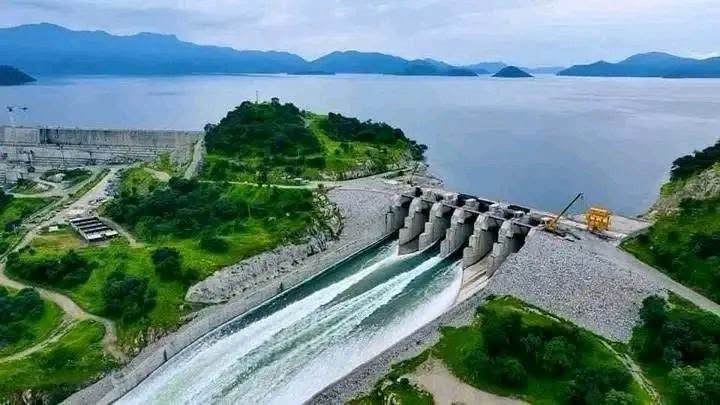
The Grand Ethiopian Renaissance Dam is being built and operated on Ethiopian territory as a hydropower project. Ethiopia’s Ministry of Water and Energy describes the GERD as a 6,450-megawatt project on the Abay, roughly 30 kilometres upstream of the Sudanese border. Its central purpose is electricity generation—not the permanent consumption of Nile water.
That point is frequently lost beneath the political thunder surrounding the dam.
Water passing through a hydropower turbine does not disappear. The water used to generate electricity continues downstream. There can be changes in the timing and regulation of flows, as well as reservoir evaporation, but hydropower generation itself is fundamentally different from consumptive irrigation use. The GERD’s central development function is therefore to transform the energy potential of flowing water into electricity while maintaining downstream flow.
And the electricity is no longer merely an Ethiopian ambition.
It is becoming a regional asset.
Recent Ethiopian Electric Power data reported by ENA show that Ethiopia exports electricity to Kenya, Djibouti, Sudan and Tanzania, with GERD accounting for 52 percent of electricity-export revenue. The expanding electricity trade is being presented by Ethiopian authorities as part of wider regional power connectivity and integration.
This is the reality that makes the latest rhetoric increasingly difficult to separate from the larger question of what kind of Nile future Africa wants.
A river can be treated as a line dividing interests, or as a system connecting economies.
Ethiopia has repeatedly presented the latter vision.
Its official position has been that transboundary rivers should become instruments of cooperation, shared prosperity and regional integration. The Ethiopian Ministry of Water and Energy has also pointed to the GERD’s regulated flows and the country’s watershed and afforestation programmes as part of a broader approach to basin sustainability. In an October 2025 statement, the Ministry specifically argued that GERD regulation reduces peak flood flows and benefits lower-riparian communities, while highlighting the contribution of the Green Legacy Initiative to the health of the basin.
That argument deserves to be examined on its merits rather than buried beneath rhetoric.
Before the GERD, the Blue Nile’s seasonal flows could produce enormous flood peaks. Ethiopia’s Ministry has cited historical measurements at Sudan showing daily peaks exceeding 800 million cubic metres in August and 750 million cubic metres in September in the pre-GERD period, while reporting substantially regulated releases after the dam’s operation. The Ministry argues that such regulation can reduce destructive flood peaks downstream. These are Ethiopian government figures and claims, but they illustrate why the GERD debate cannot be reduced to a simple narrative of upstream development versus downstream vulnerability.
There is another dimension that deserves equal attention: resilience.
A functioning basin is not protected only by arguing over how much water arrives at its lower reaches. It is also protected by strengthening the landscapes that generate, store and regulate that water.
That is where Ethiopia’s Green Legacy enters the picture.
Ethiopia has invested on a vast scale in afforestation, watershed rehabilitation and environmental restoration. Its own water authorities have explicitly linked the Green Legacy effort with sustaining the country’s hydropower infrastructure and improving watershed conditions.
In other words, the Ethiopian argument is that the country is not simply extracting value from the Abay and sending the consequences downstream. It is investing in the ecological systems from which the river itself emerges.
The larger irony is difficult to miss.
While the latest Egyptian rhetoric focuses heavily on what Ethiopia must not do, Ethiopia points to what it is already doing: generating electricity, expanding regional power trade, regulating flows, rehabilitating watersheds and pursuing development through renewable energy.
None of this erases legitimate questions over the management of a transboundary river. Nor does it make negotiations unnecessary. The United Nations record on the GERD reflects precisely that complexity: Ethiopia has maintained that its use must be equitable and reasonable and must not cause significant harm, while Egypt has raised concerns over downstream water security and sought legally binding arrangements.
But there is a profound difference between demanding cooperation and demanding subordination.
The first belongs to the modern language of shared rivers.
The second risks reviving an older political imagination in which the interests of an upstream African nation are measured against the preferences of a downstream power.
That is where the imagery of a “mummified” mindset becomes more than rhetoric. It captures the tension between an Africa that is changing rapidly and an argument that appears unwilling to change with it.
The continent of today is not the continent of yesterday.
African states are building dams, railways, industrial parks, digital systems, power pools and cross-border infrastructure. They are seeking to turn natural resources into electricity, manufacturing capacity, food security and economic opportunity. Regional integration is no longer a distant slogan; it is increasingly expressed through roads, grids, markets and shared infrastructure.
Ethiopia’s own electricity exports offer one tangible example. Power generated in Ethiopia is crossing national borders and entering neighbouring economies, turning an energy resource located within Ethiopian territory into a regional economic connection.
That is the Ethiopia presented by its current development trajectory: not a country seeking to close the river behind a wall, but one seeking to turn water into energy and energy into connectivity.
And this is why the language directed at Ethiopia matters.
To tell Ethiopians that they “need to be educated” about exercising development rights does not settle a technical question. It shifts the conversation from law and cooperation toward hierarchy. It invites the world to ask whether the real disagreement is about protecting downstream interests—or about accepting that Ethiopia, like every sovereign state, has legitimate development interests of its own.
Ethiopia has made its position clear: it will use its natural resources for the development of its people while adhering to the principles of equitable and reasonable utilization and avoiding significant harm. It has also repeatedly said that it remains committed to cooperation and mutually beneficial arrangements around shared waters.
That is not a declaration of war on the Nile.
It is a declaration that the Nile belongs to a basin of nations, not to the political imagination of one nation.
And there is perhaps an even deeper lesson in the argument.
The Abay does not begin in Cairo.
Its waters rise in the Ethiopian highlands. Its landscapes, forests and tributaries form part of the ecological architecture that carries the river toward Sudan and Egypt. Ethiopia therefore has every reason to protect those landscapes—not merely for its own development, but because the health of the basin is inseparable from the health of the river.
The answer to that reality cannot be to deny Ethiopia’s right to develop.
It should be to build a system in which development upstream and security downstream reinforce one another.
That is precisely why Ethiopia has continued to speak of cooperation, mutual benefit and regional integration.
The choice before the Nile basin is therefore larger than the latest statement from Cairo.
It is between an old politics of possession and a new politics of partnership.
Between seeing the river as a prize to be controlled and seeing it as a resource whose benefits can multiply across borders.
Between a past in which one country’s interests were treated as the centre of the basin and a future in which all riparian countries must find space to develop.
The Nile is not a relic sealed inside a museum.
Neither is Africa.
Ethiopia’s message is that its people cannot be asked to remain spectators to the development of their own natural resources, nor can sovereign development be permanently subordinated to another country’s fears or preferences.
The country is building, generating, restoring, connecting and integrating.
Its answer to confrontation is development. Its answer to exclusion is cooperation. Its answer to attempts to freeze the basin in an older political order is to move forward under the principles of sovereignty, equitable utilization, shared responsibility and regional prosperity.
The river is moving.
Africa is moving.
And Ethiopia is moving with it.