
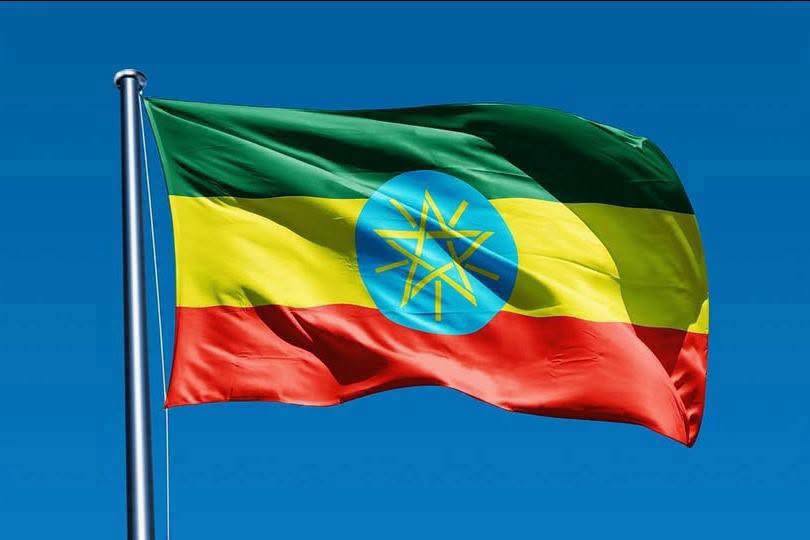
Ethiopia: A Great Nation, a Proud People, a Grand Vision
Addis Ababa, October 11, 2026 (FMC) — A nation’s greatness is not measured by the length of its history alone, nor by the vastness of its territory or the size of its population. It is measured by its ability to draw strength from the past, overcome the trials of the present, and build a future worthy of the generations to come.
By that measure, Ethiopia stands at a defining point in its long national journey: carrying the weight of a remarkable history, the aspirations of a proud and diverse people, and the responsibility to turn its enduring potential into shared progress.
For centuries, Ethiopia has preserved a distinct historical identity, sustained by generations who endured hardship, defended their homeland, and passed on a legacy that continues to shape the country’s place in Africa and the wider world. Its story is one of endurance, but endurance alone cannot determine the future. The greater challenge is to transform inherited strength into tangible gains in peace, opportunity, dignity, and prosperity.
That is where the meaning of a great nation must be found—not simply in what it once achieved, but in what it can build from the foundations its history has provided.
Ethiopia’s past offers both inspiration and responsibility. Its achievements are a source of pride, while the difficulties and divisions that have marked different periods of its history underscore the work that remains. A confident nation does not need to deny its challenges or live permanently in their shadow. It draws lessons from experience, confronts what must change, and moves forward with a clearer sense of purpose.
The strength of that undertaking rests above all with the Ethiopian people.
Across a country of many languages, cultures, traditions, and historical experiences, national progress depends on the ability to make diversity a source of strength and a foundation for shared opportunity. Ethiopia’s population is not merely a measure of its size; it represents an immense reservoir of talent, creativity, enterprise, and ambition. When these capabilities are brought together around common national goals, the potential to achieve lasting change becomes far greater.
Unity, in this sense, is not the erasure of differences. It is the ability to build a common future while respecting the richness of the people who will shape it. Lasting national cohesion requires trust, meaningful participation, a commitment to peace, and the conviction that progress must open opportunities across society.
This is the larger significance of vision. A grand vision gives a nation direction beyond the demands of the moment. It connects today’s decisions with tomorrow’s possibilities and asks whether the work being undertaken now will leave the next generation better equipped to advance the country’s journey.
Ethiopia’s newly formed Medemer Government enters this chapter with that responsibility before it. Following the June 1 general election, the formation of the new government on October 5 marked the beginning of another five-year governing term. The task ahead is to translate national aspirations into results that people can experience in their daily lives.
The promise of a new governing chapter will ultimately be measured not by declarations alone, but by progress in the areas that shape people’s lives: peace and security, economic opportunity, public services, education, productive capacity, and the institutions that sustain public trust. It will also be measured by the government’s ability to widen the space for cooperation, strengthen national cohesion, and ensure that development serves the aspirations of the wider population.
The road ahead will demand persistence. National transformation is neither automatic nor achieved in a single political term. It requires capable institutions, sustained investment, responsible leadership, public participation, and the willingness to turn ambitious objectives into practical outcomes. It requires a long view—one that recognizes that the foundations laid today may deliver their fullest benefits to generations not yet born.
For Ethiopia, the stakes extend beyond its borders. A country of its scale and historical significance has considerable potential to contribute to Africa’s economic advancement, regional cooperation, and wider aspirations for greater self-reliance. Realizing that potential begins at home: with a more peaceful society, a stronger productive economy, and a national development path that enables people to turn their capabilities into achievement.
The opportunity before the Medemer Government is therefore larger than the start of another administration. It is an opportunity to advance a national project in which the lessons of the past inform the choices of the present, and the choices of the present open a wider horizon for the future.
The measure of success will be found in what endures: peace that people can trust, institutions that command confidence, opportunities that expand, and a shared sense of belonging strong enough to carry the country through difficult times. These are the foundations on which national pride becomes a lived experience and vision becomes a reality.
Ethiopia’s greatness, then, is not a finished story preserved in history books. It is a continuing responsibility entrusted to each generation. Its people carry the memory of what came before, the power to shape what exists today, and the obligation to build what comes next.
A great nation. A proud people. A grand vision.
For Ethiopia, these are not merely words about the past. They are a promise to the future—and a call to turn the country’s enduring potential into a legacy of peace, shared prosperity, and progress for generations to come.