
Egypt Should Apologize to Ethiopia and Reward It for Its Contribution to Sustaining Nile Waters: Minister Habtamu Itefa
Addis Ababa, November 5, 2026 (FMC) – Egypt should apologize to Ethiopia and reward it for its contribution to sustaining the availability of Nile waters, rather than accusing the country of threatening downstream water security, Minister of Water and Energy Engineer Habtamu Itefa said.
In an exclusive interview with Fana Media Corporation, the Minister said Ethiopia has made substantial contributions to maintaining the Nile’s water availability, including planting more than 56 billion trees over the past seven to eight years, most of them in the river basins of Tekeze, Abbay and Baro.
“Rather, we should have received a reward for what we have done on the Nile in terms of water availability,” he said.
The Minister contrasted Ethiopia’s efforts to protect river basins with what he described as Egypt’s excessive water consumption, particularly through extensive sugarcane and rice cultivation. He noted that sugarcane has a high crop coefficient and requires substantial amounts of irrigation water.
He argued that Egypt should examine its own water-use practices instead of blaming Ethiopia for water-related challenges.
Ethiopia contributes 86 percent of the Nile’s water, the Minister said, stressing that Egypt should give priority to Ethiopia’s demands and obtain its consent when considering development plans involving the river.
He rejected allegations that Ethiopia intends to deprive Egypt of water, making clear that the country has no intention of obstructing the river’s flow to downstream nations.
“We are not going to stop the water from flowing to Egypt. We believe this river is for everyone,” he said.
The Minister emphasized that the Nile has sufficient water to serve the needs of all countries along its course, including Ethiopia, Egypt, Sudan, Uganda, Tanzania and Kenya. He said the river should be treated as a shared resource and a foundation for cooperation and collective prosperity, rather than as the exclusive property of any one country.
He also underscored Ethiopia’s development needs, noting that a population of more than 130 million requires water for irrigation, hydropower generation, fisheries and other productive activities.
The Minister said Ethiopia’s water development efforts are driven by the country’s need to secure food, expand energy production and improve the livelihoods of its people. He stressed that Ethiopia would continue using its water resources while ensuring that its development does not harm downstream countries.
Addressing Egypt’s repeated allegations over Ethiopia’s development of the Nile, he challenged the accusation of unilateral action by pointing to Egypt’s own history of developing major water projects without consulting upstream countries.
He cited the construction of the Aswan High Dam, saying Egypt proceeded despite serious concerns raised by Ethiopia. He also questioned the diversion of water to Toshka Valley and the Sinai Desert, arguing that such projects should have involved consultation with upstream countries, particularly Ethiopia.
The Minister further rejected the use of colonial-era agreements to restrict Ethiopia’s right to develop its water resources, saying Ethiopia was excluded from those arrangements and does not recognize them.
He said Ethiopia would present its position at the forthcoming UN Water Conference in Abu Dhabi, supported by technical evidence demonstrating that its water development projects benefit countries across the region.
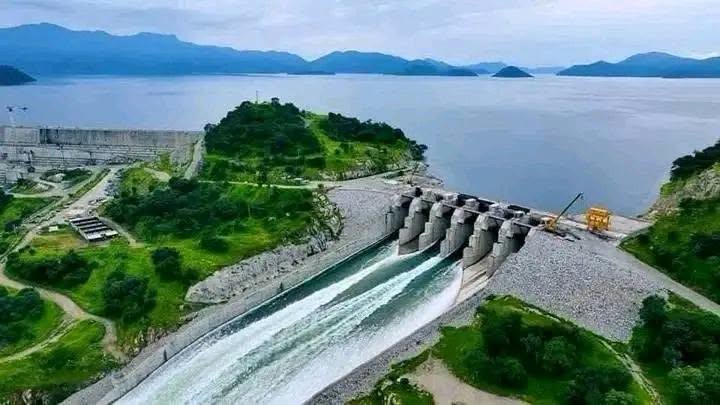
Citing the benefits of the Grand Ethiopian Renaissance Dam (GERD), he said Ethiopia’s development has contributed to regional electricity connectivity and helped regulate water flows, while its broader environmental efforts have supported the protection of river basins.
The Minister reiterated that Ethiopia seeks shared prosperity rather than conflict over water, emphasizing that the country’s development vision should also benefit Sudanese, Somalis, Djiboutians and Eritreans.
“Prosperity for all of us, poverty for no one,” he said.