
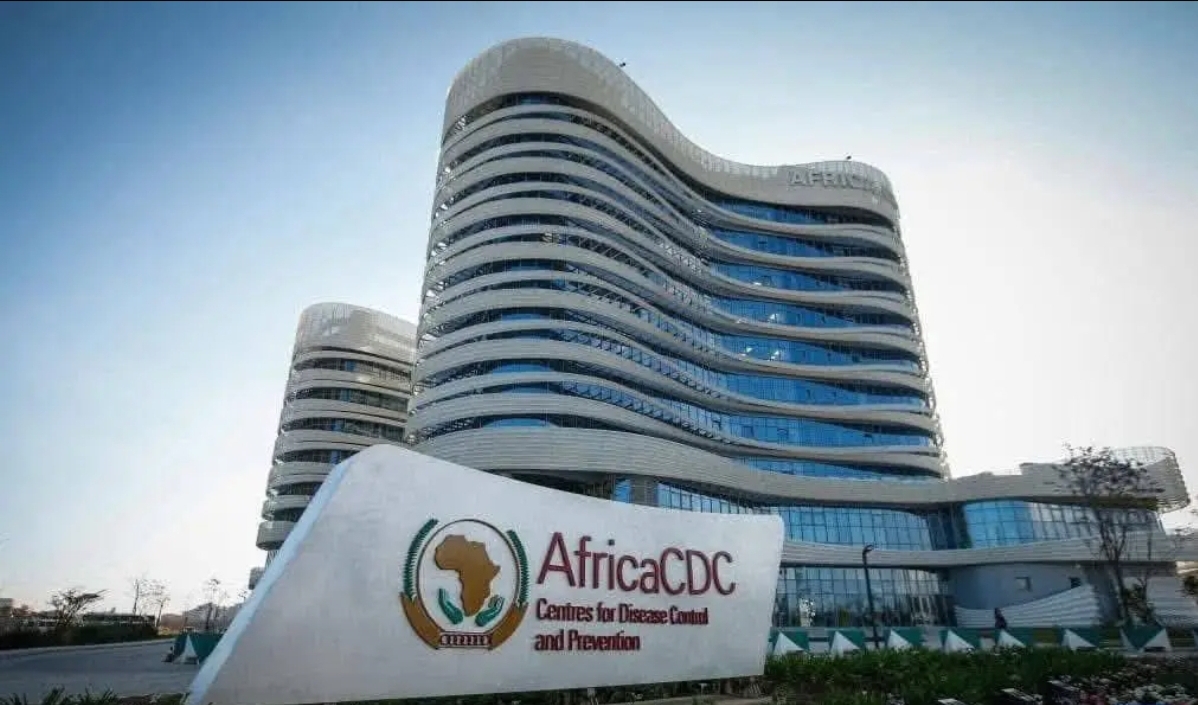
Africa CDC Rejects Politically Motivated Allegations, Asserts African Member States’ Authority over Continental Institution
Addis Ababa, November 17, 2026 (FMC) — The Africa Centres for Disease Control and Prevention (Africa CDC) has strongly rejected allegations published by Health Policy Watch, describing the article as a politically motivated attack on the continental institution and its leadership, and asserting that its authority and governance rest with African Union member states and the Union’s statutory organs.
In a statement issued on Tuesday, Africa CDC said the article, published on November 16, relied on anonymous sources, contained factual errors and disregarded official documents and responses provided to its author before publication. The agency maintained that African member states, acting through the AU’s established institutions, are the legitimate authorities responsible for its leadership and accountability.
Africa CDC emphasized that it has operated as an autonomous AU institution since February 2022 under a statute adopted by member states. It is accountable to the Chairperson of the AU Commission on administrative and financial matters, as well as to its Governing Board, the Committee of Heads of State and Government and the AU Assembly.
The agency also dismissed claims concerning the suspension of its Director-General, confirming that he has never been suspended, sanctioned or placed on leave since assuming office in April 2023. It said no formal proceedings or administrative decision supporting such claims existed. It further stressed that decisions on renewal of the Director-General’s tenure fall exclusively within the mandate of the Governing Board, the Committee of Heads of State and Government and the AU Assembly.
On staffing and administration, Africa CDC reported that its workforce had grown from 262 in 2023 to 620 in 2026, representing a 137% increase. It said the number of member states represented among its staff had risen from 21 to 49 out of 55, while the proportion of women in senior positions at P5 level and above had increased from 11% to 38%.
The agency also clarified that the redeployment of three regional directors was decided by the Chairperson of the AU Commission under his statutory authority, not by the Director-General. According to the statement, the decision preserved the officials’ ranks, salaries and benefits.
Addressing questions about its financial management, Africa CDC pointed to the unmodified, or unqualified, opinion issued by the AU Board of External Auditors on its 2025 financial statements in May 2026, describing it as the highest category of audit opinion. It acknowledged that audits had made recommendations concerning bank reconciliation, internal oversight and travel management, but said it had accepted and was implementing them. The agency added that US$23 million in reconciliation items predating its institutional autonomy had since been reconciled and that it established its own Office of Internal Oversight in 2025.
On travel expenditure, Africa CDC said approximately 88% of its 2025 travel budget went towards emergency response and capacity-building activities in member states. It acknowledged audit observations regarding late ticket bookings and weaknesses in ticket tracking, saying measures had been introduced to monitor unused tickets, refunds and compliance. The statement noted that auditors had made no adverse findings concerning the travel entitlements of the Director-General or staff.
The agency also challenged the article’s comparison of its US$463 million grant portfolio with a year-end cash balance of US$52.9 million, explaining that the former represents the total value of grant agreements, including multi-year commitments, while the latter reflects funds held on a specific date.
Regarding the upcoming Conference on Public Health in Africa (CPHIA) 2026, Africa CDC said the event is being jointly organized by the Government of Ethiopia, the African Union, Africa CDC and Ethiopian Airlines under a signed host agreement. As of November 17, one week before the conference opens, 39,069 participants from 129 countries had registered. The statement said the event is financed through host-country contributions, Ethiopian Airlines sponsorship, registration and exhibition fees, institutional resources and in-kind support, with an audited report to be submitted to member states.
Beyond responding to the allegations, Africa CDC cited what it described as its institutional progress, including the expansion of its directly managed grant portfolio from US$52 million to US$463 million and an increase in funding partners from seven to 44. It also highlighted its role in continental public health emergency responses, the establishment of the joint Africa CDC–WHO Incident Management Support Team, the operationalization of the Africa Epidemics Fund and the implementation of 48 continental research projects.
The agency further pointed to efforts to strengthen Africa’s health sovereignty through local health-product manufacturing, the African Pooled Procurement Mechanism and digital health initiatives, as well as its representation of the world’s regional health organizations on the WHO Task Force on Global Health Architecture Reform.
Africa CDC concluded that it would not be diverted from its mandate by what it described as politically motivated journalism and its sponsors, reaffirming its commitment to defending the institution, its staff and its autonomy while protecting the health of an estimated 1.4 billion Africans.
“The future of Africa’s health security will be decided in Africa, by Africans, according to Africa’s own rules, with support from partners,” Director-General Kaseya declared in the statement.