
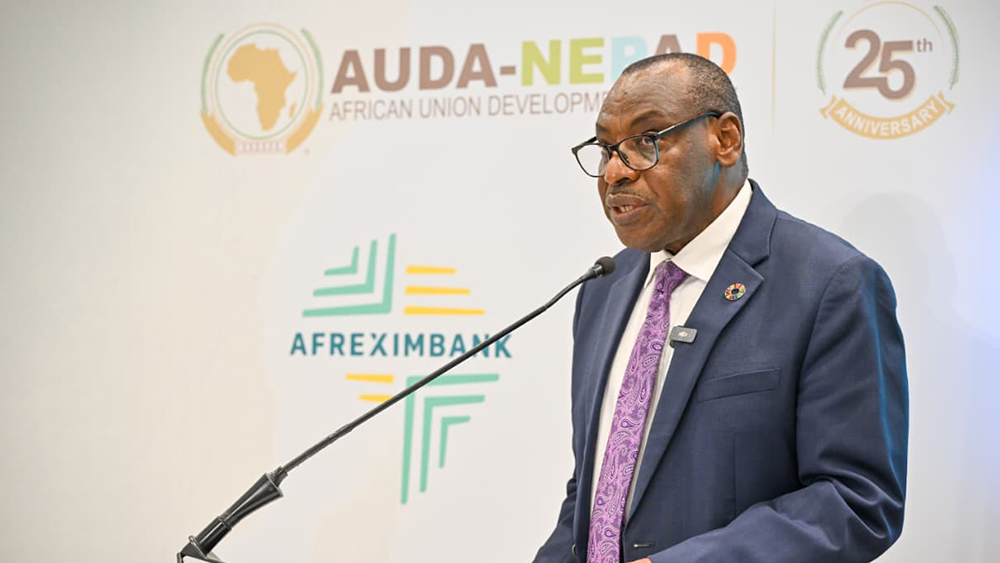
ECA Chief Looks to Ethiopia to Advance Africa’s Climate Implementation Agenda Ahead of COP32
Addis Ababa, November 10, 2026 (FMC) – United Nations Under-Secretary-General and Executive Secretary of the Economic Commission for Africa (ECA), Claver Gatete, has called for stronger institutional ownership, sustainable financing and measurable results to turn climate commitments into lasting action, highlighting Ethiopia’s role in advancing the implementation agenda ahead of COP32.
Speaking at the Africa Pavilion on the sidelines of the UN Climate Summit (COP31) in Antalya, Türkiye, Gatete stressed that climate initiatives must deliver tangible outcomes beyond the presidencies that launch them, supported by effective coordination and mechanisms that ensure continuity.
He drew attention to the mounting climate and economic pressures facing African countries, noting that the continent is warming at approximately 0.3 degrees Celsius per decade, with 2024 among its warmest years on record.
Climate-related impacts are costing some African countries an average of 5 percent of their gross domestic product, while some are allocating as much as 9 percent of their national budgets to respond to extreme weather events, he noted.
Gatete underscored the significant gap between Africa’s climate financing requirements and available resources. The continent needs an estimated 277 billion US dollars annually to implement its Nationally Determined Contributions through 2030, while current climate finance flows cover only about 11 percent of that requirement.
He cautioned that climate financing should ease, rather than deepen, the economic pressures associated with high borrowing costs, while supporting investment in resilience, energy access and economic growth.
Reflecting on global climate initiatives launched since the adoption of the Paris Agreement in 2015, Gatete noted that nearly 500 cooperative initiatives have brought together governments, international organizations, businesses, investors and civil society.
At COP30 in Belém, Brazil, more than 480 existing initiatives were brought together under the Global Climate Action Agenda, producing 120 Plans to Accelerate Solutions by June 2026 to strengthen coordination and continuity.
However, he cited a 2025 assessment by the Council on Energy, Environment and Water, which examined 203 cooperative climate initiatives and found that only 28 percent had dedicated budgets. The assessment also underscored the importance of clear targets, institutional arrangements and monitoring mechanisms in ensuring progress.
Gatete identified three essential conditions for turning climate initiatives into lasting results: institutional ownership beyond the presidency that launches them, adequate financing for implementation, and measurable outcomes supported by clear targets, realistic timelines and transparent reporting.
In this regard, he highlighted the COP31 Presidency’s Climate Implementation Bridge, which seeks to help countries translate climate and development commitments into projects capable of attracting financing. Ethiopia is among the initiative’s first five pilot countries.
He noted that Ethiopia’s participation could strengthen its project preparation capacity and access to climate finance, while generating practical experience ahead of hosting COP32 in Addis Ababa.
Gatete further emphasized that climate investment in Africa must advance broader development priorities, including energy access, food security, resilient infrastructure, industrialization and job creation.
He reaffirmed ECA’s commitment to working with the African Union, member states and development partners to advance these priorities, stressing the importance of applying the lessons from COP31 as Ethiopia prepares to host the next climate summit.
Ethiopia is scheduled to host COP32 in Addis Ababa in November 2027.