
CPHIA 2026 Closes with New African Commitments on Health Financing, Local Production and Emergency Preparedness
Addis Ababa, November 28, 2026 (FMC) – African countries have made new commitments to mobilize domestic resources, expand local pharmaceutical production, strengthen regional procurement and improve emergency preparedness as the Fifth International Conference on Public Health in Africa (CPHIA 2026) concluded in Addis Ababa.
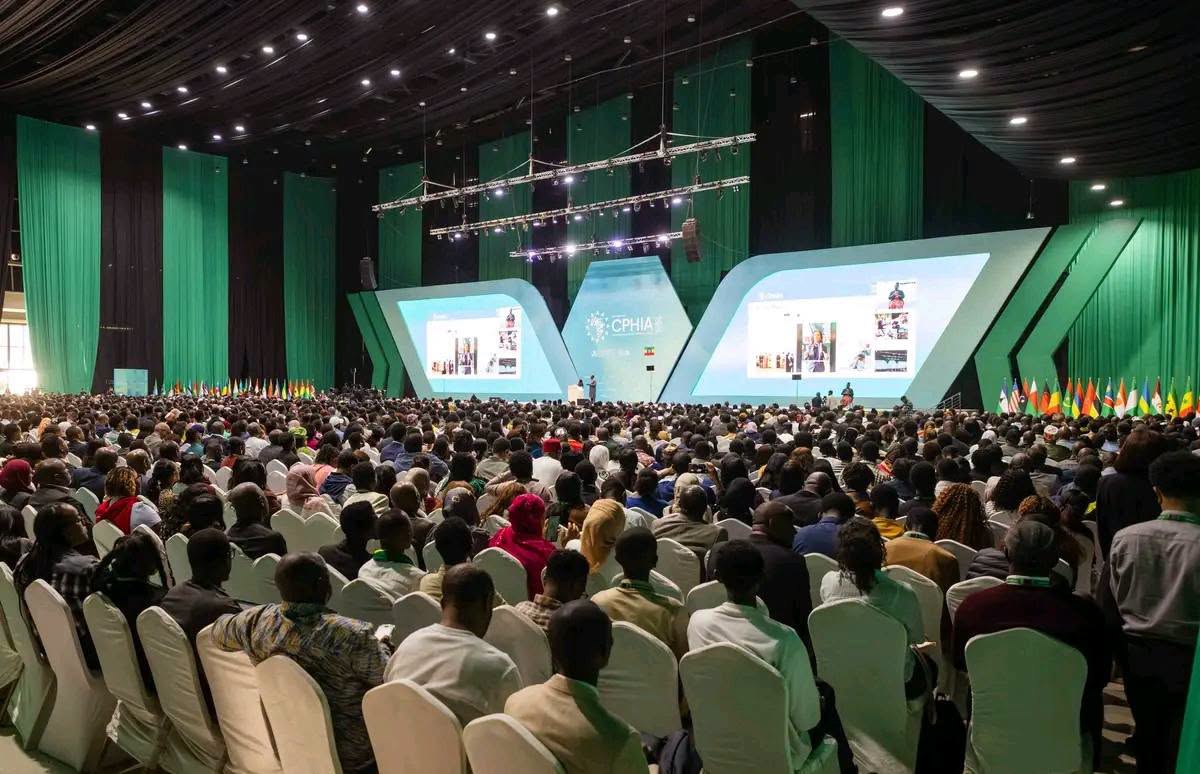
The five-day conference, co-hosted by the Africa Centres for Disease Control and Prevention (Africa CDC) and the Ethiopian Government, brought together 29,000 in-person participants and another 270,000 online from 135 countries. Delegates included six Heads of State and Government, 63 ministers, scientists, health professionals, manufacturers, civil society representatives and young people.
Held under the theme “Africa’s Health Security and Sovereignty: Transformation from Health Dependency and Vulnerability to Ownership and Resilience,” the conference translated calls for greater health sovereignty into commitments covering financing, local manufacturing, disease surveillance, digital health and the continent’s role in global health governance.
Domestic financing and local production
The Central African Republic committed to increase the share of its national budget allocated to health from approximately four percent in 2026 to 10 percent by 2029, with quarterly expenditure reporting to strengthen accountability.
Ghana announced a US$1 billion investment over four years to establish pharmaceutical and biomanufacturing hubs, while Zambia broke ground on a cholera vaccine manufacturing facility, with fill-and-finish operations targeted within a year.
Ghana also authorized direct procurement of locally manufactured snake antivenom. Meanwhile, Africa CDC and the African Medicines Agency are set to submit a continental quality assurance policy to the African Union in early 2027.
Regional cooperation on medicine procurement also gained momentum, with Sudan, South Sudan and Botswana signing the African Pooled Procurement Mechanism agreement, while Zimbabwe is completing its national procedures to join. Five Southern African Development Community countries also joined regional pooled procurement arrangements, which are projected to generate estimated savings of US$200 million.
Emergency preparedness and Sudan’s health recovery
The conference addressed the need to strengthen the continent’s capacity to anticipate and respond to disease outbreaks, including Ebola, mpox and Marburg.
Member States agreed to establish integrated climate-health early warning systems with predefined response triggers and contingency financing. They also committed to institutionalizing the One Health approach through shared laboratory infrastructure, genomic surveillance and cross-border data sharing.
With the Bundibugyo Ebola outbreak continuing in the Democratic Republic of the Congo, Gavi announced an advance purchase commitment for up to 1.5 million doses of a vaccine against the strain, subject to successful Phase 3 trial results. The revised continental Ebola response plan is estimated to require US$1.576 billion over six months, with the World Bank leading its socioeconomic protection component.
Restoring Sudan’s war-affected health system also emerged as a continental priority. Sudanese Health Minister Dr. Haitham Mohammed Ibrahim identified an annual funding gap of at least US$700 million over the next three years to restore essential services, protect health workers and rebuild disease surveillance.
Africa CDC pledged support for Sudan’s efforts to establish a functional emergency operations centre, restore laboratory and genomic sequencing capacity, and reinforce its health workforce.
Maternal health, digital transformation and accountability
Tanzanian President Samia Suluhu Hassan launched a continental roadmap targeting three objectives: zero home deliveries, zero preventable maternal and newborn deaths, and zero unvaccinated children. Tanzania also pledged 60 scholarships for specialist training.
The Beginnings Fund announced US$665 million for maternal and newborn health interventions across 14 African countries.
Ethiopian Prime Minister Abiy Ahmed launched a continental roadmap on artificial intelligence and digital health and announced plans to establish an AI university in Ethiopia that would be open to students from across Africa. The newly introduced Africa Health Atlas will provide standardized and comparable health indicators for all 54 African countries to support national planning and investment.
Africa CDC also released the continent’s first public health intelligence report, linking data analysis with operational action, and launched a health law consortium with the Coalition for Epidemic Preparedness Innovations (CEPI) to help countries address legal and regulatory barriers to emergency preparedness and response.
Accountability featured prominently in the conference outcomes, with Africa CDC introducing a mechanism to monitor implementation of the Lusaka Agenda. Zambia committed to report on its progress at the next CPHIA, while the United Nations Economic Commission for Africa offered technical support to countries restructuring their health budgets.
Conference participants called on governments and partners to align their efforts around “one plan, one budget, one report,” underscoring the need to ensure that political commitments translate into resources mobilized, budgets executed and measurable improvements in health services.
The conference also marked a milestone in Africa’s engagement with global health governance, bringing all seven candidates for the next Director-General of the World Health Organization to an African platform for discussions with the continent’s leaders on their visions and Africa’s priorities.
Delegates agreed that the next conference would assess progress against the commitments made in Addis Ababa, including resources mobilized, budget implementation and tangible improvements in health services.
#Ethiopia #AfricaCDC #CPHIA2026 #HealthSovereignty #AfricanHealth