
Ethiopia and Russia in a Multipolar World: Advancing National Interests Through Strategic Partnership
Addis Ababa, October 28, 2026 (FMC) — As global power relations shift and emerging economies seek a greater voice in international affairs, Ethiopia’s partnership with Russia is gaining renewed significance, offering opportunities to expand diplomatic options, strengthen economic cooperation and advance national development priorities.
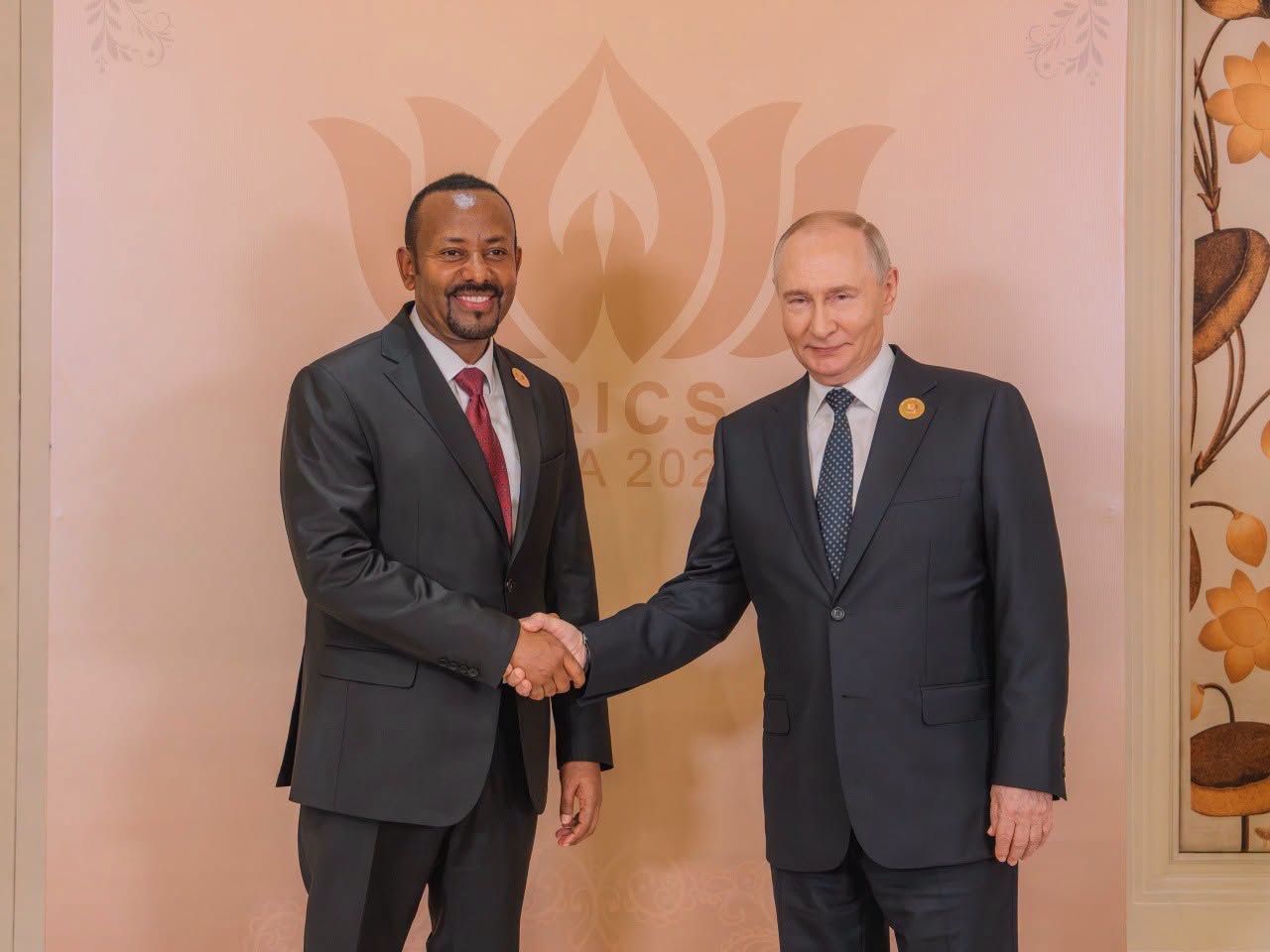
The September meeting between Prime Minister Abiy Ahmed and Russian President Vladimir Putin on the sidelines of the 18th BRICS Summit in New Delhi reflected this momentum. Putin described Ethiopia as a longstanding and reliable African partner, emphasizing equality and mutual benefit as the foundations of bilateral relations. He also noted that bilateral trade more than tripled in 2025 and welcomed Ethiopia’s constructive contribution to BRICS since becoming a full member in January 2024.
For Ethiopia, the relationship extends beyond bilateral diplomacy. It intersects with the country’s pursuit of an independent foreign policy and its efforts to strengthen its voice in a changing international order. BRICS offers Addis Ababa an additional platform to advance its interests in trade, investment, development financing and global governance, while broadening cooperation with major emerging economies. Its value lies not in replacing existing international relationships, but in expanding Ethiopia’s options and capacity to pursue its priorities.
Recent engagements point to opportunities for translating diplomatic momentum into practical cooperation. During their September meeting, PM Abiy and Putin discussed trade and investment, defence and security, education, technology, cultural exchanges and people-to-people relations, alongside climate and development priorities, including COP32. The discussions followed Russian Foreign Minister Sergey Lavrov’s July talks in Addis Ababa with Foreign Affairs Minister Gedion Timothewos, which addressed trade, investment, technology transfer and multilateral cooperation.
These areas offer scope for a more productive partnership. Ethiopia can seek expanded markets for its products, investment in productive sectors, stronger scientific and technical cooperation, and skills development aligned with its economic transformation. Putin’s reference to more than 20,000 Ethiopians educated in Russia points to an established foundation for further academic exchanges, research and specialized training. Expanding trade will be more consequential if it creates sustainable opportunities for Ethiopian producers and businesses.
The partnership also matters within Africa’s broader search for greater agency in international affairs. A more multipolar world can offer countries additional sources of investment, technology and diplomatic support, but a wider range of partners does not automatically guarantee strategic autonomy. That depends on how effectively countries negotiate, assess competing interests and ensure international cooperation serves their own priorities.
For Ethiopia, closer relations with Russia need not come at the expense of engagement with other global powers and institutions. Constructive cooperation across diverse partnerships can widen its choices and strengthen its negotiating position. This requires evaluating agreements on their merits, prioritizing sustainable economic benefits, ensuring technology cooperation builds domestic capacity, and approaching multilateral platforms according to clearly defined national interests.
The next challenge is to turn high-level engagement into measurable results. Trade growth must be sustained and diversified; investment should strengthen productive capacity; educational exchanges should develop relevant expertise; and scientific cooperation should build Ethiopian institutions. Achieving these outcomes requires viable projects, clear implementation arrangements and consistent follow-through—not diplomatic declarations alone.
As the third Russia–Africa Summit opens in Moscow on October 28, Ethiopia’s engagement with Russia forms part of a wider continental discussion about development, international representation and cooperation in a changing global order. The opportunity for Addis Ababa is to build on established ties while shaping the relationship around present-day priorities.
Ultimately, Ethiopia’s influence in a multipolar world will depend not simply on its closeness to any particular power, but on its ability to build mutually beneficial partnerships, negotiate effectively and convert diplomatic engagement into national capability. That is the strategic test—and the potential value—of its evolving relationship with Russia.