
Ethiopia Increasingly Viewed as Potential Global Economic Hub Following Economic Reforms – Finance Minister
Addis Ababa, June 11, 2026 (FMC) – Finance Minister Ahmed Shide said Ethiopia is increasingly being viewed as a potential global economic hub following the successful implementation of the country’s comprehensive macroeconomic reform program.
Ethiopia’s House of People’s Representatives held its 25th regular session in the fifth year of its tenure today, in the presence of stakeholders, to deliberate on the proposed draft federal budget for the 2026/27 Ethiopian fiscal year.
The draft budget reached Parliament after the Council of Ministers, at its 56th regular meeting held on June 9, unanimously approved the proposed 2.34 trillion Birr federal budget for the 2026/27 (2019 E.C.) fiscal year and referred it to the House of People’s Representatives for deliberation and approval.
During today’s session, lawmakers deliberated on the draft budget proclamation before referring it to the Standing Committee on Planning, Budget and Finance Affairs for detailed examination. The committee has been tasked with reviewing the proposed budget and submitting its recommendations ahead of final deliberation and approval.
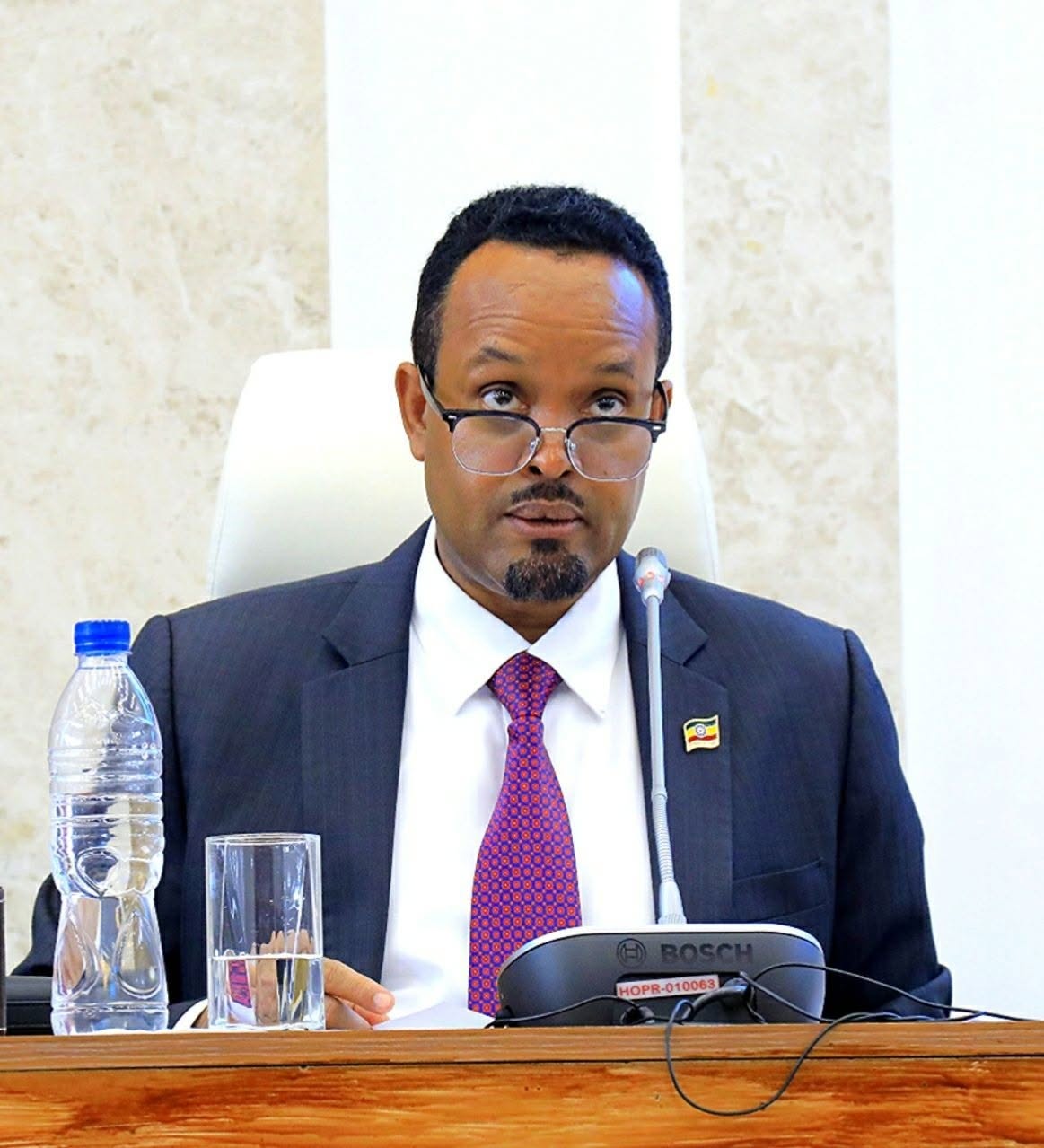
Finance Minister Ahmed Shide presented a statement on the federal government’s 2019 E.C. fiscal year draft budget forwarded by the Council of Ministers.
In his statement, the Minister said that the comprehensive macroeconomic reforms implemented since 2024/25 (2017 E.C.) have significantly eased external balance of payments pressures and foreign exchange shortages.
According to the Minister, the transition to a market-based foreign exchange management system has not only alleviated foreign currency shortages but also significantly narrowed the gap between official and parallel market exchange rates.
He stated that in the 2017 E.C. fiscal year, merchandise trade revenue increased by 119 percent, rising from 3.8 billion USD in 2016 to 8.3 billion USD.
The Minister added that the trade deficit has declined significantly in the current fiscal year as export performance continues to strengthen.
He also noted that the completion and operationalization of the Grand Ethiopian Renaissance Dam has increased national productivity and created additional foreign exchange earnings through electricity exports to neighboring countries.
Regarding monetary policy reform, Ahmed Shide explained that the reforms have led to the establishment of a modern, market-based interest rate system that enhances efficiency and strengthens the financial sector while supporting economic growth.
He added that commercial banks now have full autonomy to negotiate and determine interest rates with their customers based on market conditions.
The Minister further noted that the National Bank of Ethiopia is implementing measures to modernize and strengthen the financial sector in line with a reformed monetary policy framework.
The establishment of the Ethiopian Capital Market, he said, has created a conducive environment for both government and private enterprises to raise long-term financing through a modern capital system.
He also stated that the government has implemented social welfare expenditures in a responsible manner to ease cost-of-living pressures on low-income segments of society following the macroeconomic reforms.
Accordingly, significant budgetary allocations have been made for fuel subsidies, fertilizer, the Productive Safety Net Program, edible oil, essential medicines, and salary adjustments for federal and regional government employees.
The Minister further noted that Ethiopia’s recent economic performance is attracting increasing attention from foreign investors, positioning the country as an emerging investment destination.
He added that several economic indicators suggest that GDP growth could reach 10.2 percent in the current fiscal year.