
Ethiopian Gov’t Details Cross-Sector Reform Progress Under Pragmatic Economic and Political Approach
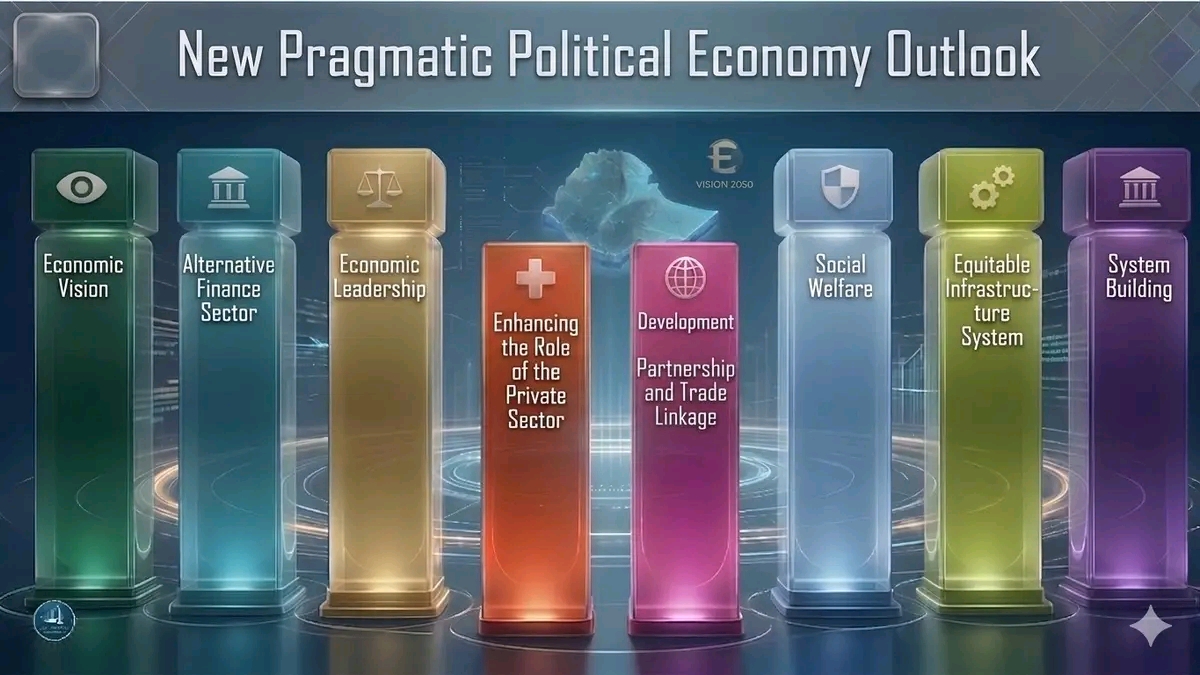
Addis Ababa, April 23, 2026 (FMC) – Ethiopia has moved away from its previous rigid political and economic ideologies, adopting a policy framework centered on a New Pragmatic Political Economy Outlook that prioritizes practical implementation and results-based governance, according to a statement released by the Office of the Prime Minister.
The statement notes that the reform direction, led by Prime Minister Abiy Ahmed, has established a governance approach that positions the government and the private sector as key partners, while institutionalizing a results-oriented work culture focused on efficiency and practical outcomes.
The update is linked to the Council of Ministers’ 100-day and nine-month performance review of the federal government for the 2025/26 fiscal year, convened this week under the leadership of the Prime Minister.
Under the pragmatic outlook, the statement outlines progress across eight key pillars.
In the economic vision pillar, it notes that homegrown economic reforms and multi-sectoral directions have redefined the role of the state, fostering market competition and strengthening economic capacity.
In the alternative finance sector, financial options have been expanded through capital market development, strengthened public-private partnerships, and the creation of a modern financial market system.
In economic leadership, integrated monitoring and evaluation systems, macro committees, and sectoral councils are said to have improved the effectiveness and efficiency of monetary policy and project management.
On the role of the private sector, the statement indicates that it has been positioned as the engine and primary driver of the economy, with efforts made to create a conducive environment for it to function as a key development partner.
In development partnership and trade linkage, progress is noted in strengthening international trade competitiveness through debt restructuring, new financing arrangements, acceleration of the WTO accession process, and implementation of the AfCFTA.
In social welfare, a people-centered support system based on inclusivity, accessibility, and quality has been established to support the sustainability of social protection services.
In infrastructure development, an equitable system has been implemented based on local potential, guided by a legal framework and aimed at addressing historical gaps in infrastructure distribution.
In system building, the statement highlights progress in national inclusive dialogues, justice and civil service reforms, and the strengthening of democratic institutions.