
Ethiopian Youth Turn Food-System Challenges into Innovation and Enterprise — ESFSAC
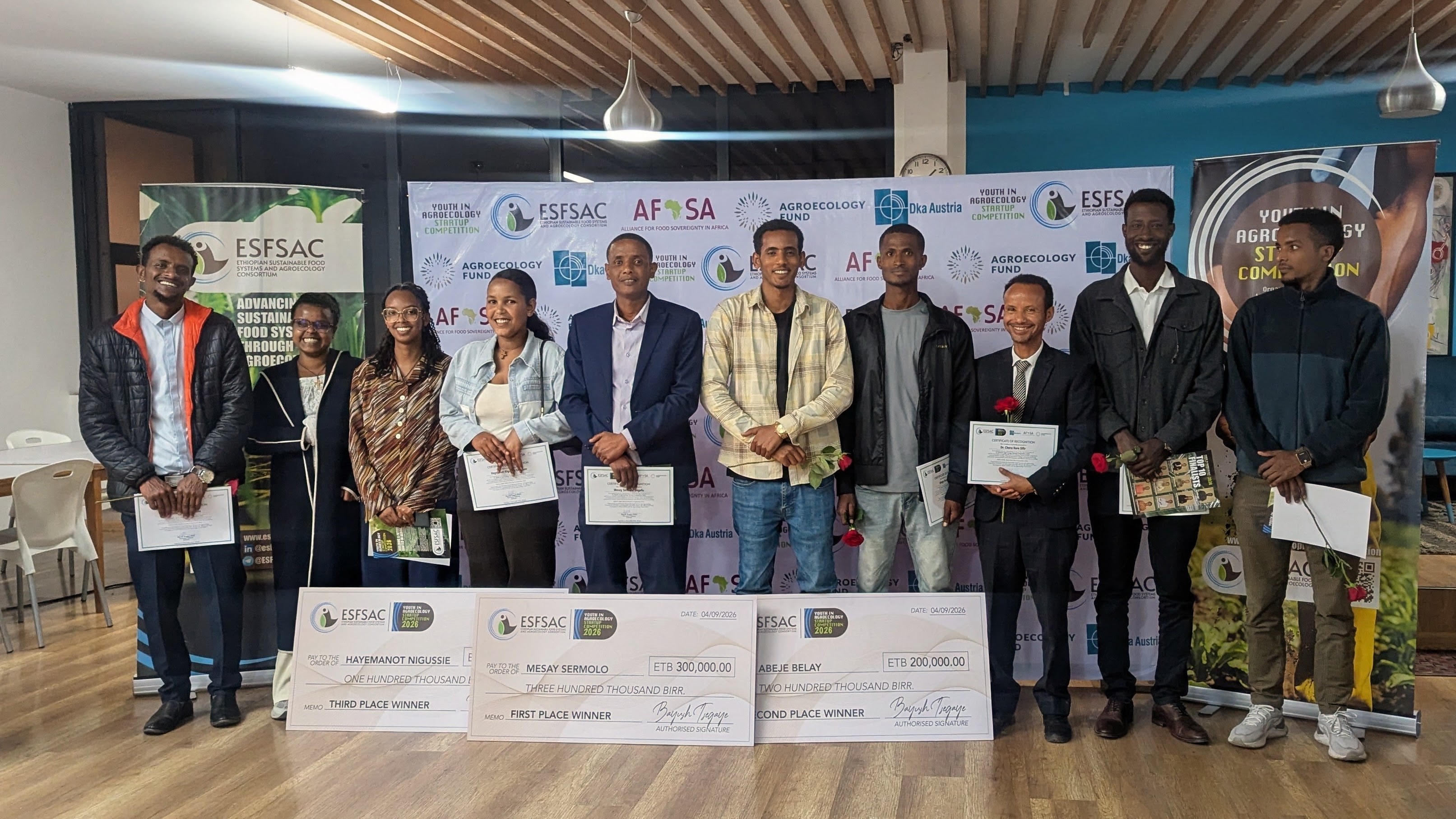
Addis Ababa, September 4, 2026 (FMC) — Young Ethiopian innovators are turning agricultural and environmental challenges into enterprises, technologies and employment opportunities, highlighting the growing role of youth in the country’s transition toward sustainable and resilient food systems, the Ethiopian Sustainable Food Systems and Agroecology Consortium (ESFSAC) said.
The observation came at the 2026 Youth in Agroecology and Food Systems Competition award ceremony, where young entrepreneurs were recognized for practical solutions addressing challenges including climate change, land degradation, post-harvest losses, limited market access and youth unemployment.
ESFSAC Executive Director Bayush Tsegaye said the competition goes beyond recognizing winners by connecting young people with mentors, experts, networks and potential partners. She said youth should not be viewed simply as future farmers, but as entrepreneurs, innovators, processors, service providers, traders and promoters of digital technologies across the entire food system.
This includes production, aggregation, processing, storage, transportation, marketing, food-waste management and digital services, she said, adding that such an approach can make agriculture more innovative, environmentally sound and economically viable while creating self-employment and jobs for others.
The initiative, organized by ESFSAC in collaboration with DKA Austria and the Alliance for Food Sovereignty in Africa (AFSA), focused on two areas: agroecological agriculture and innovation, and healthy and indigenous foods. It attracted 90 applicants aged 18–35 from Addis Ababa and Sheger City, including 26 women and 64 men. Ten finalists were selected following evaluation based on relevance, sustainability, impact, efficiency and scaling potential.
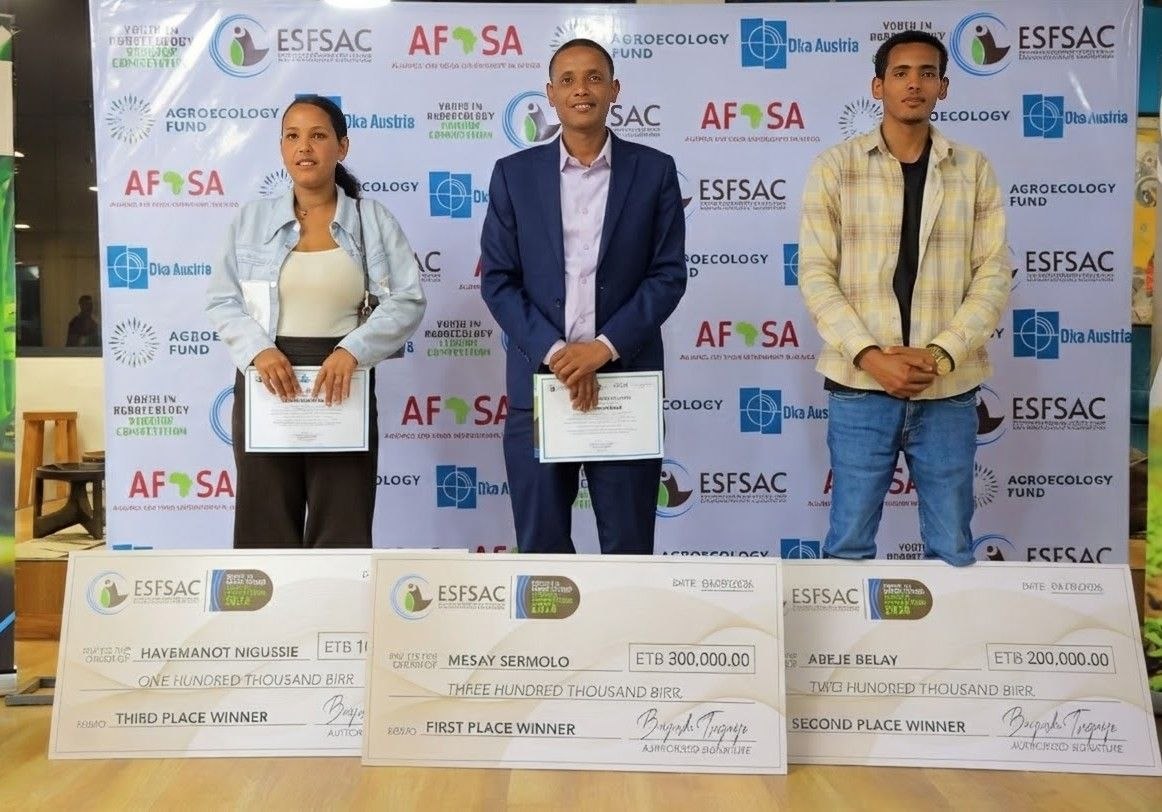
The finalists received training before pitching their enterprises to judges, who assessed pitch delivery, startup strength and potential, and implementation capacity.
Mesay Sermolo won first place and 300,000 birr for Eco-Screw Beeswax Tech, a locally fabricated mechanical screw-press technology designed to improve beeswax recovery while reducing labor and processing inefficiencies. He plans to expand the technology through hubs in areas with strong beekeeping potential.
Abeje Belay took second place with 200,000 birr for Sebez Manufacturing One Member PLC, which produces germination-based complementary foods from grains and legumes, combining traditional food practices with scientific methods to improve nutritional value.
Haymanot Nigussie won third place and 100,000 birr for Ra’ey Vegetable Farming, a social enterprise producing vegetables and grains year-round through irrigated agroecological farming, while using agricultural waste to make organic compost and creating employment opportunities.
The other seven finalists each received 10,000 birr.
Bayush said the competition also showcased opportunities in organic inputs, recycling, biopesticides, climate-smart farming, waste-to-value enterprises, indigenous foods, environmentally friendly packaging and digital marketing. Young people, she added, can contribute to soil health, biodiversity conservation, integrated pest management, agroforestry, sustainable seed systems, soil and water conservation, land rehabilitation and circular agriculture.
She stressed that the competition should be a starting point rather than an endpoint, calling for sustained mentorship, business development support, finance, market linkages, appropriate technologies and partnerships involving government, research institutions, development partners, civil society and the private sector.
Such investment can help young entrepreneurs build businesses locally, retain income and employment in rural communities, add value to agricultural products and strengthen rural economies, she said.
Bayush also highlighted youth potential in conserving, producing and marketing locally adapted seeds through collaboration with community seed banks and research institutions, linking biodiversity conservation, farmers’ seed sovereignty, entrepreneurship and market access.
She said supporting youth with access to land, finance, knowledge, technology, markets and decision-making spaces can place them at the center of a food-system transformation that is productive, inclusive, climate-resilient and capable of creating dignified livelihoods.
The initiative aligns with Ethiopia’s broader food-system transformation agenda and the National Agroecology Strategy for Food System Transformation in Ethiopia, 2024–2040.
Bayush called on government institutions, development partners, donors, academic and research institutions, civil society, the private sector, financial institutions, farmers’ organizations and other food-system actors to recognize and invest in youth as active leaders of the transition toward sustainable, resilient and inclusive food systems.