
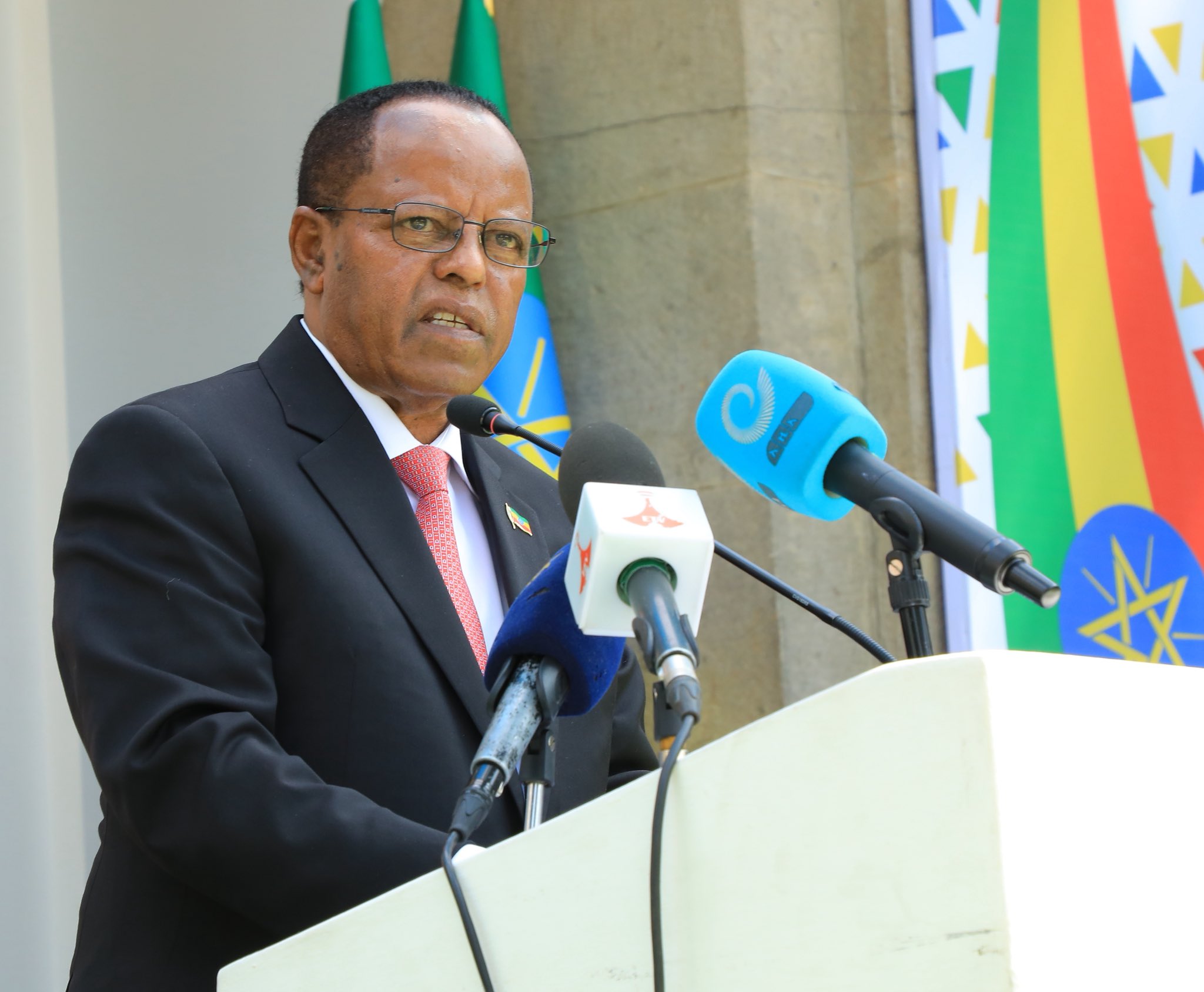
Ethiopia’s Drive for Economic Sovereignty Hinges on Ending Dependency and Expanding Domestic Production — President Taye
Addis Ababa, October 12, 2026 (FMC) — President Taye Atske-Selassie has underscored the need for Ethiopia to strengthen its economic sovereignty by reducing dependency, expanding domestic production and building the productive capacity required to secure the country’s long-term development.
Addressing the 19th National Flag Day observance on Monday under the theme “Our Flag for National Consensus and Unity,” the President linked the country’s aspirations for lasting independence with its ability to meet its own economic needs and mobilize its resources for national progress.
He emphasized that sovereignty must be reinforced not only by safeguarding territorial integrity but also by building an economy capable of supporting the country’s development ambitions and reducing reliance on external sources.
President Taye pointed to major domestic production initiatives, including fertilizer manufacturing and the development of natural gas resources, as important components of Ethiopia’s efforts to strengthen economic independence. Such undertakings, he indicated, can help expand industrial capacity, support agricultural productivity and create a stronger foundation for national prosperity.
The President’s remarks placed food sovereignty among the country’s wider development priorities, emphasizing the importance of strengthening the productive capacity that sustains farmers and pastoralists and supports the livelihoods of millions of Ethiopians.
For a country pursuing broad economic transformation, expanding domestic production is central to translating national resources into tangible benefits for its people. Strengthening agriculture and developing industrial capabilities can reinforce one another, helping create a more resilient economic foundation.
President Taye also connected Ethiopia’s development ambitions with the wider responsibility to preserve the country’s independence and advance the aspirations inherited from previous generations. The national flag, in this context, represents not only a historic achievement but also an enduring obligation to build a country capable of securing its future through its own productive strength.
He called for continued commitment to Ethiopia’s comprehensive development, stressing the importance of moving forward rather than allowing the country’s progress to be constrained by dependency or a return to past conditions.
His message placed economic sovereignty at the heart of Ethiopia’s national aspirations: a stronger productive economy, greater capacity to meet domestic needs and the effective use of national resources to advance development and prosperity for generations to come.