
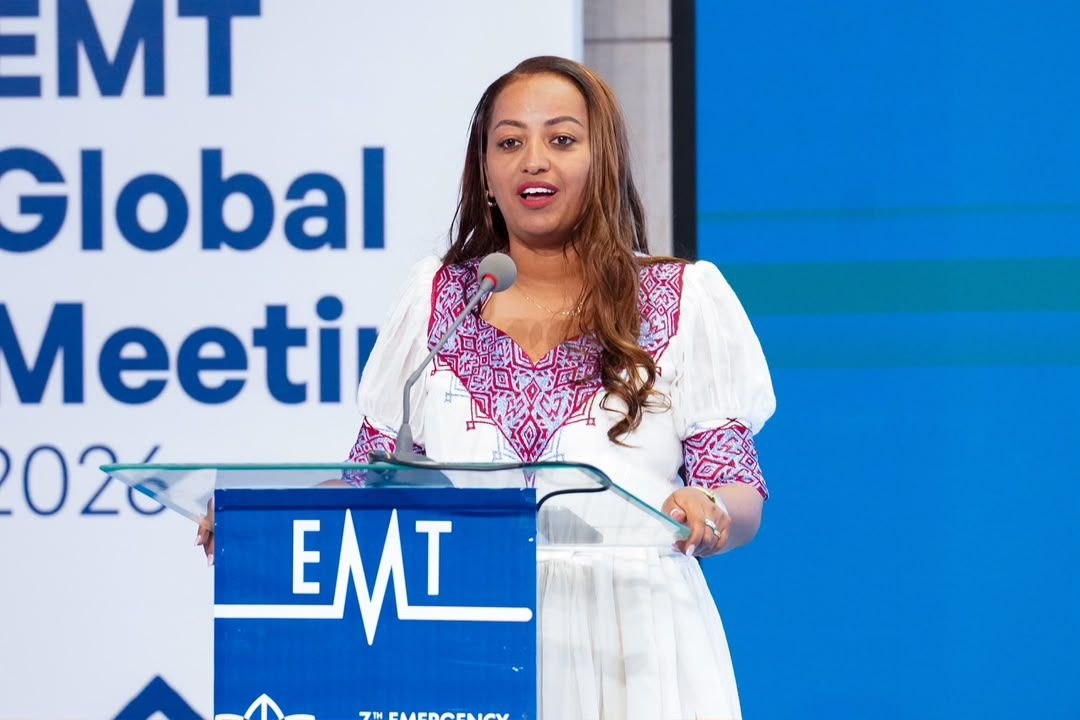
Ethiopia’s Emergency Medical Teams Have Made Historic Strides in National Preparedness and Global Health Response: Minister Mekdes
Addis Ababa, November 3, 2026 (FMC) – Ethiopia has made historic strides in building its emergency medical response capacity, with its national teams undertaking more than 15 emergency missions, developing a workforce of over 600 trained professionals and extending support to countries facing major disasters, Health Minister Dr. Mekdes Daba said.
In her opening remarks at the 7th World Health Organization (WHO) Emergency Medical Teams (EMT) Global Meeting in Addis Ababa, Dr. Mekdes highlighted the international classification of Ethiopia’s national Type 1 fixed EMT in September 2026 as a major milestone in the country’s emergency preparedness and contribution to global health response.
Ethiopia established its Disaster Medical Assistance Team in 2018, recognizing that effective emergency response requires building capacity before disasters strike. Since then, the team has carried out more than 15 missions supporting communities affected by natural and other disasters.
In 2023, Ethiopian emergency responders extended this support beyond national borders, assisting communities in Türkiye following the devastating earthquake.
With its national Type 1 fixed EMT achieving WHO international classification, Ethiopia became the second country in the WHO African Region to receive the recognition, following Senegal.
Dr. Mekdes described the achievement as historic for both Ethiopia and Africa, acknowledging the commitment of the Ethiopian Public Health Institute, emergency professionals, government institutions and partners who contributed to the team’s development and preparation.
She said the classification represents not an endpoint but a foundation for sustaining and expanding the country’s emergency response capabilities through continuous professional training, simulation exercises, quality assurance, adequate equipment, logistics and reliable deployment arrangements.
The minister also highlighted the integration of Ethiopia’s Emergency Medical Strategy for 2025–2030 into the revised national health strategy, linking the development of emergency response capacity with the country’s wider health-system transformation.
She noted that Ethiopia’s health infrastructure provides an important foundation for this effort, citing more than 54,000 public and non-public health facilities, around 632 functional higher-level hospitals and over 4,000 health centres.
She emphasized the importance of strengthening the entire continuum of care, from primary-level services to advanced emergency treatment, so that communities can receive timely assistance.
Connecting this national agenda with the Medemer philosophy, Dr. Mekdes said Ethiopia is bringing together its people, institutions, resources and capabilities in pursuit of shared national progress and better health.
She underscored that emergency preparedness begins with prevention and healthy lifestyles and requires coordinated action among communities, health facilities, ambulances, laboratories, surveillance teams and emergency medical teams.
Drawing on Ethiopia’s experience, including its response to the Marburg outbreak, she stressed that medical response and medical security are inseparable. She also warned that outbreaks transcend national borders, calling for vigilance, solidarity and stronger cooperation among countries to protect communities and health workers.
Looking to the next phase of EMT development, Dr. Mekdes outlined three priorities: sustaining national emergency medical programmes through long-term investment in trained personnel, equipment, regional capabilities and logistics; translating common standards into everyday practice through regular exercises, verification and continuous quality improvement; and making cross-border solidarity operational through clear arrangements for requesting, receiving, deploying and coordinating teams under national leadership.
She further called for stronger African participation in shaping global EMT policies and practices, emphasizing that international partnerships are most effective when they reinforce national leadership and ownership.
The minister urged participants to translate their deliberations into practical actions and measurable responsibilities, saying the success of emergency preparedness should be judged by the quality and dignity of services delivered to communities, rather than simply the number of meetings and simulation exercises conducted.
She reaffirmed Ethiopia’s commitment to developing its national capabilities while contributing to regional and international emergency response, stressing that every country should be able to protect its people and stand in solidarity with others when emergencies arise.