
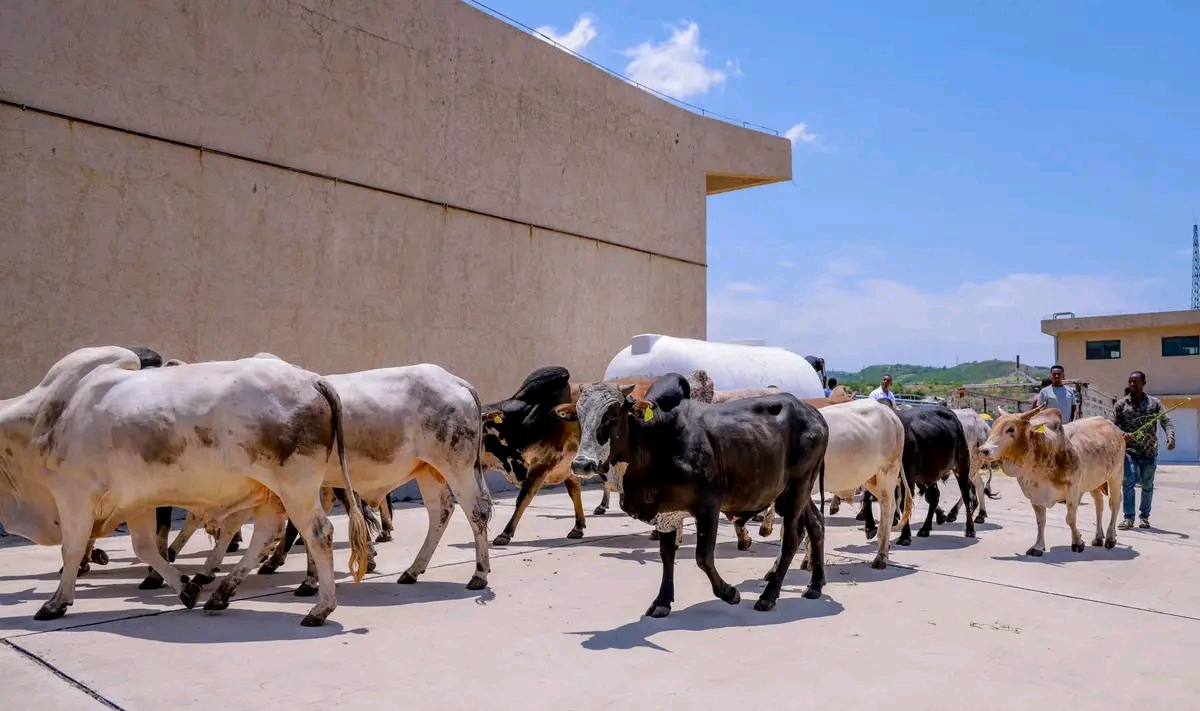
Ethiopia’s Livestock Exports Gain Momentum as Government Targets $1 Billion in Earnings
Addis Ababa, September 6, 2026 (FMC) — Ethiopia’s livestock exports generated $128.3 million in earnings during the 2018 Ethiopian fiscal year, up more than 35 percent from about $95 million in previous years, as the government moves to unlock the sector’s much larger export potential.
Livestock Development Institute Director General Asrat Tera said the country could raise livestock export earnings to at least $1 billion, pointing to substantial untapped capacity in the meat-processing and export sector.
Ethiopia’s 12 export abattoirs have a combined production capacity of about 200,000 metric tons, but are currently operating at only around 10 percent of that capacity. The government aims to raise utilization to 50 percent in the 2019 Ethiopian fiscal year, with a target of exporting about 46,000 metric tons of meat and meat products and generating more than $250 million in revenue.
The main constraint, however, remains the reliable supply of livestock. Asrat said stronger supply-chain management and closer partnerships among pastoralists, livestock traders and export abattoirs are essential to ensuring adequate supply, increasing processing and expanding value-added exports.
Livestock Development Institute Deputy Director General Sahilu Mulu said efforts are also underway to strengthen the wider livestock value chain and expand processing for both domestic and international markets.
As part of these efforts, three field support teams were deployed over the past two weeks to the Somali, South Ethiopia and Afar regions, as well as southern Oromia, engaging stakeholders involved in livestock production, aggregation and marketing.
A new pilot arrangement will also enable livestock suppliers in the Somali Region and Borena to supply animals directly to export facilities. Ethiopian Meat Producers and Exporters Association President Kelifa Hussein said the model is expected to reduce unnecessary intermediaries and transaction costs while improving competitiveness and increasing direct economic returns for traders and pastoralists.
The association plans to assess the pilot and provide further logistical and financial support to help sustain the direct-supply system.
The measures were discussed at a linkage and contract-signing forum that brought together export abattoir operators and representatives of livestock traders’ associations from the Somali Region and Borena, with the aim of strengthening market connections and establishing more reliable supply arrangements.