
FMC Africa Focus | Africa Must Turn Its Natural Wealth into Jobs and Industrial Opportunities at Home: Lesotho Youth Leader
Addis Ababa, November 12, 2026 (FMC) – African countries must move beyond exporting raw materials and importing finished products by investing in domestic processing and production, a youth political leader from Lesotho has emphasized, arguing that turning natural wealth into local industries is essential to creating jobs and addressing youth unemployment.
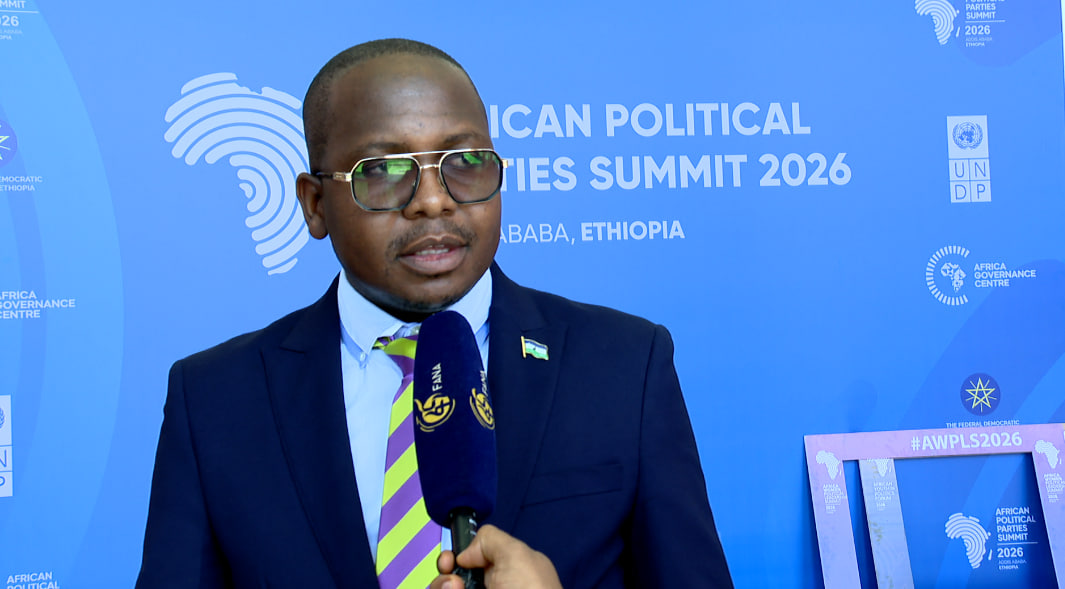
Lesala Maphathe, Youth League Chairperson of Lesotho’s Revolution for Prosperity (RFP), made the remarks in an exclusive interview with Fana Media Corporation on the sidelines of the Second African Political Party Summit held in Addis Ababa from November 5 to 7.
He argued that despite Africa’s abundant natural resources, many countries continue to export raw materials without capturing the greater economic opportunities that come from processing them domestically.
As one example, Maphathe proposed that resource-rich countries retain a larger share of their mineral wealth for local value addition. Referring to Lesotho’s diamond resources, he illustrated how keeping a greater proportion of diamonds in the country for cutting and processing could create employment and strengthen domestic industries. He offered a hypothetical example in which 80 percent of diamonds would be retained for local processing while 20 percent would be exported.
He also pointed to food production as an area where African countries could generate more economic value. Using Lesotho as an example, he noted that the country imports substantial amounts of food from South Africa despite having agricultural production that could support local processing.
Developing food-processing industries, he explained, would enable countries to make greater use of their own agricultural output, reduce reliance on imported finished products and create employment opportunities.
Maphathe further identified wool and mohair as resources that Lesotho could process locally instead of exporting them in raw form. Establishing domestic industries around these products, he argued, would generate jobs and allow the country to capture more value from its resources.
He linked these proposals directly to the challenge of youth unemployment and migration. Expanding local industries and employment opportunities, he noted, could reduce the pressure on young people to leave their countries, particularly Lesotho’s migration to South Africa in search of work.
For African countries, his argument points to the importance of connecting natural-resource management with industrial development and employment creation. Rather than measuring economic potential only by the resources a country possesses, the priority should be building the capacity to transform those resources into products, businesses and livelihoods.
Maphathe also emphasized that countries should identify and develop the sectors in which they have particular strengths. He suggested that Lesotho could focus on agricultural products such as maize, develop its production capacity and supply markets beyond its borders.
Reflecting on his visit to Ethiopia, he expressed appreciation for the country’s development initiatives and its efforts to produce goods locally. He observed that Ethiopia’s large population could provide both the human resources and domestic market needed to support local production.
His remarks come as African political parties and stakeholders continue discussions on the role of governance and political leadership in advancing economic transformation. The Second African Political Party Summit was held under the theme “Governing for Growth: Political Parties as Architects of Africa’s Economic Future.”
Maphathe’s proposals underscore a central development challenge facing the continent: ensuring that Africa’s natural and agricultural wealth translates into productive industries, employment and greater economic opportunities for its people.