
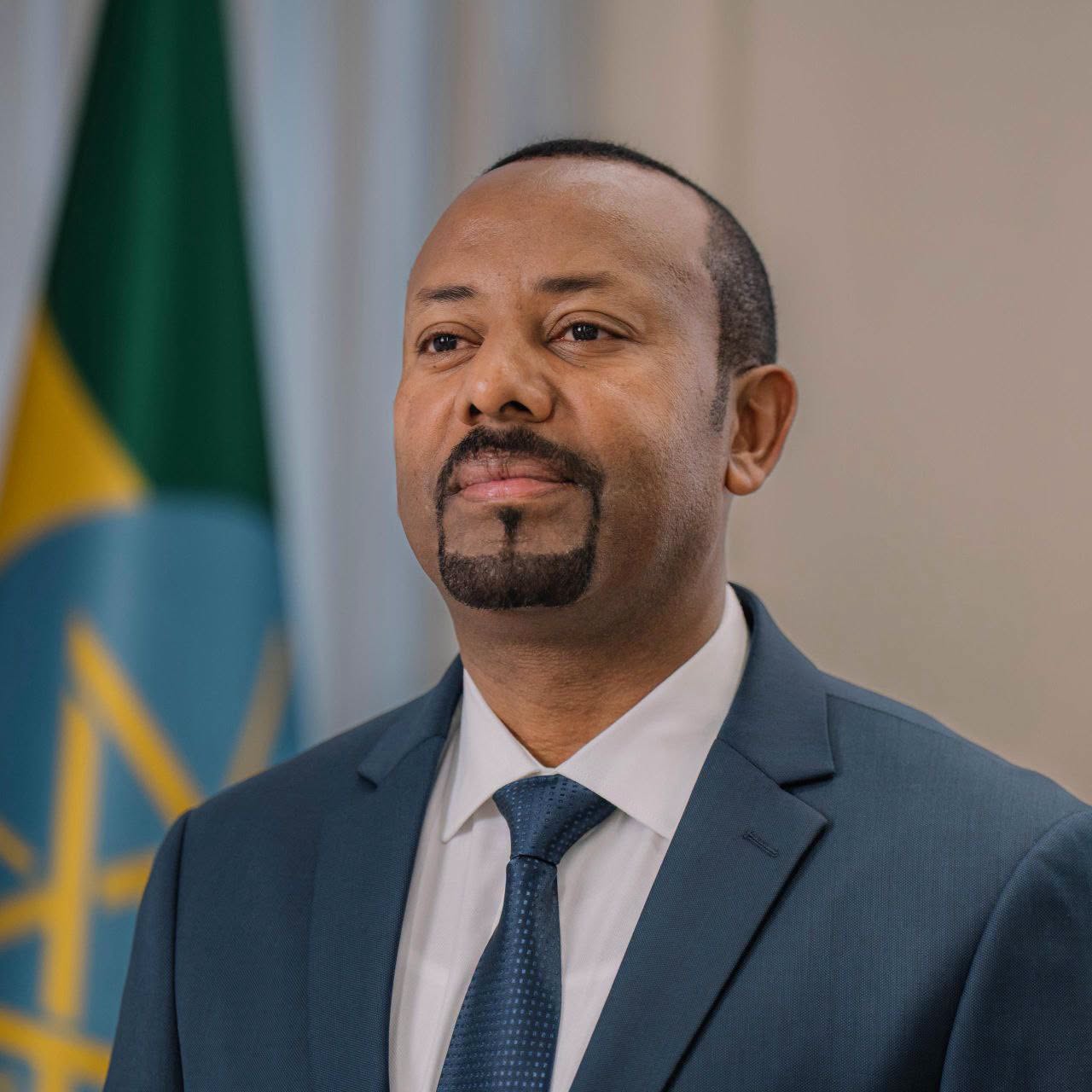
PM Abiy Foresees a Year of Political Openness, Stronger Sovereignty and Greater African Leadership for Ethiopia
Addis Ababa, September 10, 2026 (FMC) — Prime Minister Abiy Ahmed has envisioned the coming Ethiopian year as a period of deeper political openness, stronger national sovereignty, greater productivity and a more firmly established leadership role for Ethiopia in the region and Africa.
In his Ethiopian New Year message marking the final day of 2018 E.C., the Prime Minister said the coming year would see Ethiopia further advance the “Guba Tidings” announced at the Guba site of the Grand Ethiopian Renaissance Dam (GERD), while translating the outcomes of the National Dialogue into practical action and opening wider political space for diverse ideas and approaches to converge around the national interest.
He said the new year should be marked by greater respect for Ethiopia’s comprehensive sovereignty, stronger multinational unity and continued gains in productivity across sectors, both in variety and quality.
The Prime Minister also envisaged Ethiopia firmly establishing its leadership in the region and Africa and building prosperity that extends beyond the present generation.
The Prime Minister placed this vision within a broader reflection on the passage of time, describing each person’s lifetime as a book whose pages are limited and whose content depends on what one chooses to write.
He urged Ethiopians to consider what they have written, what they are writing now and what they intend to write on the remaining pages of their collective history.
Ethiopia’s history, he noted, contains remarkable achievements in trade, agriculture, architecture, calendar-making, astronomy, peaceful transfers of power, art, music, religion and philosophy. Yet it also carries the scars of famine, epidemics, war, destruction, division and periods of national weakness.
The task for the present generation, he said, is therefore not simply to inherit that history but to determine what meaningful work it will add to the country’s next pages.
Pointing to developments recorded during the outgoing year, Prime Minister Abiy highlighted progress across a broad range of national priorities, including the Green Legacy Initiative, tourism development through the (prime ministerial) “Dine”-related projects, food sovereignty through summer wheat and the Bounty of the Basket initiative, manufacturing under Made in Ethiopia, energy development through natural gas projects and nuclear technology, domestic fertilizer production, aviation development through the Bishoftu mega airport and the completion of the GERD.
He also cited gains in irrigation, rice production and fruit cultivation, rising exports, the results of macroeconomic reform, African energy interconnection, Digital Ethiopia 2030, corridor development, riverfront projects, expanding pharmaceutical production capacity and renewed exploration and development in the mining sector.
The Prime Minister further pointed to Ethiopia’s growing engagement on sea access and what he described as an expanding sphere of influence, presenting these developments as part of a broader national effort to transform Ethiopia’s economic and strategic position.
A central part of his New Year message was the National Dialogue, which he described as a significant turning point in Ethiopia’s political history.
He recalled longstanding questions over why the country’s political disputes had so often been settled through conflict and why Ethiopia’s indigenous traditions of dialogue, consultation and collective problem-solving had not been more fully brought into political life.
According to the Prime Minister, the National Dialogue has already demonstrated that Ethiopians can deliberate on difficult national questions, identify areas of common ground and bring a broad consultation process to completion despite the country’s diversity.
He said the process had also challenged the notion that differences in ideas and interests necessarily prevent Ethiopians from reaching common national positions.
Beyond its agreements, he said, the dialogue is helping establish a political culture centered on discussion, understanding and the search for solutions rather than elite bargaining over political power.
Unlike past conferences in which political elites often sought to determine what was best for society and negotiated among themselves, the National Dialogue enabled citizens themselves to deliberate and put forward solutions to longstanding national questions, he said.
The process brought together participants from Ethiopia’s regions and diverse communities, including different faiths and political perspectives, as well as members of the diaspora. Farmers, pastoralists, workers, government officials and ordinary citizens participated alongside people with different levels of education and backgrounds, with women and men represented in the process.
Prime Minister Abiy said the agreements reached through the dialogue would be translated into action in different forms. Some would become culture, systems, working methods or ideas, while others could inform proclamations, constitutional amendments and structural reforms.
Still others could shape future national symbols, monuments, names and brands, or contribute to reconciliation and a more constructive interpretation of the past.
He said the government would use the ideas generated through the process appropriately as inputs for guiding Ethiopia’s future, adding that the country’s “book of time” would read differently before and after the National Dialogue.
The New Year message also linked the dialogue’s outcomes to the government’s decision to release hundreds of prisoners on the eve of the Ethiopian New Year.
Prime Minister Abiy said the measure served two purposes: beginning to translate the spirit and outcomes of the dialogue into practice through forgiveness and peace, and responding to requests raised during the process for the release of people imprisoned in connection with past mistakes.
He expressed the expectation that those released would contribute positively to peace and democracy, learn from the past and make the future a path of peace and democratic engagement, while calling on society to support and advise them.
At the heart of the Prime Minister’s message was a call for Ethiopia to decisively move beyond violence as a means of resolving its political and national challenges.
“The time is for the pen and ideas, not for guns and force,” he said, stressing that Ethiopia’s future should no longer be written through conflict and armed confrontation.
He argued that the country had already experienced enough war and conflict and that its next chapter should be written through new methods, ideas and approaches rather than repeating the patterns of the past.
Looking ahead to 2019 E.C., Prime Minister Abiy said the country would seek to broaden its political space and bring diverse ideas and approaches together in pursuit of the national interest.
He said the coming year would be a period in which Ethiopia further advances the Guba Tidings, strengthens its comprehensive sovereignty and multinational unity, and expands the productivity already begun across different sectors.
He also envisioned the year as one in which Ethiopia would consolidate its leadership in the region and Africa and build a foundation for prosperity capable of extending across generations.
The Prime Minister called for the participation of political parties, intellectuals, religious leaders, security institutions, manufacturers, the business community, farmers and pastoralists, youth and women in realizing the country’s ambitions.
He also urged the media to uphold honesty, called for continued digital modernization and stressed the importance of integrity among public servants and improved public service.
As Ethiopia turns to 2019 E.C., Prime Minister Abiy said the country has an opportunity to write new history, advance new ideas and build a new civilization in its continuing “book of time.”
He concluded by expressing hope that Ethiopia would live forever with pride and honor through the efforts of its children and offered prayers for God’s blessing upon Ethiopia and its people.