
What Chinese President Xi Jinping’s Five BRICS Proposals Mean for the Next Phase of Cooperation
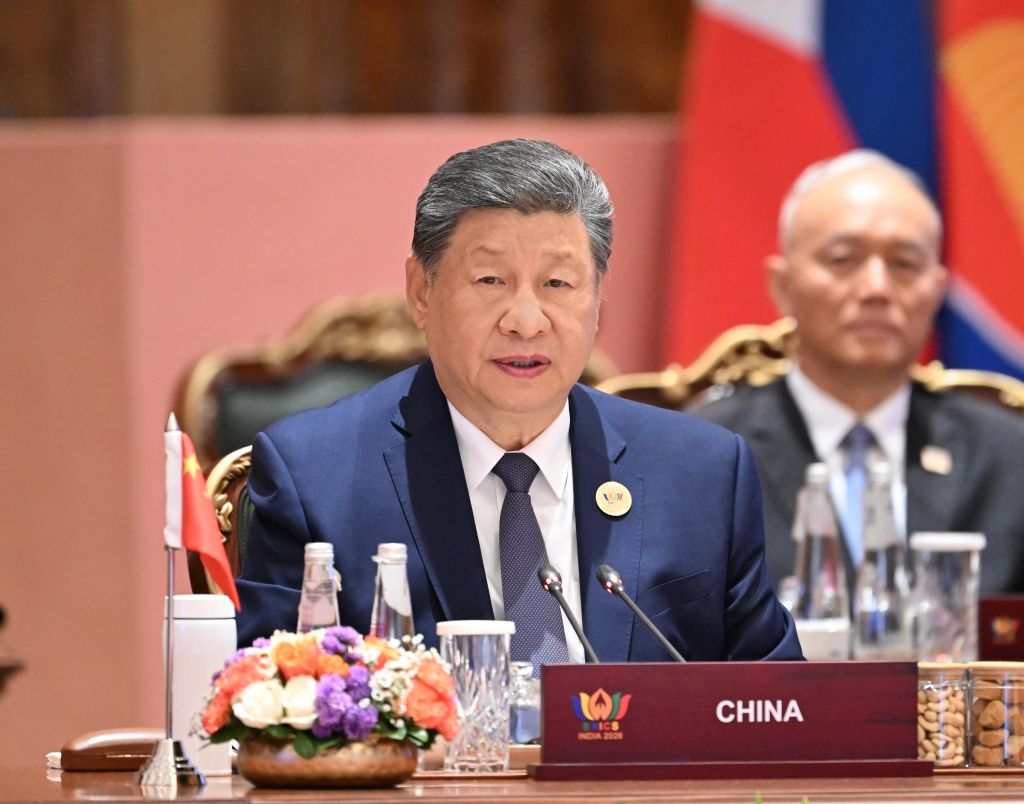
Addis Ababa, September 18, 2026 (FMC) — Five-point plans put forward by Chinese President Xi Jinping at the 18th BRICS Summit in New Delhi last week offer a broad picture of where practical cooperation among the expanded grouping could head next, placing artificial intelligence, trade, digital industries, smart manufacturing and technological talent at the center of its emerging agenda.
The proposals were not presented as isolated initiatives. Taken together, they point to an effort to connect technology, production, skills and markets in ways that could strengthen the economic foundations of BRICS cooperation and create new avenues for collaboration among member countries and the wider Global South.
At a media briefing in Addis Ababa on Thursday, Chinese Embassy Chargé d’Affaires a.i. Sun Mingxi returned to the proposals while explaining China’s priorities following the New Delhi summit. His briefing offered a closer look at the areas China sees as particularly important for advancing practical cooperation under BRICS.
The first proposal — an open-source and inclusive artificial intelligence initiative — addresses one of the defining technological questions of the coming years.
China proposed establishing a BRICS AI open-source community, supporting cooperation in the development and application of large language models, and organizing specialized AI seminars and training courses. The broader objective is to build an open AI ecosystem through cooperation among BRICS countries.
The proposal is significant because artificial intelligence is rapidly moving from a specialized technology into an important component of economic production, public services, scientific research and industrial competitiveness.
For developing economies, participation in this transformation is increasingly about more than acquiring finished technologies. It involves developing skills, research capacity, computing capabilities and locally relevant applications, while ensuring that new technologies can respond to different languages, cultures and development circumstances.
This makes the open-source dimension particularly relevant to countries seeking to expand their own technological capabilities.
Cooperation in large language models, research and training could create channels through which BRICS members contribute to and benefit from a broader technological ecosystem.
The second proposal moves from technology to the economic environment in which technology and production can generate value: trade and investment facilitation.
China proposed establishing a BRICS special economic zone partnership, including an intelligent portal for policy coordination and open economic cooperation. It also proposed holding a BRICS Forum on Trade in Services in 2027 to develop new drivers of economic and trade cooperation.
The significance of this proposal extends beyond conventional trade in goods.
Services, digital commerce, investment and technology-enabled business are becoming increasingly important components of international economic relations.
Greater coordination among BRICS economies could therefore help connect businesses and investors across markets while making it easier to navigate different regulatory and policy environments.
For economies such as Ethiopia that are seeking greater integration into international markets, this dimension of BRICS cooperation is particularly relevant.
The third proposal focuses directly on the digital economy.
China proposed establishing a BRICS digital ecosystem cloud platform and expanding digital-skills training, technological exchanges and industrial alignment to jointly advance digital economic development.
This proposal suggests a shift from viewing digital transformation primarily through the lens of connectivity toward building an ecosystem in which digital infrastructure, skills, technology and industry reinforce one another.
That distinction is increasingly important.
A country may have widespread access to digital services without necessarily possessing the capacity to develop digital products, operate advanced platforms or create technology-intensive industries. Digital skills and technological exchange can therefore become as important as the infrastructure itself.
For Ethiopia, which is expanding digital public infrastructure, digital identification, electronic payments and digital skills while placing artificial intelligence increasingly within its development agenda, this area of the proposed BRICS cooperation has obvious points of intersection.
The fourth proposal addresses the productive side of the equation: intelligent manufacturing.
China has proposed supporting BRICS countries in building smart factories, developing standards and norms, and jointly advancing manufacturing transformation and upgrading.
The proposal comes at a time when manufacturing is being reshaped by artificial intelligence, automation, robotics, data analytics and interconnected production systems.
For countries pursuing industrialization, the question is increasingly not simply how to expand manufacturing capacity, but how to make that capacity more productive, technologically capable and competitive.
Smart manufacturing can potentially help bridge that gap by bringing advanced technologies into factories and production chains while creating opportunities for technical cooperation and skills development.
This has particular relevance for African economies seeking to increase domestic value addition. The transition from exporting raw materials toward processing, manufacturing and higher-value production requires not only investment but also technology, technical expertise and access to markets.
The fifth proposal addresses the human foundation required to make the other four possible.
China proposed establishing a BRICS engineer cultivation alliance for joint development of engineers and mutual recognition of competency standards. It also announced a BRICS youth exchange program focused on scientific and technological innovation.
The emphasis on talent is important because technology transfer and industrial upgrading ultimately depend on people capable of developing, operating, adapting and improving the technologies involved.
Engineers, researchers, programmers, technicians and other skilled professionals form the human infrastructure of the digital and industrial economies.
The five proposals therefore form a connected chain.
AI requires talent and digital infrastructure. Digital industries require skills and technological exchange. Smart manufacturing requires engineers, investment and technology. Trade facilitation provides pathways for the resulting goods and services to reach wider markets.
Seen together, the proposals point toward a model of BRICS cooperation in which technology, industrial development, human capital and trade are increasingly treated as interconnected components of economic transformation.
That broader approach also explains why the proposals were placed within Xi Jinping’s call for BRICS countries to strengthen their economic foundations, safeguard stable industrial and supply chains, foster a large integrated market, build innovation incubators, upgrade traditional industries and develop emerging and future industries.
The proposals also need to be viewed against China’s own development trajectory.
Xi said China’s 15th Five-Year Plan, launched this year, represents not only a blueprint for China’s economic and social development but also a “cooperation list” for the rest of the world. He linked the plan to high-quality development, high-standard opening up, the Global Development Initiative and high-quality Belt and Road cooperation.
This places the five BRICS proposals within a broader Chinese emphasis on technological advancement, industrial upgrading and international economic cooperation.
The message is that China’s own development experience and capabilities can increasingly be connected with opportunities in partner economies, while cooperation with those economies can also create new markets, production links and avenues for shared development.
For BRICS, that approach could become particularly significant as the grouping seeks to translate its growing economic weight into more practical cooperation.
The expanded BRICS brings together economies with different levels of development, industrial structures, technological capabilities and resource bases. The challenge is therefore not simply to identify common interests, but to build mechanisms through which those interests can generate concrete cooperation.
The five proposals offer several such mechanisms: an AI community, a special economic zone partnership, a digital ecosystem platform, cooperation on smart factories and standards, and joint development of technical talent.
Their potential significance for Ethiopia is also clear.
Ethiopia is pursuing digital transformation and artificial intelligence while seeking to expand manufacturing, strengthen domestic production, increase value addition and deepen access to international markets. Its BRICS engagement has likewise emphasized opportunities in technology, agriculture, minerals, renewable energy and industrial development.
The overlap means that cooperation in AI, digital skills, industrial technology, manufacturing and trade services could potentially complement Ethiopia’s own development priorities.
But the importance of the proposals extends beyond any individual BRICS member.
For Africa and other developing regions, the central question is whether cooperation among emerging economies can contribute to building productive capabilities — whether in technology, manufacturing, skills, agriculture, energy or services — rather than simply expanding the exchange of finished products.
This is where the proposals on talent and technology become especially important.
Access to advanced technology without the skills to adapt it can create dependence. Investment without domestic productive capacity may have limited transformational impact. Market access without competitive production may not generate sustained export growth.
The five proposals, taken together, address several of these dimensions at once.
Their eventual impact, however, will depend on implementation: whether proposed platforms become functioning mechanisms, whether training produces usable skills, whether technological exchanges generate domestic capacity, whether smart-manufacturing cooperation reaches actual production systems, and whether trade facilitation creates new opportunities for businesses.
That implementation phase is now the more important question following the New Delhi summit.
The proposals have already moved the discussion beyond broad statements about cooperation toward identifiable areas in which BRICS countries can build institutions, platforms, skills and industrial partnerships.
For China, they also provide a framework for advancing its priorities in technology, industry, trade and human-capital development through the BRICS mechanism.
For the wider grouping, they offer potential pathways for turning the economic weight and diversity of BRICS into practical cooperation.
And for countries such as Ethiopia, the significance lies in the possibility of connecting national development ambitions with a broader network of technology, investment, markets and skills.
The next phase will therefore be measured less by the announcement of the five proposals than by what follows from them — the partnerships they generate, the capabilities they build and the extent to which they contribute to a more productive, technologically capable and interconnected BRICS community.