
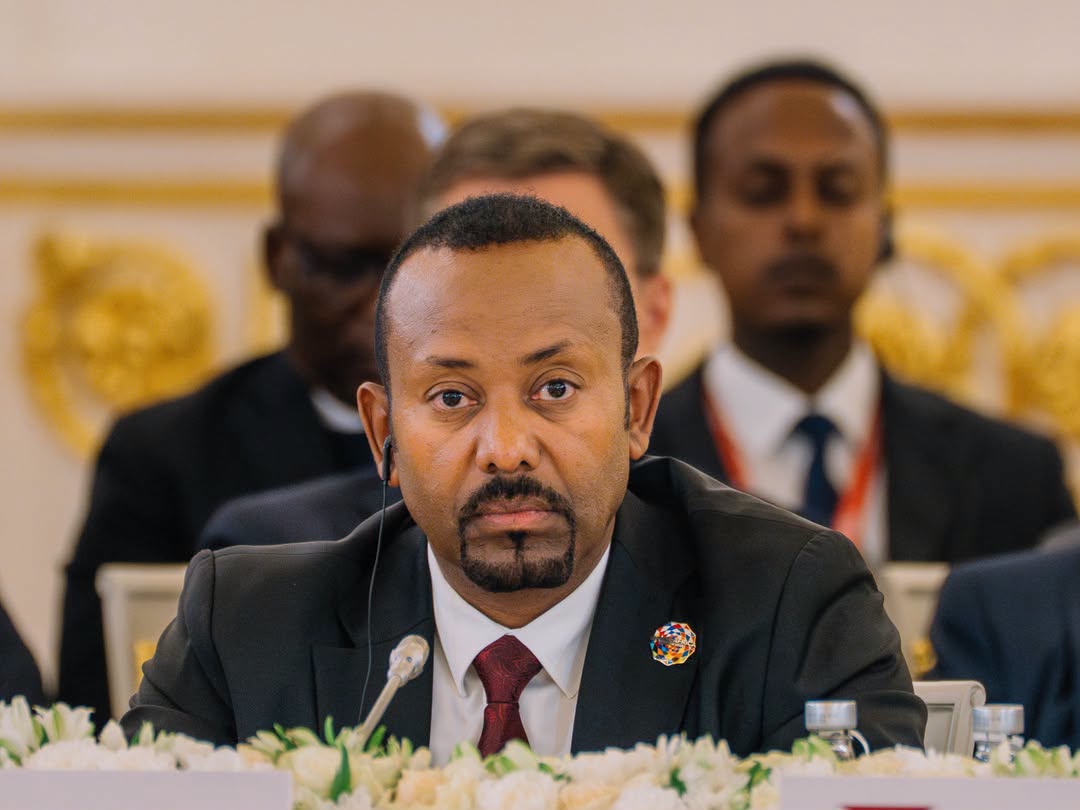
PM Abiy Puts Ethiopia’s Food Security, Energy and Knowledge Priorities at Center of Russia–Africa Summit
Addis Ababa, October 29, 2026 (FMC) — Ethiopian Prime Minister Abiy Ahmed has placed food security and productivity, reliable energy supply, and skills and knowledge transfer at the center of Ethiopia’s development agenda, calling for stronger cooperation with Russia to translate the decisions of the Third Russia–Africa Summit into tangible results.
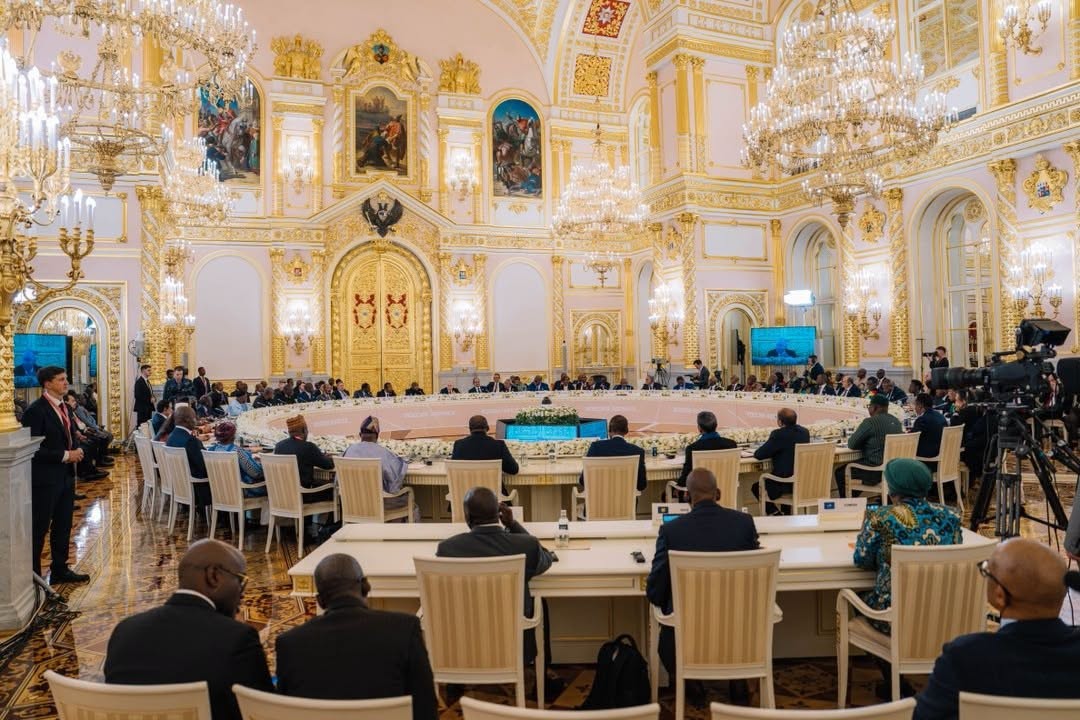 Addressing the summit’s plenary session in Moscow on Thursday, Abiy said Ethiopia’s pursuit of national sovereignty must be matched by the capabilities needed to turn decisions into action.
In a social media post following his address, he reiterated the importance of collective commitment and cooperation to ensure the summit’s historic decisions produce practical outcomes.
“For Ethiopia, this begins with sovereignty. Independence gives us the right to decide. Capability gives us the means to put those decisions into action,” he said in his speech, identifying food, energy and knowledge as three key areas of investment.
The Prime Minister opened his address by recalling more than a century of friendship between Ethiopia and Russia, pointing to the Russian Red Cross mission that came to Ethiopia after the Battle of Adwa in 1896 to treat wounded Ethiopians and translate a medical guide into Amharic.
He described the translation as a small act with far-reaching meaning, illustrating how knowledge can be turned into practical assistance. He urged the summit to follow the same principle by ensuring that agreements and discussions lead to concrete results.
On food security, Abiy said Ethiopia’s priority is to feed its people while building an agricultural economy capable of delivering lasting prosperity.
He identified cooperation with Russia in farm machinery and agricultural processing industries as opportunities to improve productivity and increase the value derived from domestic harvests.
Reliable energy supply formed another central pillar of Ethiopia’s agenda. Abiy highlighted cooperation with Russia to develop Ethiopia’s first nuclear power plant, describing the partnership in his social media post as a strategic undertaking that would diversify the country’s energy options, support prosperity and strengthen bilateral relations.
In his plenary address, he said the nuclear power project would diversify an energy mix that currently relies mainly on hydropower.
He also stressed that cooperation must be guided by the safety standards of the International Atomic Energy Agency (IAEA) and include the development of Ethiopian expertise to operate and regulate the facility.
The Prime Minister further noted that nuclear science has applications beyond electricity generation, including reducing food losses and supporting cancer treatment. These potential applications underscore the wider relevance of developing scientific and technical capacity alongside energy infrastructure.
On knowledge and technology, Abiy identified artificial intelligence as an increasingly important dimension of national capability.
He said the way AI systems are developed will influence which languages are served and whose experiences are represented, arguing that African researchers should be able to create tools in their own languages and that national institutions should determine how their data are used.
He announced that Ethiopia is establishing the Medemer University of Artificial Intelligence in Addis Ababa and invited Russian universities and institutions to collaborate in teaching and research.
The Prime Minister also emphasized the importance of linking innovation to production and trade. With Africa advancing a single market through the African Continental Free Trade Area (AfCFTA), he invited Russian enterprises to establish joint ventures in Ethiopia’s special economic zones, particularly in pharmaceuticals and machinery, to supply markets across the continent.
He called as well for payment channels between Ethiopia and Russia to make bilateral trade simpler and less costly, connecting industrial cooperation with the practical arrangements needed to facilitate commerce.
Abiy said Ethiopia valued the commitments Russia had made to the partnership and would fulfil its own responsibilities. He proposed that the summit’s new action plan establish clear tasks and timelines, reinforcing his message that cooperation should be judged by its implementation and results.
He also said Ethiopia would be honored to host a future Russia–Africa Summit in Addis Ababa, the seat of the African Union, when the gathering next comes to Africa.
On international affairs, the Prime Minister reaffirmed Ethiopia’s support for negotiated solutions, African-led mediation and consistent application of the United Nations Charter to all nations.
He concluded by returning to Medemer, Ethiopia’s homegrown philosophy of synergy and cooperation, which he said recognizes that every partner has something to contribute.
Connecting the Russian medical knowledge translated into Amharic after the Battle of Adwa with the Russian-language translation of his book *Medemer* this year, Abiy described the exchange as an example of knowledge moving in both directions.
Taken together, his address and subsequent social media message presented Ethiopia’s priorities at the summit as a connected agenda: strengthening food production, diversifying energy supply, developing national expertise and using international partnerships to expand productive capacity.
He called for these partnerships to move beyond commitments toward practical outcomes that support Ethiopia’s development and shared prosperity.