
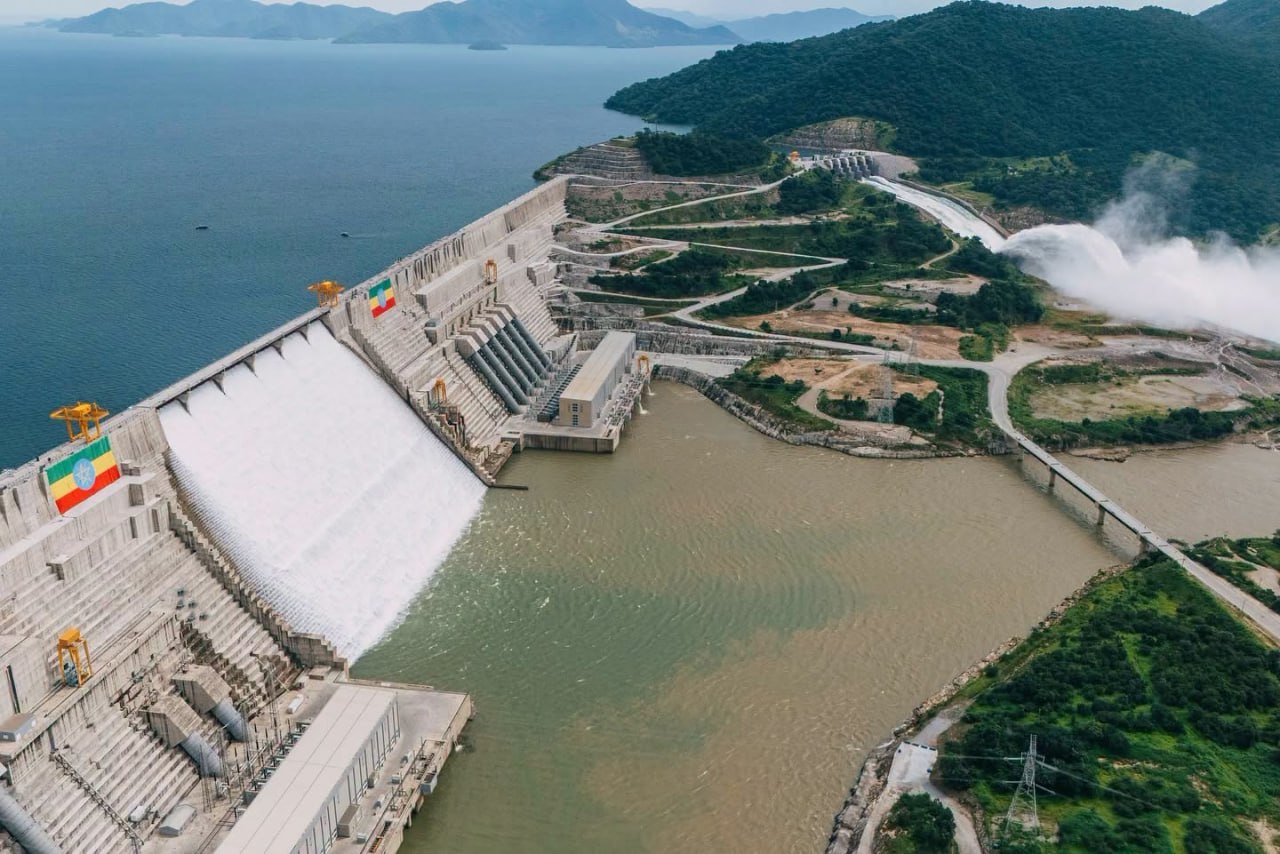
Egypt Wastes Billions of Cubic Meters of Nile Water in the Desert While Opposing Ethiopia’s GERD & Dev’t Aspirations
Addis Ababa, August 5, 2026 (FMC) — Egypt’s latest attempt to portray Ethiopia’s future water development aspirations as a threat cannot hide a glaring contradiction: while Cairo continues its campaign to restrict Ethiopia’s responsible use of its own resources, it has been wasting billions of cubic meters of Nile water through inefficient utilization and desert-based water management practices.
The statement coming from Cairo that Ethiopia should not undertake future water development projects is not a new position. It is a continuation of a decades-old approach that seeks to preserve a system in which Ethiopia, despite being the source of the largest share of the Nile’s water through Abbay (Blue Nile), is expected to remain constrained in utilizing its own natural resources for the development of its people.
But this approach is increasingly detached from reality.
Ethiopia’s development aspirations are not built on depriving others. The country has never sought prosperity through another nation’s resources. Its vision has always been centered on responsibly developing resources originating within its own sovereign territory to fight poverty, expand electricity access, accelerate economic transformation and contribute to regional integration.
The Grand Ethiopian Renaissance Dam (GERD) stands as the clearest demonstration of this principle. The dam was constructed not to harm downstream countries but to generate electricity, support economic growth and create opportunities for Ethiopia and the wider region.
Throughout the construction of GERD, Ethiopia repeatedly demonstrated its commitment to dialogue, cooperation and shared prosperity. Addis Ababa consistently maintained that the Nile should become a foundation for mutual development rather than a source of political confrontation.
However, Cairo’s continued opposition did not end with the completion of GERD. Instead, Egypt has extended its objections to Ethiopia’s future water development aspirations, revealing a broader objective: preventing Ethiopia from fully utilizing its own resources for development.
This position ignores a fundamental reality — Ethiopia’s development does not require the permission of another country. Responsible utilization of natural resources within a nation’s own territory is a legitimate pathway for economic progress, particularly for a country that has endured decades of poverty despite possessing immense natural wealth.
At the same time, Egypt’s argument that Ethiopia’s development threatens its water security overlooks the country’s own water management challenges and available opportunities.
Egypt possesses significant groundwater potential and other options to strengthen its water security, yet instead of fully maximizing these resources and improving efficiency, Cairo continues to focus its attention on limiting Ethiopia’s development activities.
The contradiction is clear: Egypt demands that Ethiopia refrain from developing its own water resources while failing to address significant losses within its own water management system.
Large quantities of Nile water are lost every year through evaporation from major reservoirs and desert-based water projects. In the vast and extremely hot Sahara environment, water stored in open reservoirs faces substantial evaporation losses, while long-distance open-channel irrigation systems further increase inefficiency.
The water lost through these processes represents a significant amount of a resource that Egypt claims must be protected. Yet rather than focusing on improving efficiency and adopting modern water management solutions, Cairo continues to direct its criticism toward Ethiopia’s responsible development efforts.
This exposes the deeper issue behind Egypt’s continued rhetoric: the refusal to accept a new reality in which Ethiopia, like any sovereign nation, has the right to pursue development using its own resources.
For decades, Egypt has relied on colonial-era water arrangements established without the participation of Ethiopia to justify exclusive claims over the Nile. Those outdated approaches attempted to transform a shared natural resource into a matter of control by one country.
But the Nile Basin of today cannot be governed by the politics of the past.
Ethiopia’s position has remained consistent: equitable utilization, cooperation and mutual benefit must guide the future of the Nile. The country has never called for reducing Egypt’s water access. Instead, Ethiopia has repeatedly emphasized that the river has enough potential to support the prosperity of all basin countries if managed through cooperation rather than confrontation.
Prime Minister Abiy Ahmed has repeatedly stressed Ethiopia’s commitment to peace, regional cooperation and shared growth, emphasizing that development projects such as GERD are opportunities for partnership rather than sources of conflict.
The Prime Minister has also consistently conveyed Ethiopia’s message that the country’s progress should not come at the expense of others, but that no nation should be prevented from advancing through responsible use of its own resources.
During the inauguration of GERD, Ethiopia reaffirmed that the project was built with a vision of cooperation and mutual benefit. The dam represents Ethiopia’s determination to overcome poverty through self-reliance while creating opportunities for neighboring countries through electricity connectivity and regional economic integration.
Ethiopia’s Minister of Water and Energy Engineer Habtamu Itefa recently reiterated this position in an exclusive interview with Fana Media Corporation, stressing that GERD is a symbol of African capability, self-reliance and shared development.
The Minister emphasized that Ethiopia built the dam through its own financial resources, national expertise and the determination of its people. He also highlighted that Ethiopia’s water development approach remains focused on cooperation and regional integration, including through electricity exports and shared infrastructure.
The contrast between Ethiopia’s approach and Egypt’s continued rhetoric is becoming increasingly evident.
Ethiopia is pursuing development through investment, innovation and cooperation. Cairo’s continued attempts to restrict Ethiopian water development represent an outdated mindset that seeks to preserve historical advantages rather than embrace a future based on partnership.
Water security cannot be achieved by keeping another nation poor. Regional stability cannot be built by denying countries their legitimate development aspirations. And the Nile cannot become a source of lasting peace if it remains trapped in the politics of exclusion.
Egypt has every right to pursue its own development and protect its interests, but it cannot claim a permanent privilege to determine Ethiopia’s future.
The path forward is not obstruction. It is cooperation.
The Abbay (Blue Nile) is not a symbol of rivalry. It is a source of opportunity — for Ethiopia’s transformation, for regional integration and for shared prosperity across the Nile Basin.
Ethiopia’s message remains unchanged: development, dialogue and cooperation are the only sustainable answers for the future of the Nile.