
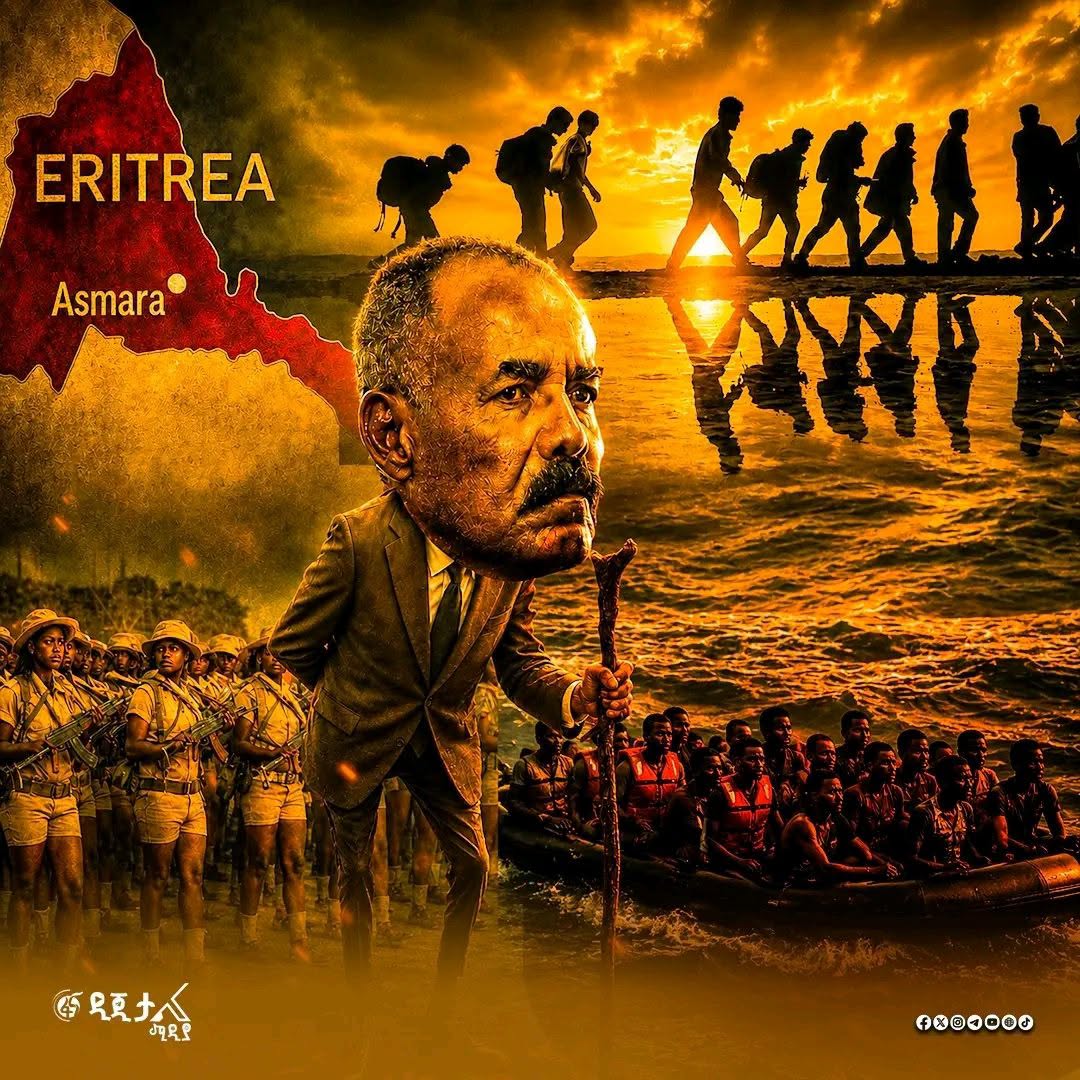
Eritrea’s Protracted Crisis Drives Citizens into Exile as Ethiopia Hosts Over 400,000 Eritrean Refugees
Addis Ababa, July 29, 2026 (FMC) — More than three decades after the coming to power of the Shaebia regime, Eritrea continues to face deepening social, economic and political challenges, with many Eritreans seeking refuge abroad, including in neighboring Ethiopia.
Although the Eritrean people achieved independence after a more than 30-year armed struggle, the Shaebia government that led the independence movement has since maintained a one-party rule, creating what Eritrean refugees, international organizations and political analysts describe as prolonged crises affecting the country.
One of the major challenges facing Eritrea is linked to its political system. The country’s 1997 Constitution, which was approved by the National Assembly and included provisions on civil rights, has never been implemented.
The country has remained under a one-party system, with political parties other than Shaebia prohibited by law. Eritrea has also never conducted a national election.
Since 2001, independent media outlets have been completely shut down, while senior officials who criticized the government, journalists and religious leaders have reportedly been detained without court orders. Many others who challenged the system have also lost their lives while in detention.
The concentration of legislative, judicial and executive powers under one individual, President Isaias Afwerki, has further weakened the justice system, according to critics of the government.
Although the Eritrean government says it follows a self-reliance-based economic policy, critics argue that the approach has contributed to economic decline and reduced the purchasing power of citizens.
The private sector remains highly restricted, while much of the country’s commercial and economic activity is controlled by Shaebia-linked enterprises and military commanders. This state dominance has limited market competition and discouraged foreign investment.
Political uncertainty, weak rule of law and foreign currency restrictions have also made international companies reluctant to invest in the country.
The lack of comprehensive economic reforms has left essential services, including electricity, clean drinking water, telecommunications and transportation, at very low levels.
The political and economic pressures have directly affected the social and psychological wellbeing of Eritrean society.
The Shaebia regime, which critics say remains influenced by a culture of conflict, requires young people to undergo mandatory military service. After completing training at the Sawa military camp, many young Eritreans are reportedly kept in military and compulsory service for years with limited compensation.
This system has significantly affected the future prospects of young people, prompting thousands to risk their lives every month to flee the country in search of better opportunities and freedom from mandatory service and economic hardship.
The continued migration has deprived Eritrea of educated and productive human resources, while the prolonged absence of family members serving in the military and the large-scale departure of youth have weakened social ties and family structures.
Following Eritrea’s independence, hundreds of thousands of Eritreans have fled to Ethiopia to escape political restrictions and the mandatory military service system.
Ethiopia remains one of the leading refugee-hosting countries in East Africa. Eritrean refugees constitute the third-largest refugee population in Ethiopia after refugees from South Sudan and Somalia.
Due to the shared history, culture, religion and social ties between the peoples of Ethiopia and Eritrea, Ethiopia currently hosts more than 400,000 Eritrean refugees.
The humanitarian support provided to Eritrean refugees reflects Ethiopia’s longstanding role in hosting people from neighboring countries. Including Eritreans, Ethiopia is currently sheltering about 1.3 million refugees in total.
Overall, critics argue that Shaebia has failed to lead Eritrea toward a democratic and prosperous future. The government has often attributed the country’s challenges to external pressure, unresolved border issues and international sanctions rather than internal policy decisions.
However, the realities inside the country continue to pose serious challenges for Eritrean citizens.
Addressing Eritrea’s prolonged social, economic and political crises requires, according to critics, a transition from one-party rule toward a constitutional system, protection of citizens’ human rights and implementation of comprehensive economic reforms.