
Ethiopia Leveraging Global Economic Pressures to Advance Manufacturing and Export Growth
Addis Ababa, July 8, 2026 (FMC) — Ethiopia‘s Prime Minister Abiy Ahmed (PhD) said his country is leveraging global economic pressures as opportunities to accelerate manufacturing growth, expand exports and strengthen the country’s productive capacity.
The Prime Minister made the remarks yesterday while responding to questions from members of the House of Peoples’ Representatives during its 30th regular session of the fifth year of its term, where he presented the government’s performance highlights for the 2018 Ethiopian fiscal year.
He said Ethiopia’s economic direction is focused on building resilience by strengthening domestic production, reducing dependency on imports and creating the capacity to compete in regional and global markets.
Prime Minister Abiy highlighted the progress recorded in the industrial sector, noting that extensive measures have been taken to expand manufacturing capacity and increase the contribution of productive sectors to the national economy.
He said manufacturing capacity has increased from 47 percent to 67 percent, supported by the expansion of industrial parks and other initiatives aimed at strengthening Ethiopia’s production base.
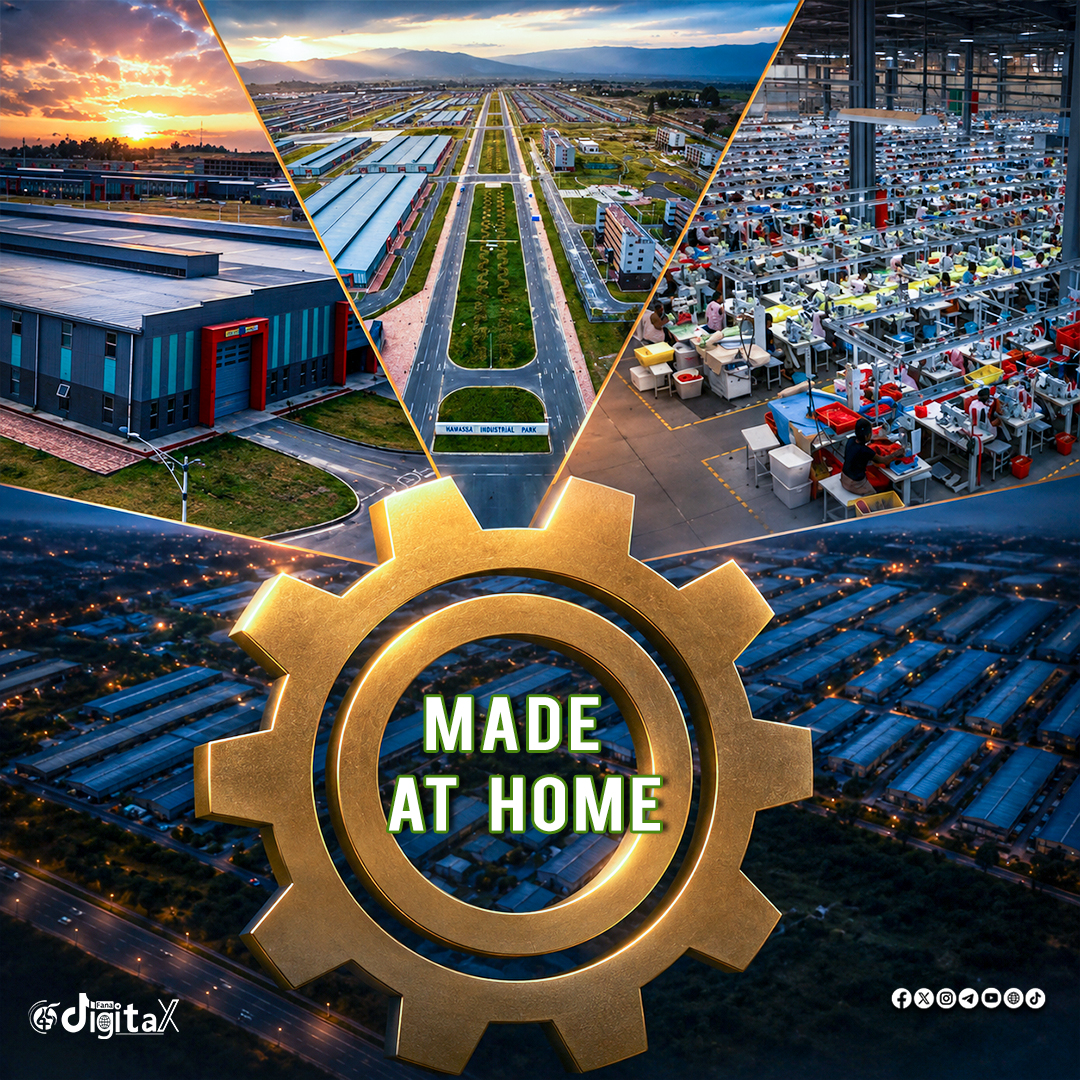
The Prime Minister noted that the construction of ten additional industrial parks, alongside existing industrial parks including those in Kombolcha, Mekelle and Hawassa, has played a significant role in attracting foreign direct investment and expanding industrial activities.
He said Ethiopia’s import substitution strategy has also contributed to strengthening domestic production, with locally manufactured products such as cement, steel, glass and ceramics helping the country save nearly 5 billion US dollars in foreign currency.
Prime Minister Abiy further highlighted the performance of Ethiopia’s export sector, saying the country generated 11 billion US dollars in export revenue during the concluded fiscal year.
He described the achievement as a major milestone, noting that the annual export earnings were equivalent to the country’s total export revenue accumulated over the previous 17 years.
The Prime Minister also pointed to the contribution of the gold sector, which generated 5.5 billion US dollars in export earnings during the fiscal year, as a reflection of Ethiopia’s expanding capacity to generate foreign exchange.
He added that growth has been recorded across key productive sectors, including mining, manufacturing and energy, demonstrating the impact of ongoing economic reforms.
Looking ahead, Prime Minister Abiy said Ethiopia will continue strengthening industrial production and export capacity, with efforts underway to further expand manufacturing output and increase foreign exchange earnings from industrial products.
He emphasized that Ethiopia’s economic strategy is anchored in transforming challenges into opportunities, strengthening self-reliance and building a productive economy capable of withstanding global pressures.