
Ethiopia’s Journey of Resilience: Turning National Ambition into a Pan-African Vision
Addis Ababa, October 12, 2026 (FMC) — At sunrise over the Abbay River, the waters that once flowed through Ethiopia without their full potential being harnessed now turn the turbines of a historic national achievement.
The Grand Ethiopian Renaissance Dam (GERD) stands as a powerful expression of what a nation can accomplish when its people unite around a common vision, invest in their own future and refuse to surrender their aspirations to the limits of yesterday.
Yet the significance of the dam reaches far beyond Ethiopia’s borders. It embodies a wider African possibility: that the continent can mobilize its own resources, develop strategic infrastructure and transform its natural wealth into opportunities for its people.
For generations, Africa’s development story has too often been framed through its challenges and dependencies. Ethiopia’s unfolding transformation offers another perspective—one in which African determination, homegrown capacity and long-term ambition can change the trajectory of national development while opening new possibilities for the continent.
Inaugurated in September 2025, the GERD is Africa’s largest hydroelectric dam, with a designed generation capacity of approximately 5,000 megawatts. Built through a remarkable national mobilization of resources, it represents a milestone in Ethiopia’s pursuit of energy security and industrial development.
Its significance also extends to regional electricity cooperation, as Ethiopia increasingly uses its power-generating capacity to supply neighbouring countries.
The achievement carries a message that resonates across Africa: the continent’s rivers, land, human ingenuity and financial resources can become foundations for prosperity when they are developed with ambition and purpose.
Reliable electricity can support industries, expand economic opportunity and improve lives, while cross-border power connections can strengthen regional integration.
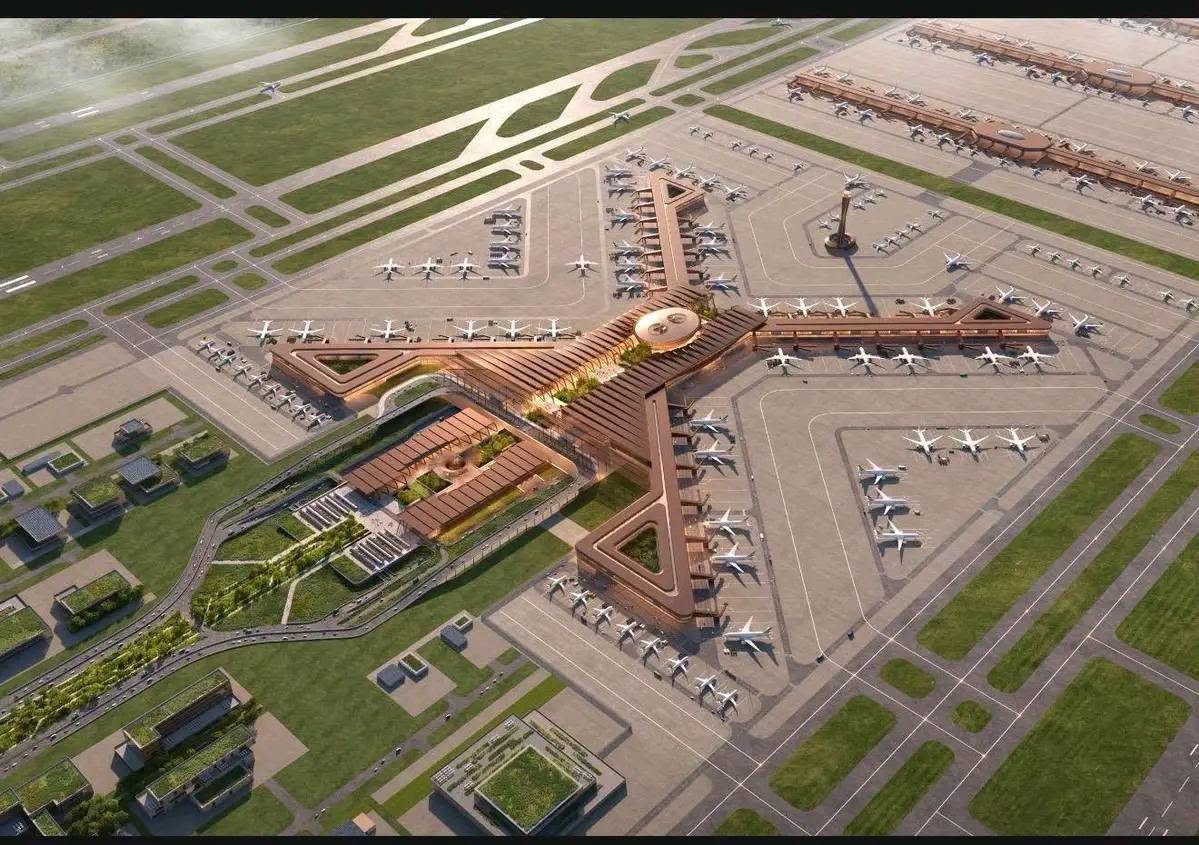
Ethiopia’s ambition, however, does not end at the water’s edge. On the plains of Bishoftu, another transformative undertaking is taking shape—one designed to redefine the country’s place in global aviation and strengthen Africa’s connections with the wider world.
Bishoftu International Airport, whose construction began in January 2026, is planned as a major continental aviation hub. Its first phase is designed to accommodate 60 million passengers annually, with a long-term master-plan capacity of 110 million.
The approximately 12.5-billion-dollar project is expected to expand passenger and cargo capacity, reinforce Ethiopian Airlines’ international network and create new opportunities for trade, tourism and investment.
For Africa, the implications extend beyond a new airport. The continent’s economic integration depends not only on agreements and declarations, but also on the infrastructure that enables people, goods, services and ideas to move efficiently across borders.
A major aviation gateway can help bring African markets closer together, strengthen links with international destinations and support the ambitions of the African Continental Free Trade Area.
Where the GERD harnesses the power of water, Bishoftu seeks to harness the power of connectivity. Together, they illustrate a development vision that links national capacity to wider continental opportunity.
The transformation is equally visible in Ethiopia’s fields, where a profound shift in agricultural production is helping reshape the country’s food-security outlook.
For years, wheat imports placed a heavy burden on foreign-exchange resources. Ethiopia has since expanded cultivation through rain-fed farming and large-scale irrigation, turning dry-season fields into productive landscapes and enabling farmers to bring more land into cultivation.
According to Ethiopia’s Ministry of Agriculture, the country produced approximately 280 million quintals of wheat in 2025. Its wheat-irrigation programme expanded from about 20,000 hectares in 2020 to 3.5 million hectares in 2025, while production increasingly covered domestic requirements.
Ethiopia has emerged as the largest wheat producer in sub-Saharan Africa, marking a significant shift in a sector once heavily reliant on imported supplies.
The importance of this transformation lies not simply in the volume harvested. It is reflected in reduced import dependence, improved prospects for farmers, greater food availability and the opportunity to direct foreign exchange toward other development priorities.
As production expands, the potential to supply regional markets also grows.
For a continent that continues to confront food insecurity and vulnerability to international price shocks, Ethiopia’s experience underscores the importance of investing in irrigation, agricultural technology, productivity and the capacity of farmers.
Food sovereignty is not secured by ambition alone; it requires sustained investment, productive land, reliable water, knowledge and the ability to bring harvests to markets.
Ethiopia’s agricultural transformation is therefore part of a much larger African imperative: to make the continent’s vast agricultural potential a stronger foundation for nourishment, employment, economic resilience and shared prosperity.
The same long-term outlook is evident in the country’s environmental restoration efforts. Since its launch in 2019, the Green Legacy Initiative has mobilized millions of citizens in a nationwide campaign to restore degraded landscapes and expand tree planting.
Ethiopia’s 2026 campaign set a target of planting eight billion seedlings, building on a cumulative total exceeding 50 billion seedlings planted in previous years. On August 3, 2026, the country reported planting more than 805 million seedlings in a single day.
The initiative represents more than a striking exercise in public mobilization. Environmental restoration is closely connected to the health of watersheds, soil conservation, agricultural productivity and the resilience of communities facing the consequences of climate change. By linking national participation with a long-term environmental vision, Ethiopia has placed restoration among the pillars of its development agenda.
Its relevance is inherently continental. Climate pressures, land degradation and ecological vulnerability do not respect national borders.
Efforts to restore landscapes and protect natural resources can generate lessons and opportunities for cooperation across Africa, where environmental security is inseparable from food production, livelihoods and sustainable growth.
Ethiopia’s development ambitions are also transforming the spaces in which people live and work. Urban corridor development, improved public spaces, modern transport infrastructure and expanding sports facilities are reshaping parts of Addis Ababa and other cities.
These initiatives seek to make urban areas more accessible and attractive while supporting tourism, investment, recreation and economic activity.
Modern stadiums and sports facilities can add another dimension to this transformation. Beyond hosting domestic competitions, appropriately developed and managed venues can create opportunities to attract continental tournaments, international sporting events and visitors.
For a country whose athletes have long carried its name to the world’s highest podiums, stronger sports infrastructure offers the prospect of developing future talent while expanding Africa’s capacity to host major events.
Digital transformation provides another illustration of Ethiopia’s effort to build the foundations of a modern economy. Initiatives in digital identity, skills development and digital public services are expanding the infrastructure through which citizens can participate in economic and social life.
The Five Million Ethiopian Coders Initiative, alongside the expansion of the Fayda digital identity programme, reflects a broader recognition that future prosperity will depend not only on physical infrastructure, but also on knowledge, skills and technological capability.
These investments speak to an Africa whose development must be powered by both concrete and code, by productive farms and modern industries, by efficient transport networks and a generation equipped to participate in the digital economy.
Taken together, these achievements reveal a wider pattern. Energy generation, aviation, agricultural production, environmental restoration, urban development and digital skills are not isolated ambitions. They are interconnected elements of a development trajectory in which progress in one sector can reinforce opportunities in another.
Electricity supports industry. Aviation expands access to markets. Agricultural productivity strengthens food security and livelihoods. Environmental restoration helps protect the natural foundations of production.
Digital capacity opens new possibilities for innovation and public services. Each can contribute to a more productive economy, while the benefits can extend beyond national borders through trade, investment, knowledge and regional cooperation.
This is where Ethiopia’s experience acquires its wider Pan-African significance. The continent does not lack natural resources, entrepreneurial energy or a young and ambitious population. The challenge is to turn these strengths into productive capacity, resilient institutions and infrastructure that serves people across generations.
Ethiopia’s path does not suggest that every country must replicate its projects or circumstances. Rather, it demonstrates the importance of defining national priorities, mobilizing domestic commitment, developing capacity and pursuing long-term goals.
African countries have different resources and development needs, but they share an interest in a continent better connected, more food-secure, more energy-resilient and more capable of creating prosperity from its own strengths.
The journey remains unfinished. Major infrastructure projects require sustained investment, careful implementation and long-term management.
Agricultural gains must be consolidated, environmental restoration must translate into lasting ecological benefits, and urban and digital development must deliver meaningful opportunities to citizens.
The measure of success will ultimately be not only the scale of projects built, but the lives improved and the possibilities created.
Nevertheless, the direction is unmistakable: Ethiopia is pursuing a future in which its development ambitions are increasingly expressed through tangible national projects and capabilities with wider regional relevance.
As the country advances under the newly formed Medemer Government, the challenge is to build on these foundations, turn investment into lasting public benefit and ensure that development strengthens the common aspirations of its people.
For Africa, the broader lesson is equally important: the continent’s future will be shaped not by the limits others imagine for it, but by the capacity of its nations and peoples to transform possibility into achievement.
From the turbines of the GERD to the runways planned at Bishoftu, from irrigated wheat fields to restored landscapes, Ethiopia’s journey is becoming part of a larger African story—a story of resilience, ambition and the determination to build a more prosperous future through African initiative.
A nation’s progress can become a continent’s inspiration when achievement opens doors beyond its own borders. Ethiopia’s enduring opportunity is to ensure that its development does precisely that: strengthen its own people while contributing to a more connected, self-reliant and prosperous Africa.