
IGAD Countries Validate Roadmap for Regional Climate Smart Agriculture Network
Addis Ababa, July 8, 2026 (FMC) — IGAD Member States have validated an assessment study for establishing a Regional Network of Centres of Excellence on Climate Smart Agriculture (CSA) aimed at strengthening climate-resilient food systems across the Horn of Africa.
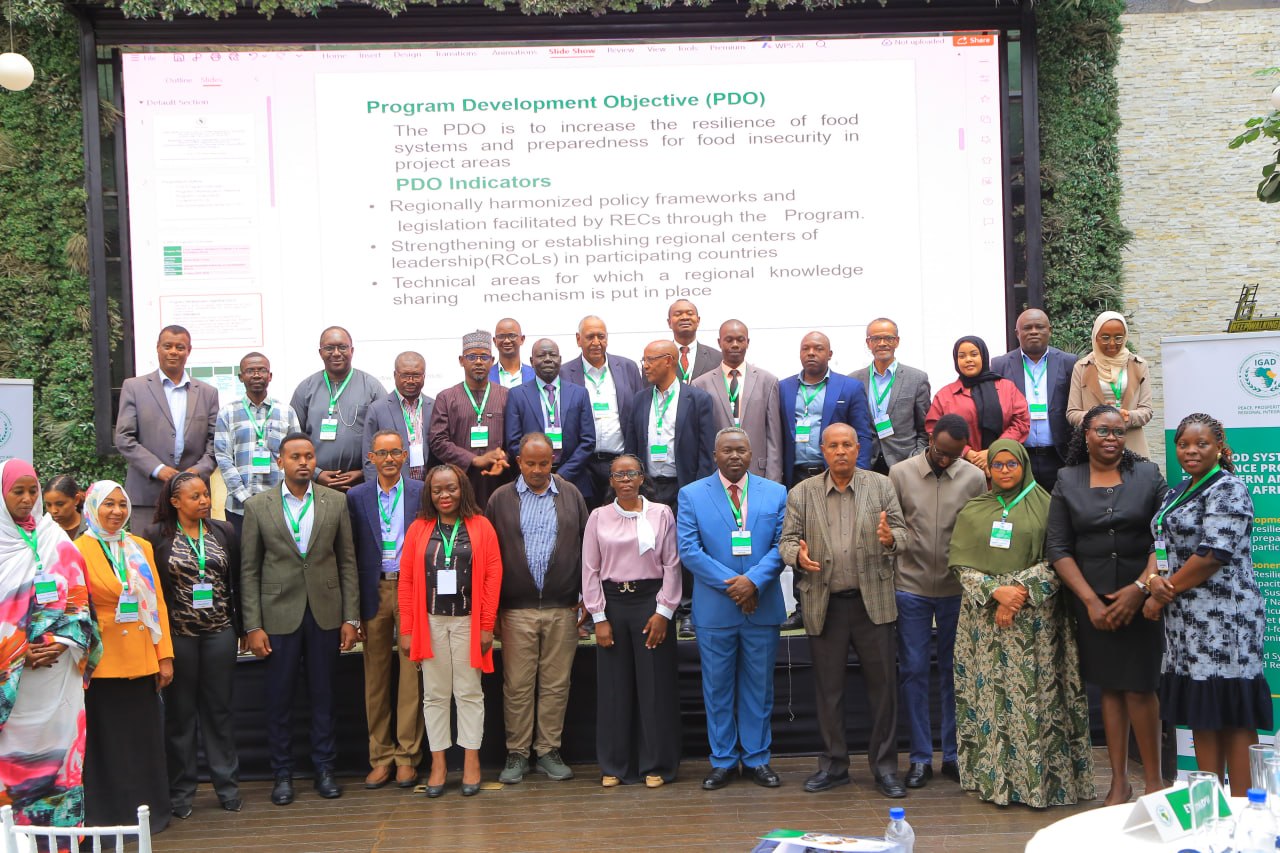
The two-day validation meeting, held in Addis Ababa, brought together technical experts from IGAD Member States, research institutions, universities and regional organizations to review the study findings and agree on a framework for advancing regional cooperation on Climate Smart Agriculture.
The assessment, conducted under IGAD’s Food Systems Resilience Programme (FSRP) supported by the World Bank, reviewed existing Climate Smart Agriculture centres across the region and proposed a regional platform that would connect and strengthen national research and innovation capacities.
Speaking at the meeting, Senior Advisor to Ethiopia’s Minister of Agriculture Zena Habtewold stressed the need for integrated regional action, noting that climate change affects countries beyond their borders through shared ecosystems, cross-border pastoral mobility and interconnected markets.
He said about half of the IGAD region’s landmass is arid and semi-arid, leaving millions of agro-pastoralists vulnerable to recurring droughts, floods and land degradation. He also highlighted that more than 63 million people in IGAD Member States are facing acute food insecurity due to climate change, economic challenges and instability.
Director of IGAD’s Agriculture and Environment Division Daher Elmi said climate change is already affecting livelihoods and economic development in the region through rising temperatures, floods, pests and diseases.
He emphasized that agriculture accounts for more than 70 percent of the regional economy, making Climate Smart Agriculture critical to improving productivity, resilience and sustainable food production.
Zena highlighted Ethiopia’s national initiatives, including the Green Legacy Initiative, irrigated wheat production, livestock and fishery transformation programmes, and agricultural cluster farming, as examples of efforts to strengthen climate resilience and food security.
The assessment recommends establishing a regional network rather than creating a new institution, with the proposed platform operating under IGAD’s Agriculture and Environment Division to link existing centres of excellence and research institutions in member states.
Participants also reviewed proposed governance structures, financing options and mechanisms for ensuring regional ownership of the initiative.
The initiative supports continental and regional frameworks, including the Kampala Declaration and the African Union’s Agenda 2063, as IGAD countries seek coordinated solutions to climate change and food security challenges.
IGAD comprises Djibouti, Ethiopia, Kenya, Somalia, South Sudan, Sudan and Uganda, working to promote regional cooperation, peace, stability and development in the Horn of Africa.