
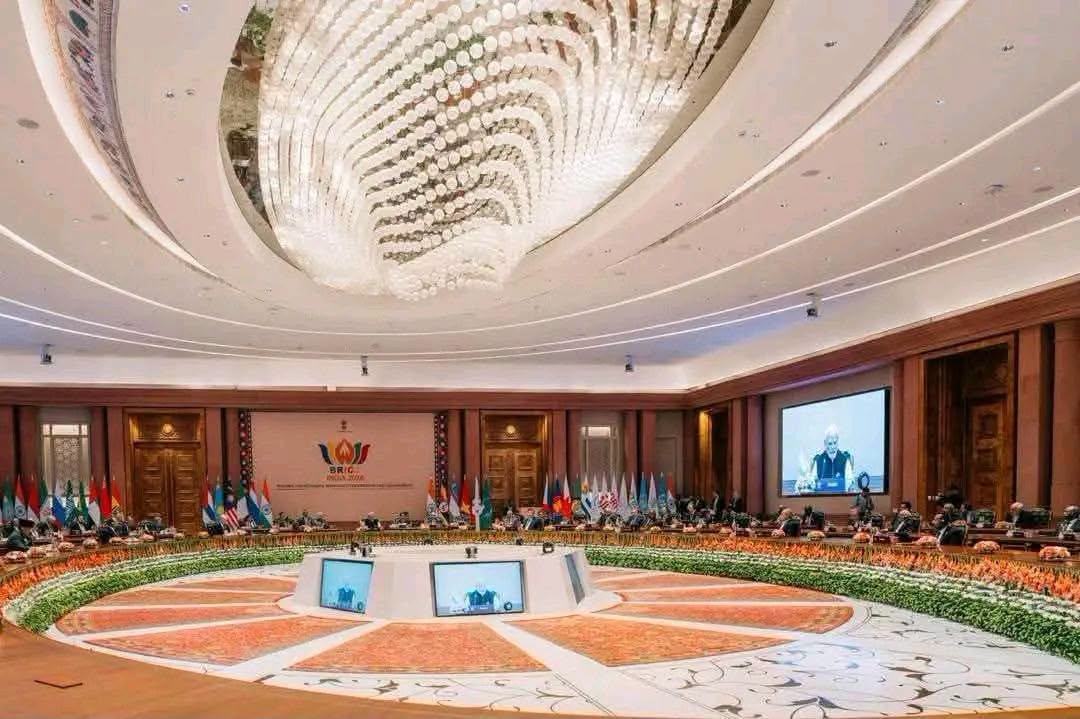
PM Abiy Underscores Ethiopia’s Wheat Self-Sufficiency, Pharmaceutical Expansion as “Preparedness Requires Production” Evidence at BRICS Summit
Addis Ababa, September 13, 2026 (FMC) — Prime Minister Abiy Ahmed underscored Ethiopia’s shift from dependence on imported wheat to self-sufficiency and its expanding pharmaceutical manufacturing as evidence of a central resilience principle he advanced at the 18th BRICS Leaders’ Summit: “Preparedness requires production.”
Addressing BRICS leaders in New Delhi, Prime Minister Abiy said the summit’s theme of resilience, innovation, cooperation and sustainability speaks directly to a time when shocks rarely come alone, with disruption in one area quickly affecting another.
“That’s why resilience must be built before a crisis. And it has to be part of how we govern,” he said, explaining that, for Ethiopia, this means strengthening the systems that keep the country functioning under strain.
In food, Prime Minister Abiy said Ethiopia has moved from dependence on imported wheat to self-sufficiency.
He said this achievement also informs Ethiopia’s approach to the proposed BRICS grain exchange, with the country approaching the initiative “as both a producer and a supplier.”
The example underscored the connection he drew between domestic productive capacity and preparedness: building resilience, in his formulation, means developing the ability to sustain essential systems and supplies before a crisis exposes vulnerabilities.
“In health, the pandemic taught us a similar lesson. Preparedness requires production,” Prime Minister Abiy said, pointing to Ethiopia’s expansion of pharmaceutical manufacturing.
He thus connected the country’s experience in food production with its efforts to strengthen pharmaceutical manufacturing, presenting both as examples of the productive capacity needed to withstand external shocks.
The Prime Minister extended the same principle to technology, saying Ethiopia is building digital public infrastructure covering digital ID, payments and data exchange, while also putting in place rules for data to be used securely and lawfully.
Taken together, his remarks linked Ethiopia’s wheat self-sufficiency, pharmaceutical manufacturing expansion and digital infrastructure development to the broader resilience framework he addressed at the BRICS summit.
For the proposed BRICS grain exchange, Prime Minister Abiy’s message was particularly concrete: Ethiopia’s movement from imported-wheat dependence to self-sufficiency means it approaches the proposed mechanism not only from the standpoint of food supply needs, but also as a producer and supplier.